Coalition Politics Explained: How Multi-Party Governments Survive in India
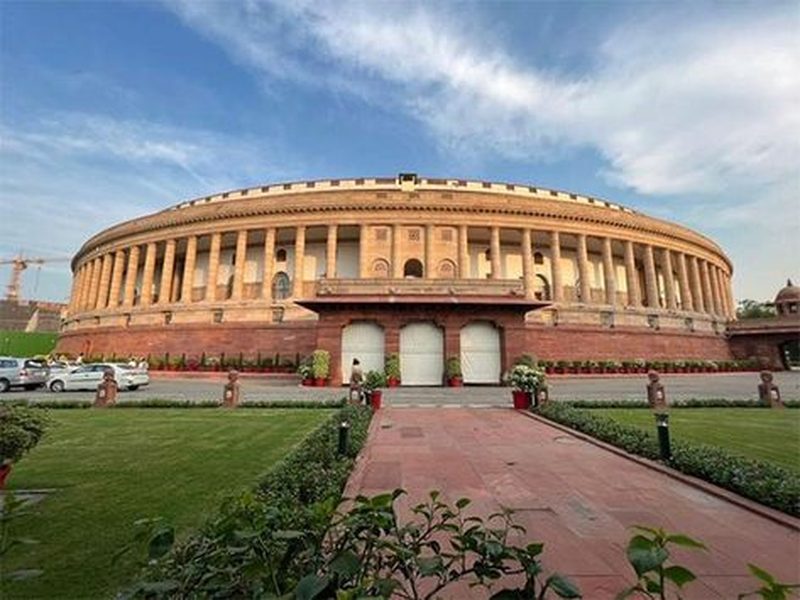
For 25 years, from 1989 to 2014, no single party won a Lok Sabha majority — and India was governed by coalitions: fragile, fractious alliances of national and regional parties, stitched together after elections and prone to dramatic collapse. The era produced both policy paralysis and landmark reforms, and it permanently transformed Indian politics by giving regional parties a share of national power. With single-party majorities returning in 2014, 2019 and a reduced mandate in 2024, coalition politics is evolving, not ending.
Why did the coalition era begin?
The Congress system collapsed under its own weight: the Emergency destroyed its moral authority, Mandal empowered OBC parties, and economic liberalisation created new regional interests. The 1989 election ended single-party dominance, and every Lok Sabha verdict until 2014 was fractured. The BJP-led NDA (1998-2004) and Congress-led UPA (2004-2014) were the era’s stable poles — broad pre-poll alliances with common minimum programmes. Between them lay experiments like the United Front (1996-98), which produced two prime ministers in under two years, and the chronic instability that made coalition synonymous with chaos.
How do coalitions survive?
Survival is an art of management. Successful coalitions share traits: a common minimum programme papering over differences, a coordination committee for dispute resolution, portfolio distribution reflecting bargaining power, and a dominant anchor party (BJP or Congress) too big to be blackmailed but not big enough to rule alone. Atal Bihari Vajpayee’s NDA managed 20+ partners for a full term through consensual leadership; Manmohan Singh’s UPA-I survived the Left’s withdrawal over the nuclear deal by finding new partners. The UPA-II’s later paralysis — allies blocking reforms, scams exploding — showed what happens when management fails.
What did coalitions achieve?
The record defies the chaos stereotype. Coalition governments delivered the 1991 reforms’ consolidation, the Vajpayee-era highways and telecom revolution, the UPA’s rights-based legislation (RTI, NREGA, Right to Education), the nuclear deal and 8%+ growth years. Constraints forced consultation: allies vetoed extremes, regional voices shaped national policy, and federalism deepened as regional parties tasted central power. Critics counter that coalitions produced policy drift, auctioned ministries to allies (the 2G and coal scandals), and let blackmail substitute for governance — the UPA-II’s paralysis being exhibit A.
Is the coalition era over?
The BJP’s 2014 and 2019 majorities seemed to end it, but 2024’s reduced mandate revived coalition dynamics within the NDA: Chandrababu Naidu’s TDP and Nitish Kumar’s JD(U) became indispensable, extracting ministries and special packages. The pattern suggests a new normal — dominant-party-led coalitions where the anchor is strong but not self-sufficient.
- Pre-poll vs post-poll: pre-poll alliances (NDA, INDIA bloc) offer voters clarity; post-poll stitch-ups breed instability.
- Regional leverage: even in majority eras, regional parties extract disproportionate concessions.
- Opposition unity: the INDIA alliance showed coalitions remain the only arithmetic against a dominant party.
- Federal deepening: coalition compulsions permanently empowered states in national policymaking.
Coalition politics taught India that fragmented mandates need not mean failed government — but that survival demands constant negotiation. As long as India’s diversity fragments its vote, the coalition art will remain essential, whatever the headline majority.
The human factor: leaders who managed coalitions
Coalition survival often came down to personality. Vajpayee’s consensual style held together 20-plus partners through patience and poetry; Manmohan Singh’s quiet negotiation kept the UPA-I alive through the nuclear-deal crisis; Deve Gowda and I.K. Gujral showed how quickly weak anchors collapse. The lesson: coalitions are managed, not just arithmetically assembled. Leadership that consults, accommodates egos and shares credit can stretch a thin majority across five years; arrogance shatters it in months.
Coalition dharma and its critics
Vajpayee coined coalition dharma — the ethic of consultative, restrained governance. Critics argue the dharma was often adharma: allies extracting ministries as fiefdoms, reforms held hostage, the public interest traded for survival. The 2G spectrum and coal-block allocations, both coalition-era scandals, showed how portfolio distribution could become loot distribution. Defenders reply that single-party majorities produced their own scandals — the Emergency, after all, needed no allies. The dharma’s real test was whether consultation improved decisions; the record is genuinely mixed.
FAQs
When was India’s coalition era?
Roughly 1989-2014, when no party won a Lok Sabha majority; the NDA (1998-2004) and UPA (2004-2014) were the stable coalition governments.
What is a common minimum programme?
The agreed policy framework coalition partners negotiate before or after elections, papering over ideological differences to enable joint governance.
Did coalitions deliver reforms?
Yes — telecom, highways, RTI, NREGA and the nuclear deal all came from coalitions, though UPA-II’s later paralysis showed the model’s failure modes.
Compiled by the Khabar 24h Editorial Desk from publicly available sources.

Khabar 24h Editorial Desk — our explainers are prepared by the Khabar 24h editorial team using AI-assisted research tools, and every piece is reviewed by a human editor before publishing. We do not claim original reporting: our work is turning complex topics into simple, accurate summaries. Spotted an error? Write to contact@khabar24h.com — our corrections policy aims for same-day review.
More from this author →