Track II Diplomacy: The Back Channels That Shape Peace Talks
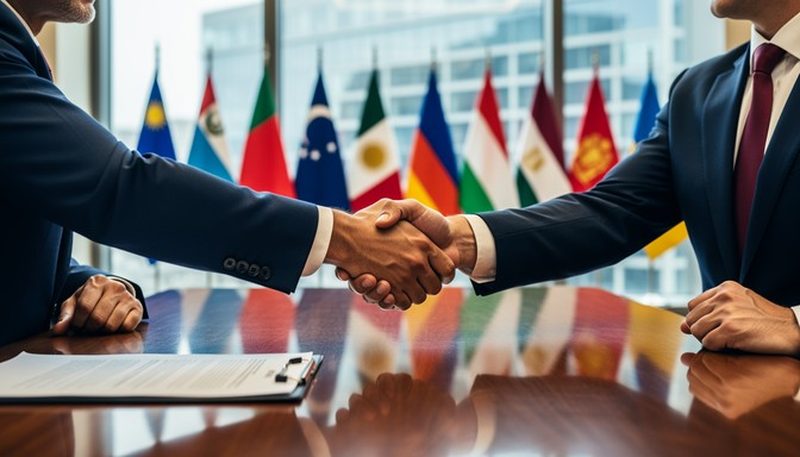
When official diplomacy stalls, the back channel begins. Track II diplomacy — unofficial dialogues involving academics, retired officials, journalists and civil-society figures — has quietly shaped some of the world’s most important breakthroughs, from the Oslo Accords to US-China rapprochement. Operating without flags or communiqués, these conversations let adversaries explore ideas their governments cannot yet utter. This is how the world’s most discreet diplomacy works.
What is Track II diplomacy?
The term, coined by diplomat Joseph Montville in the 1980s, distinguishes official Track I diplomacy from unofficial Track II: private citizens with expertise and access, acting in their personal capacities, exploring solutions outside the constraints of official positions. A middle variant, Track 1.5, mixes officials (attending unofficially) with non-officials. The ground rules are strict Chatham House confidentiality — nothing said can be attributed — which lets participants float trial balloons, admit mistakes and brainstorm without the posturing that official talks require.
Why do back channels matter?
Official negotiations suffer structural handicaps that Track II bypasses. Leaders cannot publicly concede anything without domestic punishment; negotiators cannot explore options without them leaking as commitments. Back channels solve this: ideas can be tested deniably, relationships built before stakes are high, and technical groundwork laid so that when political windows open, agreements are ready. The 1993 Oslo Accords grew from secret academic contacts; Henry Kissinger’s 1971 secret trip to Beijing, prepared by unofficial feelers, remade the Cold War. In the India-Pakistan context, the Neemrana Dialogue and Chaophraya Dialogue kept conversations alive through decades when official talks were frozen.
How do Track II dialogues actually work?
A typical dialogue gathers 15-30 participants for closed-door sessions over several days, often in neutral venues like Bangkok or Dubai. Agendas mirror official disputes — Kashmir, nuclear doctrines, trade — but discussions range freely into scenarios officials cannot touch. Facilitators from think tanks or foundations organise, funders (often Western governments or philanthropies) pay, and reports distil recommendations for policymakers. The best dialogues maintain continuity across years, so participants become genuine interlocutors who can pick up the phone in crises.
What are the limits?
Track II has real constraints its enthusiasts sometimes understate.
- No authority: participants cannot commit governments; brilliant ideas die without official uptake.
- Legitimacy questions: who elected these people? Dialogues can look like elite echo chambers detached from public sentiment.
- Co-optation: intelligence agencies monitor and sometimes manipulate back channels; participants may be used.
- The action gap: in frozen conflicts like Kashmir, decades of dialogue have produced understanding without settlement.
- Funding bias: Western-funded dialogues can subtly import Western framings of local conflicts.
Yet the alternative — no contact at all — is worse. Track II’s value is not in producing peace but in preserving the possibility of peace: keeping human relationships, shared analysis and draft solutions alive through the long winters when official diplomacy freezes. When breakthroughs come, historians usually find a back channel behind them.
Track II in the digital age
Technology is reshaping back channels. Encrypted messaging lets interlocutors talk continuously rather than at annual retreats; video calls sustained dialogues through the pandemic. But digitalisation also threatens the confidentiality Track II depends on — leaks, hacks and surveillance make candour riskier. Some dialogues now ban devices entirely, returning to paper and face-to-face talk. The paradox of modern back channels: never has unofficial contact been easier, and never has it been harder to keep truly private.
When back channels become front pages
Track II fails most visibly when secrecy breaks. Leaked discussions can be weaponised by hardliners as proof of sellouts — Indian and Pakistani hawks alike have attacked dialogue participants as traitors. The 2007 India-Pakistan back channel on Kashmir, which reportedly neared a framework, collapsed partly when its existence became political ammunition. Successful back channels therefore guard secrecy obsessively: deniability is not a luxury but the precondition that lets participants speak freely.
FAQs
What is the difference between Track I and Track II?
Track I is official government-to-government diplomacy; Track II involves private citizens and experts acting unofficially, free from the constraints of official positions.
Did Track II produce the Oslo Accords?
Yes — secret contacts between Israeli academics and PLO figures, facilitated by Norway, created the channel that became the 1993 Oslo breakthrough.
Is there India-Pakistan Track II dialogue?
Yes — initiatives like the Neemrana Dialogue and Chaophraya Dialogue have sustained unofficial contact through decades of frozen official relations.
Source: United States Institute of Peace

Khabar 24h Editorial Desk — our explainers are prepared by the Khabar 24h editorial team using AI-assisted research tools, and every piece is reviewed by a human editor before publishing. We do not claim original reporting: our work is turning complex topics into simple, accurate summaries. Spotted an error? Write to contact@khabar24h.com — our corrections policy aims for same-day review.
More from this author →