The G20 Explained: How the World’s Major Economies Coordinate Policy
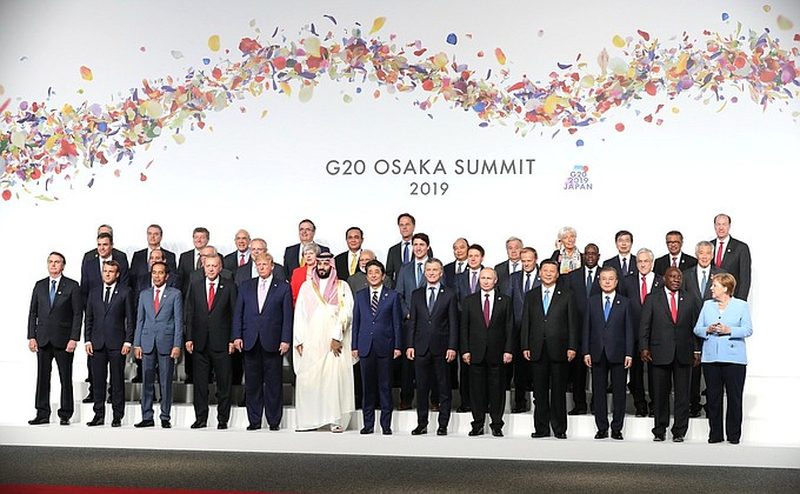
The G20 — the Group of Twenty — brings together the leaders of the world’s largest economies, representing around 85 per cent of global GDP and two-thirds of humanity. Born as a finance-ministers’ forum after the 1997 Asian financial crisis and elevated to a leaders’ summit in 2008, it has become the premier venue for coordinating responses to economic shocks, from the global financial crisis to the pandemic. India’s 2023 presidency, which admitted the African Union as a permanent member, marked a high point of its evolution.
Who sits at the table?
The G20 comprises 19 countries — including India, the United States, China, Japan, Germany, Brazil and South Africa — plus the European Union and, since 2023, the African Union. Spain is a permanent guest, and each presidency invites additional countries and international organisations. The inclusion of the AU, championed by India, was symbolically huge: it gave formal voice to a continent long underrepresented in global economic governance. The membership reflects economic weight rather than democratic credentials, which is both the group’s strength and a recurring criticism.
How does the G20 actually work?
The G20 has no secretariat, no treaty and no enforcement mechanism — it runs on consensus and peer pressure. Work proceeds through two tracks: the finance track of central bank governors and finance ministers, and the sherpa track of leaders’ personal representatives who negotiate the summit declaration. Each year a rotating presidency sets the agenda and hosts the leaders’ summit; recent hosts include India (2023), Brazil (2024) and South Africa (2025). Agreements are political commitments, not binding law — implementation depends on members following through at home.
What has the G20 achieved?
At its best, the G20 has been the world’s economic crisis committee. The 2008-09 summits coordinated stimulus and financial regulation that helped arrest the global financial crisis. Later achievements include the Base Erosion and Profit Shifting framework against corporate tax avoidance, the 2021 global minimum corporate tax deal, debt-relief initiatives for poor countries and pandemic-era coordination. Critics note a thinner record in recent years, as US-China rivalry and the Ukraine war made consensus declarations harder to negotiate — several summits produced watered-down language on geopolitics.
Why does the G20 matter for India?
India has used the G20 to project its claim to global leadership. The 2023 New Delhi summit — with its consensus declaration on Ukraine, the AU’s admission, the India-Middle East-Europe Economic Corridor announcement and the Global Biofuels Alliance — was presented domestically as a diplomatic triumph. For emerging economies more broadly, the G20 offers something the G7 cannot: a table where the developing world outnumbers the West. Its critics call it an unaccountable talking shop; its defenders reply that in a fragmented world, any functioning forum for the largest economies is precious.
Criticisms and the road ahead
The G20’s detractors make three charges: it is unrepresentative (most of the world’s states have no seat), unaccountable (leaders make pledges no voter can punish them for breaking) and increasingly ineffective as geopolitical rivalry hardens. The difficulty of agreeing summit language on Ukraine and Gaza has fed the talking-shop jibe. Defenders counter that the alternative is worse — in a world where the UN Security Council is paralysed by vetoes, a leaders-level forum that still includes both Washington and Beijing is itself an achievement. The 2026 US presidency will test whether the group can still function when its host is sceptical of multilateralism.
The 2026 test
All eyes are now on the 2026 summit under the United States presidency. Washington’s scepticism toward multilateral institutions raises the question of whether the G20 can still produce meaningful consensus when its most powerful member doubts the premise. If the summit delivers on issues like debt relief, digital taxation and climate finance, the forum’s defenders will claim vindication; if it collapses into discord, the obituaries will write themselves. Either way, the G20’s fate will say much about the state of global cooperation.
FAQs
What is the difference between the G20 and the G7?
The G7 is a club of seven advanced Western democracies; the G20 adds major emerging economies like India, China and Brazil, plus the EU and African Union, making it far more representative.
Are G20 decisions binding?
No. The G20 issues political declarations, not treaties. Its power lies in peer pressure and coordinated national action, not legal enforcement.
Which country holds the G20 presidency now?
The presidency rotates annually; South Africa hosted in 2025, with the United States due to take over the 2026 summit.
Compiled by the Khabar 24h Editorial Desk from publicly available sources.

Khabar 24h Editorial Desk — our explainers are prepared by the Khabar 24h editorial team using AI-assisted research tools, and every piece is reviewed by a human editor before publishing. We do not claim original reporting: our work is turning complex topics into simple, accurate summaries. Spotted an error? Write to contact@khabar24h.com — our corrections policy aims for same-day review.
More from this author →