India’s Olympic History: Every Medal From 1900 Explained
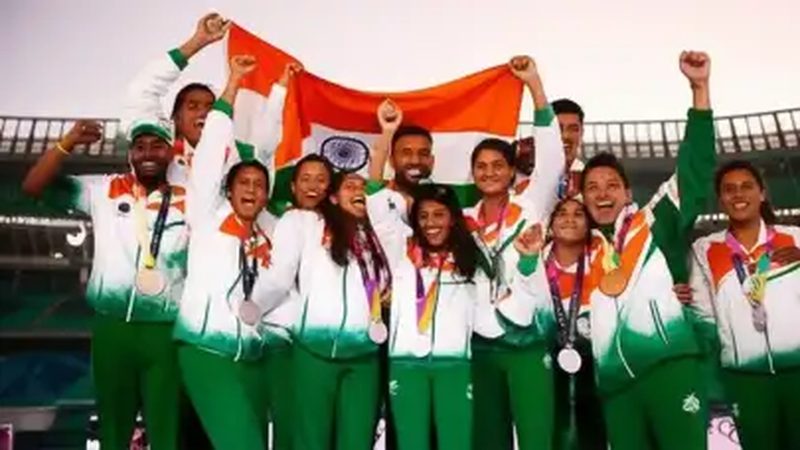
India’s Olympic journey spans 124 years, from two silver medals won by a lone athlete in Paris 1900 to a record seven medals at Tokyo 2020. Along the way there were decades of hockey dominance, long medal droughts, individual breakthroughs and the slow building of a sporting system. This is the complete story of India’s Olympic medals: every one of them, and what each meant for the nation.
How did India’s Olympic story begin?
India’s first Olympic medals came before independence, and from an unlikely source. At the Paris 1900 Games, Norman Pritchard, an Anglo-Indian athlete from Calcutta, won two silver medals in the 200 metres and 200-metre hurdles. For decades these were India’s only Olympic medals in athletics, and a source of historical debate about national sporting identity. India first sent an official team in 1920, and the early decades brought little success beyond one towering exception: field hockey. The hockey team’s golden era would define India’s Olympic identity for half a century.
What was the hockey golden era?
Between 1928 and 1980, Indian hockey won eight Olympic gold medals, a record of dominance unmatched in team sports. The run began at Amsterdam 1928, where Dhyan Chand announced himself with a masterclass, and continued through Los Angeles 1932 and Berlin 1936, where India humiliated hosts Germany 8-1 in the final. After independence, the tricolour flew at London 1948, Helsinki 1952 and Melbourne 1956, before Pakistan ended the streak in 1960. India reclaimed gold at Tokyo 1964 and Moscow 1980. Those eight golds, plus a silver and two bronzes from the era, remain the foundation of India’s Olympic heritage and the reason hockey is still called the national game in popular memory.
Why did the medals dry up after 1980?
The Moscow 1980 hockey gold was followed by a 16-year Olympic medal drought, India’s longest. Hockey declined as astroturf replaced grass and European systems professionalised; India failed to medal at five straight Games. Other sports produced near misses but no podiums: PT Usha’s fourth place in 1984, Milkha Singh’s ghost from 1960. The drought reflected systemic failure: poor funding, politicised federations, negligible sports science and the absence of professional leagues. By Atlanta 1996, a nation of nearly a billion people had won just a handful of medals in the entire post-hockey era. The drought finally ended at Atlanta, when tennis player Leander Paes won bronze in men’s singles, India’s first individual medal in 44 years.
Who broke through in the 2000s?
Paes’s bronze opened the floodgates slowly. At Sydney 2000, weightlifter Karnam Malleswari won bronze, India’s first Olympic medal by a woman. Athens 2004 brought shooting silver for Rajyavardhan Singh Rathore. Then Beijing 2008 changed everything: Abhinav Bindra won gold in the 10-metre air rifle, India’s first individual Olympic gold, while wrestler Sushil Kumar and boxer Vijender Singh added bronzes. London 2012 delivered six medals, then India’s best haul: silvers for Sushil Kumar and Vijay Kumar, bronzes for Saina Nehwal, Mary Kom, Yogeshwar Dutt and Gagan Narang. The message was clear: with targeted support, Indians could win across sports.
What happened at Rio, Tokyo and Paris?
Rio 2016 was a disappointment saved by two women: PV Sindhu’s badminton silver and Sakshi Malik’s wrestling bronze were India’s only medals. The response was the Target Olympic Podium Scheme’s expansion and a professionalised approach to preparation. Tokyo 2020, held in 2021, delivered India’s greatest Games: seven medals, headlined by Neeraj Chopra’s historic javelin gold, India’s first in athletics. Mirabai Chanu’s weightlifting silver, Ravi Dahiya’s wrestling silver, and bronzes for Sindhu, Lovlina Borgohain, Bajrang Punia and the men’s hockey team, ending a 41-year hockey medal drought, completed the haul. Paris 2024 brought six more medals, including Manu Bhaker’s historic shooting double bronze and another hockey bronze, confirming India as a consistent multi-medal nation.
Which sports have won medals for India?
- Hockey: eight golds, one silver, four bronzes; the foundation of India’s Olympic history.
- Wrestling: multiple medals from Sushil Kumar to Bajrang Punia; India’s most consistent individual sport.
- Shooting: from Bindra’s gold to Bhaker’s bronzes; a precision-sport powerhouse.
- Badminton: three medals via Saina Nehwal and PV Sindhu.
- Boxing: medals for Vijender Singh, Mary Kom and Lovlina Borgohain.
- Weightlifting: Karnam Malleswari’s pioneering bronze and Mirabai Chanu’s silver.
- Athletics: Neeraj Chopra’s gold and silver; the newest frontier.
- Tennis: Leander Paes’s 1996 singles bronze.
FAQs
How many Olympic medals has India won in total? India has won over 40 Olympic medals across the Summer Games, with hockey’s eight golds the standout achievement.
Who won India’s first individual Olympic gold? Abhinav Bindra, in the men’s 10-metre air rifle at Beijing 2008.
What was India’s best Olympic performance? Tokyo 2020, with seven medals including Neeraj Chopra’s javelin gold.
From Pritchard’s silvers in 1900 to Chopra’s gold in 2021, India’s Olympic history is a century-long arc from colonial curiosity to sporting nation. The medals tell the story; the growing hauls suggest the best chapters are still to come.
Source: Indian Olympic Association records

Khabar 24h Editorial Desk — our explainers are prepared by the Khabar 24h editorial team using AI-assisted research tools, and every piece is reviewed by a human editor before publishing. We do not claim original reporting: our work is turning complex topics into simple, accurate summaries. Spotted an error? Write to contact@khabar24h.com — our corrections policy aims for same-day review.
More from this author →