Nepal’s Federal Democracy: How Politics Works After the Monarchy
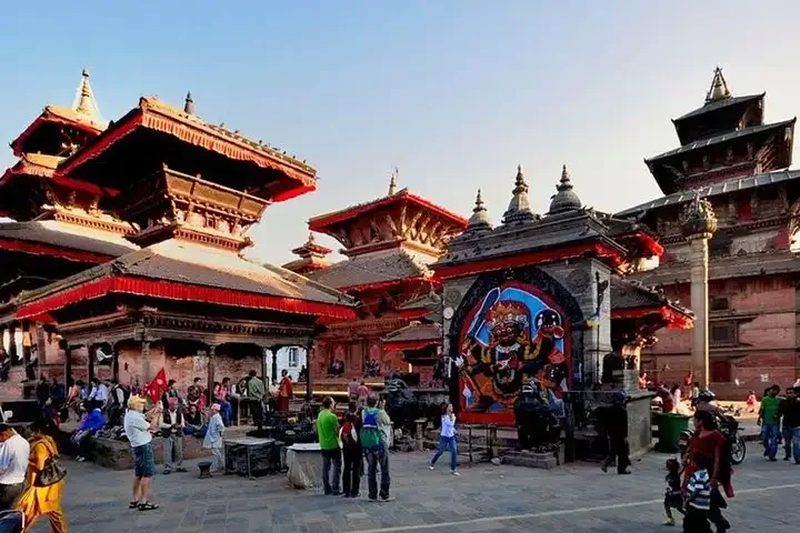
In 2008, Nepal did something few countries have attempted: it abolished a 240-year-old monarchy and declared itself a federal democratic republic, ending a decade-long Maoist insurgency and years of royal autocracy. The constitution adopted in 2015 created three tiers of government — federal, provincial and local — across seven provinces. Nepal’s democracy remains turbulent, with frequent government changes, but the federal experiment has survived. Here is how politics works in the Himalayan republic today.
From monarchy to republic: how Nepal got here
Nepal’s modern political journey began with the 1990 People’s Movement, which forced King Birendra to accept constitutional monarchy. A Maoist insurgency launched in 1996 killed some 17,000 people over a decade, and King Gyanendra’s 2005 seizure of absolute power united the mainstream parties and the Maoists against him. The 2006 People’s Movement restored democracy, a 2008 constituent assembly abolished the monarchy, and after years of wrangling, a new constitution was promulgated in September 2015 — promptly triggering a blockade crisis with India over citizenship and provincial boundaries that still colours relations.
How does the federal system work?
Nepal has three levels of government. At the top, the federal parliament is bicameral: the 275-member House of Representatives, elected through a mix of first-past-the-post and proportional representation, and the 59-member National Assembly. Below it sit seven provincial assemblies with their own chief ministers, and 753 local governments — municipalities and rural municipalities — with directly elected mayors and chairs. The president is the ceremonial head of state, elected by an electoral college, while executive power rests with the prime minister, who must command a majority in the House.
Why are governments so unstable?
No single party has won a parliamentary majority since the republic began, so every government is a coalition — and coalitions in Kathmandu are notoriously fragile. Nepal has cycled through prime ministers at a dizzying rate, with alliances shifting between the Nepali Congress, the various communist parties and the former Maoists. Party splits, engineered defections and court interventions have all toppled governments. The instability frustrates voters, but it also reflects a genuinely competitive multiparty system in which no force can dominate.
What has federalism delivered?
For all the chaos at the centre, federalism’s quiet success is at the grassroots.
- Local government revived: after a two-decade gap, local elections in 2017 and 2022 put elected representatives back in every village and town.
- Inclusion: quotas for women, Dalits and marginalised groups have brought historically excluded communities into office in large numbers.
- Service delivery: local bodies now handle schools, health posts and roads, bringing government closer to citizens.
- Unfinished business: provinces complain that Kathmandu hoards revenue and real power, and fiscal federalism remains contested.
The 2024-25 period brought fresh turmoil, with youth-led protests in 2025 toppling another government over corruption and economic frustration — a reminder that Nepal’s democracy, while resilient, has yet to deliver the stable, clean governance its citizens were promised. The federal republic endures, but its legitimacy will ultimately be judged on jobs and services, not constitutional design.
Nepal’s balancing act between India and China
Geography makes foreign policy existential for Nepal: landlocked between India and China, it has historically tilted toward New Delhi while Beijing’s influence — through investment, infrastructure and political ties — has grown steadily. Every Kathmandu government navigates this rivalry, signing connectivity deals with one side while reassuring the other. The 2015 blockade, which Nepal blamed on India, pushed Kathmandu closer to Beijing and remains a wound in bilateral ties. Managing both giants without becoming a battleground is Nepal’s permanent diplomatic challenge, and domestic parties are often accused of being proxies in the contest.
What to watch next
Nepal’s next general election will test whether the post-2025 political reset produces a more stable order or simply reshuffles the same faces. Key markers to watch: whether the big parties finally allow a full five-year government, whether provinces win genuine fiscal autonomy, and whether the new generation of leaders emerging from the protest movements can convert street energy into institutional reform. The republic’s second decade will be defined less by constitutional engineering than by delivery.
FAQs
When did Nepal become a republic?
The constituent assembly abolished the 240-year-old Shah monarchy in May 2008, declaring Nepal a federal democratic republic.
How many provinces does Nepal have?
Seven provinces, created by the 2015 constitution, each with its own assembly, chief minister and governor.
Why does Nepal change prime ministers so often?
No party wins a majority, so fragile multiparty coalitions govern — and collapse — as alliances shift between the Congress, communist and Maoist blocs.
Source: The Kathmandu Post

Khabar 24h Editorial Desk — our explainers are prepared by the Khabar 24h editorial team using AI-assisted research tools, and every piece is reviewed by a human editor before publishing. We do not claim original reporting: our work is turning complex topics into simple, accurate summaries. Spotted an error? Write to contact@khabar24h.com — our corrections policy aims for same-day review.
More from this author →