How Chess Tournaments Work: Swiss System, Round Robin and Tiebreaks
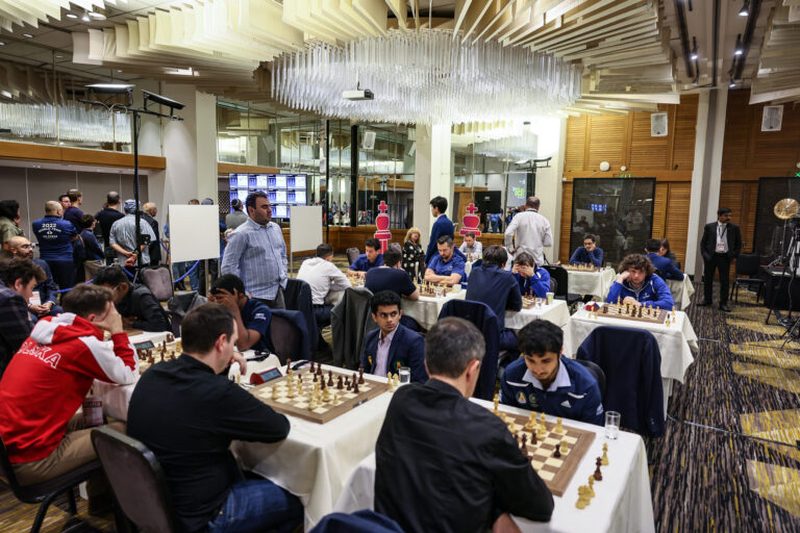
Chess tournaments come in bewildering variety: weekend Swiss events with hundreds of players, elite round robins with ten grandmasters, knockout World Cups and online arenas. Each format has its own pairing system, its own rhythm and its own way of breaking ties. This guide explains how chess tournaments work, from the first pairing to the final tiebreak.
How does the Swiss system work?
The Swiss system is the workhorse of competitive chess, used in events from school championships to the Chess Olympiad. All players compete in the same section, but nobody is eliminated. In each round, players with the same score are paired against each other: winners play winners, losers play losers. Colours are balanced so nobody gets White or Black too often, and players never face the same opponent twice. After a fixed number of rounds, usually seven to eleven, the player with the highest score wins. The Swiss is brilliantly efficient: it crowns a worthy champion from hundreds of entrants in a single weekend, and every round offers competitively balanced games. Its quirk is that the winner is not always the strongest player, just the one who scored most against their particular path of opponents.
What is a round robin tournament?
The round robin is the gold standard of fairness: every player faces every other player, once or twice. Elite events like the Candidates Tournament and traditional super-tournaments use double round robins, where each pairing plays once with each colour. With small, elite fields, the round robin produces the most reliable winner, since everyone faces identical opposition. The format creates narratives: leaders emerge, chasers hunt, and the final rounds are thick with tension. Its limitation is scale: a ten-player round robin needs nine rounds, so fields stay small and invitations become precious. For fans, round robins are the most watchable format, with a fixed cast of characters and storylines that build across the event.
How do knockout tournaments work?
Knockouts bring single-elimination drama to chess. The FIDE World Cup, the sport’s biggest knockout, features over 200 players in mini-matches: two classical games, with rapid and blitz tiebreaks if needed, and the loser goes home. Knockouts are spectacular television: underdogs slay giants, and every match is win-or-bust. But they are a controversial way to identify the best player, since one bad day ends a campaign. Chess has therefore reserved knockouts for qualification events rather than the world title itself. The format rewards fighters and punishes slow starters, and its tiebreaks have produced some of the most nerve-shredding finishes in the sport.
How are ties broken?
Ties are endemic in chess, and every tournament needs tiebreak rules. Common systems include:
- Buchholz: the sum of opponents’ scores, rewarding players who faced stronger opposition; the standard tiebreak in Swiss events.
- Sonneborn-Berger: scores weighted by the strength of beaten opponents, favouring wins over top players.
- Direct encounter: the result of the game between the tied players, used when they met.
- Playoffs: extra games, often rapid or blitz, to decide titles and qualification places.
- Armageddon: a single sudden-death game guaranteeing a winner, used as the ultimate tiebreak.
Players study tiebreak rules before events because they shape strategy: in a Swiss, your Buchholz depends on your opponents’ results, adding a layer of fortune to the final standings.
What are time controls and why do they matter?
Time controls define the game’s character. Classical chess gives each player 90 minutes or more, producing the deepest games. Rapid gives 10 to 25 minutes per side, blitz 3 to 5 minutes, and bullet under 3 minutes, each faster format increasing chaos and reducing quality. Increment, a few seconds added per move, prevents pure time scrambles. Tournaments specify their controls precisely because they determine which rating list the games affect and how seriously players prepare. The trend toward faster formats reflects audience preferences, but classical chess remains the format that crowns champions.
How do team tournaments work?
Team events like the Chess Olympiad add national pride to individual skill. Teams of four or five players face each other board by board: board one plays board one, and so on, with each game contributing to the match score. Teams earn match points for winning the overall contest, and the team with the most match points wins the tournament. Strategy enters in board order and preparation: captains analyse opponents’ line-ups and rest players tactically. The Olympiad’s eleven rounds across two weeks make it a marathon of preparation, stamina and team spirit, and winning it requires depth across all boards, not just a superstar on top.
FAQs
What is the difference between Swiss and round robin? In a Swiss, players are paired by score each round and never eliminated; in a round robin, everyone plays everyone in a fixed schedule.
How are chess tournament prizes divided on ties? Prize money for tied places is usually shared equally among the tied players, though title and qualification ties go to tiebreaks or playoffs.
What does 7/9 mean in chess results? A score of 7 points from 9 games, the standard way of reporting tournament results.
Swiss systems, round robins, knockouts and tiebreaks: tournament formats are the hidden architecture of competitive chess. Understand them, and every event becomes a story you can follow from pairings to prizes.
Source: FIDE tournament rules handbook

Khabar 24h Editorial Desk — our explainers are prepared by the Khabar 24h editorial team using AI-assisted research tools, and every piece is reviewed by a human editor before publishing. We do not claim original reporting: our work is turning complex topics into simple, accurate summaries. Spotted an error? Write to contact@khabar24h.com — our corrections policy aims for same-day review.
More from this author →