How EVMs and VVPATs Work: The Technology Behind Indian Elections
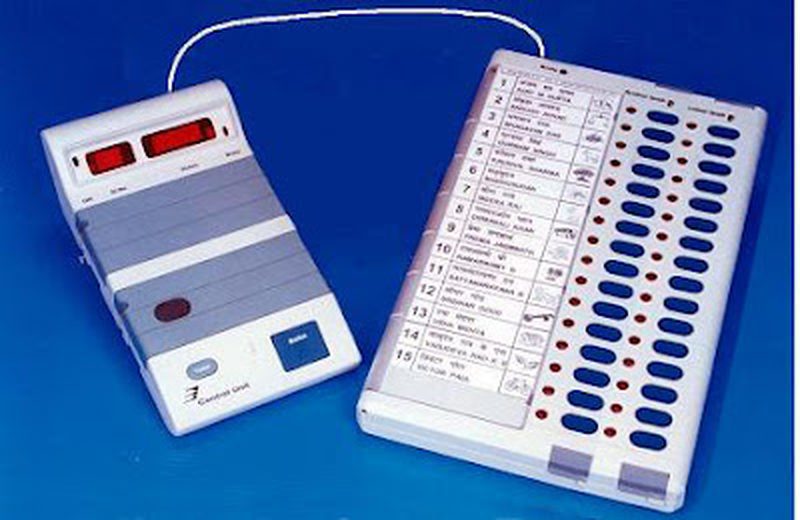
India conducts the world’s largest elections without paper ballots. Since the early 2000s, voting across the country has taken place on Electronic Voting Machines, with Voter Verifiable Paper Audit Trail units added nationwide to let voters confirm their choice. More than five million EVMs and VVPATs were deployed in the 2024 general election, an operation involving over ten million polling personnel. The technology is admired globally for its scale and simplicity, yet it remains one of the most debated subjects in Indian politics. Here is how the system actually works.
What an EVM is
An Indian EVM is a simple, rugged device with two units connected by a cable: the ballot unit, kept inside the voting compartment, which lists candidates’ names and symbols with a button beside each; and the control unit, with the polling officer, which enables one vote at a time. The machines are manufactured by two public-sector companies, Bharat Electronics Limited and Electronics Corporation of India Limited, to the Election Commission’s specifications. There are no moving parts beyond the buttons, the devices run on batteries, and they are designed to work in the heat, dust and remoteness of Indian polling stations.
How voting works on polling day
When a voter arrives, the polling officer verifies their identity against the electoral roll and presses the ballot button on the control unit, activating the ballot unit for a single vote. The voter presses the button next to their chosen candidate, a red light glows, and a beep confirms the vote is recorded. With the VVPAT unit attached, a paper slip showing the candidate’s serial number, name and symbol appears behind a glass window for seven seconds before dropping into a sealed box. The control unit then locks until the officer enables the next vote, making double voting impossible.
The security design
The EVM’s security rests on deliberate simplicity. The machines are standalone devices with no wireless connectivity, no internet link and no operating system that could be hacked remotely; the software is burned into one-time-programmable chips at manufacture. Each machine has a unique identifier, candidates’ agents verify and sign the machines before polling, and mock polls are conducted in front of agents on the morning of voting. After polling, machines are sealed and stored in strong rooms under multi-layer guard, with candidates’ representatives allowed to watch, until counting day.
What the VVPAT adds
The Voter Verifiable Paper Audit Trail was introduced to answer the demand for a physical record of each vote. The printed slip lets the voter visually confirm that the machine recorded their choice correctly, addressing the black-box criticism of pure electronic voting. After polling, the slips sit sealed in the VVPAT boxes. On counting day, the slips from a sample of polling stations in every assembly constituency are counted and matched against the EVM totals. The Supreme Court has progressively increased this sample, and any mismatch would trigger deeper verification.
The controversy and the court’s answers
Opposition parties and activists have repeatedly alleged that EVMs can be tampered with, demanding a return to paper ballots or a 100 per cent VVPAT count. The Election Commission has consistently rejected these claims, pointing to the machines’ standalone design, the administrative safeguards, and public hackathon-style challenges. Courts, including the Supreme Court, have upheld the use of EVMs while ordering the VVPAT verification regime as an added safeguard. Election administrators worldwide note that no credible demonstration of large-scale EVM manipulation in Indian conditions has ever been established.
FAQs
Can EVMs be hacked over the internet? No. The machines have no network, Bluetooth or Wi-Fi capability of any kind; they are standalone devices.
What happens if the VVPAT slip and EVM count differ? The VVPAT slip count is treated as authoritative in case of a verified mismatch, and the discrepancy is investigated.
Why doesn’t India use paper ballots like some countries? Paper ballots for nearly a billion voters would be logistically enormous, slower to count and historically more vulnerable to booth-capturing and invalid votes.
Love them or question them, EVMs and VVPATs are the machinery that converts a billion intentions into a national verdict within hours, a feat of electoral engineering no other democracy attempts at this scale.
As elections grow larger and more complex, the machines’ simplicity remains their greatest strength.
Compiled by the Khabar 24h Editorial Desk from publicly available sources.

Khabar 24h Editorial Desk — our explainers are prepared by the Khabar 24h editorial team using AI-assisted research tools, and every piece is reviewed by a human editor before publishing. We do not claim original reporting: our work is turning complex topics into simple, accurate summaries. Spotted an error? Write to contact@khabar24h.com — our corrections policy aims for same-day review.
More from this author →