Durga Puja’s Pandal Economy: How Kolkata’s Festival Fuels a City
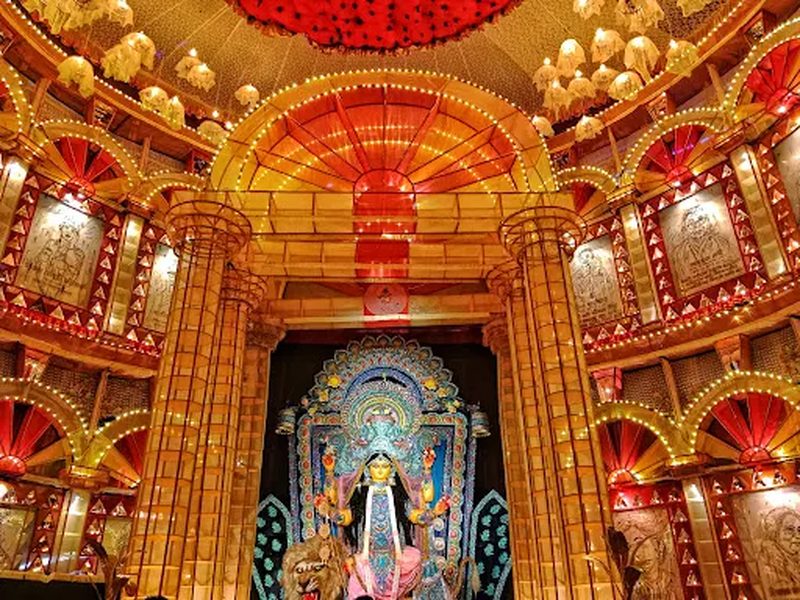
For five days each autumn, Kolkata transforms into an open-air art gallery. Thousands of pandals, temporary structures housing the goddess Durga, rise in every neighbourhood, each competing to outdo the last in theme, craft, and spectacle. Millions of people pandal-hop through the night, and the city barely sleeps. Behind the devotion lies serious economics: Durga Puja generates thousands of crores in spending across idols, decoration, lighting, food, clothing, advertising, and tourism. UNESCO’s 2021 inscription of Durga Puja on its Intangible Cultural Heritage list only confirmed what Kolkata already knew. This is the story of the pandal economy.
The pandal as public art
The modern pandal is a far cry from a simple canopy. Leading pujas commission artists, architects, and art-college collectives to build themed installations: replicas of famous temples, recreations of villages, abstract meditations on migration or climate change, structures woven from bamboo, jute, clay, and recycled material. Budgets for the biggest pandals run into crores, funded by a mix of neighbourhood subscriptions, corporate sponsorships, and advertising on pandal walls and approach roads. The competition is fierce but largely friendly, judged by popular footfall and a constellation of awards, the most prestigious being the judging circuits run by civic bodies and media houses. What began as community worship has become, without ceasing to be worship, one of the world’s great ephemeral art movements, dismantled each year after immersion.
The artisans who build the festival
The festival’s supply chain starts months earlier in Kumartuli, the potters’ quarter in north Kolkata, where generations of idol-makers sculpt Durga and her children from straw, clay, and paint. Orders come from across Bengal and the Bengali diaspora worldwide, and the season’s income sustains artisan families through the year. Beyond Kumartuli, the economy spreads wide: pandal decorators and structural workers, electricians and lighting designers who rig the famous illumination, dhakis, the traditional drummers, and their ensembles, florists, caterers for bhog, the community feast, and printers producing the festival’s vast paper trail. Economists who have studied the festival estimate its total economic footprint in the tens of thousands of crores, with spending rippling through retail, transport, hospitality, and media. For many workers, from idol painters to food vendors, Puja is the financial anchor of the year.
Brands, sponsors, and the business of devotion
Corporate India discovered the pandal decades ago. Sponsorship deals put brand names on pandals, gates, and lighting; FMCG companies run Puja-season campaigns timed to the festival shopping surge; and media houses sell Puja guides, awards, and broadcast rights. Real estate developers, jewellers, and automobile companies treat the season as a second Diwali for Bengal’s consumers, and pre-Puja shopping, new clothes for the family are a near-universal ritual, drives retail across the state. The state government has leaned in too, with tourism departments promoting Puja itineraries, illuminated heritage zones, and in recent years, direct grants to community pujas. Critics occasionally grumble about commercialisation, but the sponsors’ money is what lets neighbourhood committees build at the scale they do; devotion and commerce have long since made their peace.
Heritage status and what it changed
UNESCO’s 2021 inscription of Durga Puja in Kolkata as Intangible Cultural Heritage was a landmark: the first Asian festival of its kind on the list. The designation recognised not just the rituals but the entire ecosystem, artisans, performers, organisers, and the city’s collective creativity. Practically, it boosted cultural tourism, with the state reporting rising visitor numbers in subsequent years, and gave the festival’s custodians a new language for preservation, from documenting craft techniques to protecting artisan livelihoods. It also raised the stakes for managing the festival’s downsides: crowd safety at marquee pandals, where lakhs queue for hours; traffic gridlock across the city; noise and waste; and the environmental cost of idol immersion in the Hooghly, which has prompted shifts toward eco-friendly materials and designated immersion ghats. Heritage status, in other words, brought both pride and scrutiny.
Five days that carry the year
Ask Kolkatans what Puja means and the answer is rarely just religious. It is homecoming, with the Bengali diaspora streaming back; it is the year’s biggest social season; it is, for thousands of families, the income that makes the rest of the year possible. The pandal economy illustrates something larger about India’s festival economies: that culture, at sufficient scale, is industry, employing lakhs and moving thousands of crores, while remaining, for its participants, a matter of faith and joy. When the idols are immersed on Dashami and the lights come down, the city exhales, counts its earnings, and begins, almost immediately, to plan next year’s pandals.
FAQs
When is Durga Puja celebrated? In the autumn month of Ashwin, usually September or October, with the main festivities spanning Mahalaya to Dashami.
What is a pandal? A temporary structure housing the Durga idol, built new each year by neighbourhood committees, often as elaborate themed art installations.
Why is Kumartuli famous? It is Kolkata’s centuries-old potters’ quarter where most of the city’s Durga idols are sculpted by traditional artisan families.
Durga Puja proves that a festival can be simultaneously sacred and economic, ephemeral and institutional. Kolkata builds a new city of art every autumn, worships in it for five days, and then lets the river take it, richer in every sense for the having built it.
Compiled by the Khabar 24h Editorial Desk from publicly available sources.

Khabar 24h Editorial Desk — our explainers are prepared by the Khabar 24h editorial team using AI-assisted research tools, and every piece is reviewed by a human editor before publishing. We do not claim original reporting: our work is turning complex topics into simple, accurate summaries. Spotted an error? Write to contact@khabar24h.com — our corrections policy aims for same-day review.
More from this author →