UDAN Scheme Explained: How Regional Flights Reached India’s Small Towns
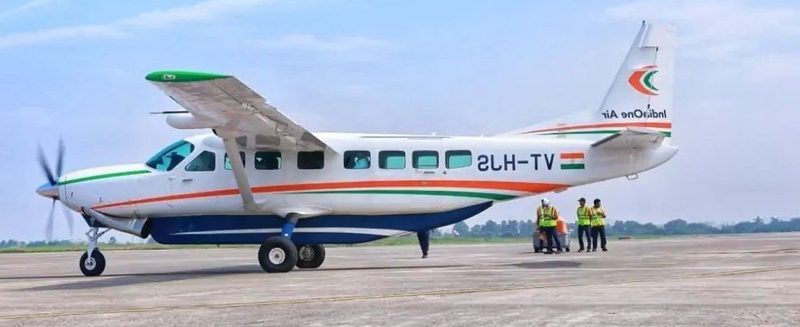
In 2016, flying in India was still a metro affair: a handful of big airports handled the overwhelming share of traffic, while dozens of airstrips built in earlier decades lay silent. The UDAN scheme, short for Ude Desh ka Aam Nagrik, set out to change the map of Indian aviation with a simple proposition: cap fares on regional routes at 2,500 rupees for an hour-long flight, subsidise airlines to fly them, and revive unserved and underserved airports. A decade on, UDAN has operationalised hundreds of routes and over a hundred airports, heliports and water aerodromes, putting towns like Jharsuguda, Darbhanga and Hubballi on the air map. This explainer traces how the scheme works and what it has achieved.
How UDAN works
UDAN is built on competitive bidding. Airlines bid for the right to operate specific regional routes, offering the lowest viability gap funding they need to make the route work. The government caps fares on a portion of seats, currently around 2,500 rupees for roughly an hour of flying, and pays the airline the gap funding from a Regional Connectivity Fund financed by a levy on major routes. Airports Authority of India upgrades the chosen airports, often modest facilities with short runways, and states contribute by reducing VAT on aviation fuel and providing security and fire services. The model deliberately shares costs across the centre, states and the aviation market.
What it put on the map
The scheme’s route map reads like a tour of small-town India: Darbhanga to Delhi and Mumbai, Jharsuguda to Kolkata and Hyderabad, Kishangarh near Ajmer, Hubballi, Belagavi, Shillong, and helicopter routes in the hills of Uttarakhand and Himachal Pradesh. For many of these towns, UDAN provided the first scheduled air service in history, or the first in decades. The effects ripple beyond passengers: medical evacuation, tourism, and business travel become possible, and the airports themselves create jobs. The seaplane and helicopter rounds extended the scheme to places runways cannot reach, including tourist circuits and remote border areas.
The airline economics problem
UDAN’s persistent challenge is that regional aviation is a tough business. Small aircraft have high per-seat costs, load factors on thin routes are uncertain, and several airlines that won UDAN routes, including regional startups, collapsed or scaled back, stranding routes. The viability gap funding covers only part of the economics, and when fuel prices spike or demand disappoints, airlines quietly exit. The government has responded with successive rounds of bidding, tweaked terms and a focus on routes with proven demand. The pattern is familiar from regional aviation worldwide: subsidies can start routes, but only real demand sustains them.
Airports revived
One of UDAN’s most visible achievements is physical: dormant airstrips brought back to life with terminal buildings, fire stations and navigational aids. Many of these airports handle only a few flights a day, but their existence changes the region’s connectivity calculus. The Airports Authority of India has also used the scheme to develop no-frills airports with lower construction and operating costs, a template for affordable regional infrastructure. Critics note that some revived airports see barely any traffic, raising questions about capital allocation; supporters reply that connectivity is a long game and that today’s thin route may be tomorrow’s busy one.
Where UDAN goes next
The scheme has been extended in phases, with later rounds emphasising tourism routes, seaplanes and helicopters, and connectivity to the Northeast and island territories. The government’s stated ambition is to keep expanding the network toward hundreds of operational airports. The deeper question is sustainability: whether UDAN routes can graduate from subsidy to self-sufficiency, and whether India’s regional airlines can build durable businesses on them. International experience suggests a mixed outcome, with some routes thriving and others permanently dependent on support. Either way, UDAN has permanently redrawn the mental map of Indian aviation: the sky no longer belongs only to the metros.
FAQs
What does UDAN stand for? Ude Desh ka Aam Nagrik, “let the common citizen of the country fly,” the regional air connectivity scheme launched in 2016.
What is the UDAN fare cap? Fares on designated UDAN seats are capped, originally at Rs 2,500 for about an hour of flight, with airlines compensated through viability gap funding.
How many UDAN routes operate? Hundreds of routes and over a hundred airports, heliports and water aerodromes have been operationalised, with numbers evolving across bidding rounds.
UDAN’s promise was democratic: that a student from Darbhanga or a trader from Jharsuguda could fly without going through a metro. On that measure, whatever its economics, the scheme has already changed who gets to be a flyer in India.
Source: Press Information Bureau

Khabar 24h Editorial Desk — our explainers are prepared by the Khabar 24h editorial team using AI-assisted research tools, and every piece is reviewed by a human editor before publishing. We do not claim original reporting: our work is turning complex topics into simple, accurate summaries. Spotted an error? Write to contact@khabar24h.com — our corrections policy aims for same-day review.
More from this author →