How VFX Studios Create Bollywood’s Biggest Spectacles
When a mythological warrior rides a divine chariot across the sky, when an entire ancient city rises from an empty field, or when a superhero levels a Mumbai street, audiences are watching the work of India’s visual effects studios. VFX has moved from a post-production afterthought to the very engine of Bollywood’s biggest spectacles, with top productions now spending a significant share of their budgets on computer-generated imagery. Behind the spectacle lies a disciplined industry of artists, supervisors and render farms that has quietly made India one of the world’s largest VFX workforces.
How a VFX-heavy film gets planned
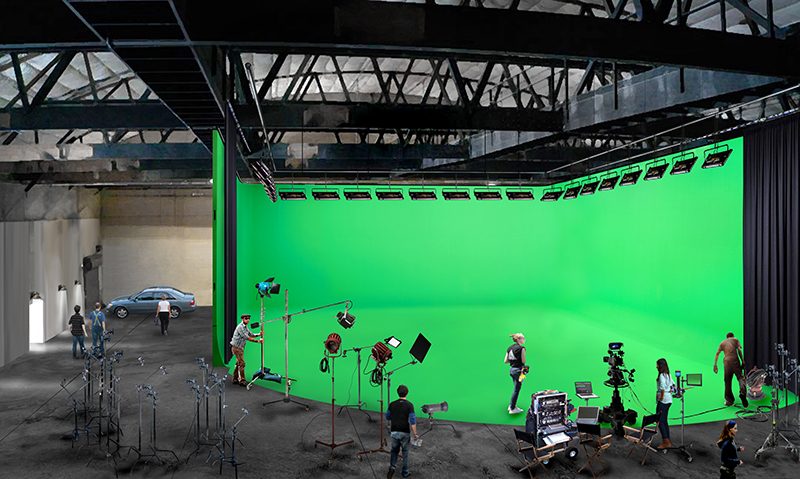
The work begins long before a camera rolls. On a big production, the VFX supervisor joins during pre-production, breaking down the script shot by shot to decide what will be built physically, what will be shot against green screens, and what will be created entirely in the computer. This planning stage determines the budget: every digital creature, crowd, explosion and environment is counted and costed. Directors and supervisors create previsualisation, rough animated versions of complex sequences, so everyone from the cinematographer to the stunt team knows exactly what the final frame should look like.
Indian studios have become adept at planning for scale on budgets far smaller than Hollywood’s. Where a Hollywood blockbuster might spend hundreds of crores on effects, an Indian epic aims for comparable spectacle at a fraction of the cost, which demands ruthless efficiency: reusing digital assets across sequences, planning camera moves that minimise expensive simulation work, and locking the edit early so artists are not redoing finished shots.
Inside the VFX pipeline
A modern VFX pipeline is an assembly line of specialised departments. It starts with matchmove and layout, where artists recreate the camera’s movement in 3D so digital elements sit correctly in live footage. Modelling builds the digital objects, texturing paints their surfaces, and rigging gives creatures and characters skeletons they can be animated with. Animation brings them to life, effects simulation handles fire, water, smoke and destruction, lighting makes everything sit believably in the scene, and compositing blends all the layers into the final image.
- Pre-production: script breakdown, previs, concept art and asset planning with the director.
- Production: on-set supervision, green-screen shoots, HDR lighting reference and data capture.
- Post-production: the department pipeline from matchmove to final compositing, often running for six to twelve months.
Hundreds of artists may touch a single major sequence, working in shifts across studios in Mumbai, Hyderabad, Chennai and Bengaluru. The final images are rendered on render farms, rooms full of servers that can take hours to compute a single frame of a complex shot.
Why India became a VFX powerhouse
India’s rise in visual effects rests on two advantages: a deep pool of technically trained artists and cost structures that let studios deliver Hollywood-quality work at competitive prices. For years, Indian studios primarily serviced international productions, building expertise on global films and series. That outsourcing foundation then fed back into domestic cinema, as artists and supervisors brought world-class experience to Indian epics and action films.
The domestic market itself has transformed. The success of large-scale Indian spectacles proved that audiences would reward ambitious visual storytelling, and producers responded by raising VFX budgets. Streaming platforms added fuel, commissioning fantasy and science-fiction series that need sustained effects work across episodes. Today the industry serves both masters: international projects that pay in dollars and domestic blockbusters that showcase Indian stories at global scale.
The hardest shots to pull off
Not all effects are equal. Digital humans remain the hardest challenge: audiences instantly detect anything false in a face, which is why fully digital characters are used sparingly and de-aged actors are handled with extreme care. Large-scale destruction, water and fire simulations are computationally punishing, sometimes taking days per shot. And the invisible effects, removing wires, duplicating crowds, extending sets, are often the most numerous: a typical big film contains far more VFX shots than the audience ever notices.
Indian studios have earned particular praise for creature work and mythological imagery, drawing on a rich visual tradition to design gods, demons and celestial weapons that feel culturally rooted rather than generically fantastical. That distinctiveness has become a calling card in the global market.
FAQs
How long does VFX take on a big Bollywood film? Typically six to twelve months of post-production, running parallel to editing and sound, with complex sequences started even before the shoot wraps.
Why do some Indian films have visibly weak VFX? Usually a mix of under-budgeting, rushed schedules and late creative changes. Great effects need time and money locked early; when either runs short, quality is the first casualty.
Is AI replacing VFX artists? AI tools are speeding up routine tasks like rotoscoping and cleanup, but creative supervision, artistry and complex simulation still need experienced artists. Studios describe AI as an accelerator, not a replacement.
The next time a sky splits open on screen, remember the hundreds of artists in dark rooms who built it pixel by pixel: Bollywood’s biggest spectacles are, at heart, feats of extraordinary patience.
Source: Animation Magazine

Khabar 24h Editorial Desk — our explainers are prepared by the Khabar 24h editorial team using AI-assisted research tools, and every piece is reviewed by a human editor before publishing. We do not claim original reporting: our work is turning complex topics into simple, accurate summaries. Spotted an error? Write to contact@khabar24h.com — our corrections policy aims for same-day review.
More from this author →