Special Intensive Revision Explained: How the Election Commission Rebuilds Voter Rolls, and Why Bihar Became the Test Case
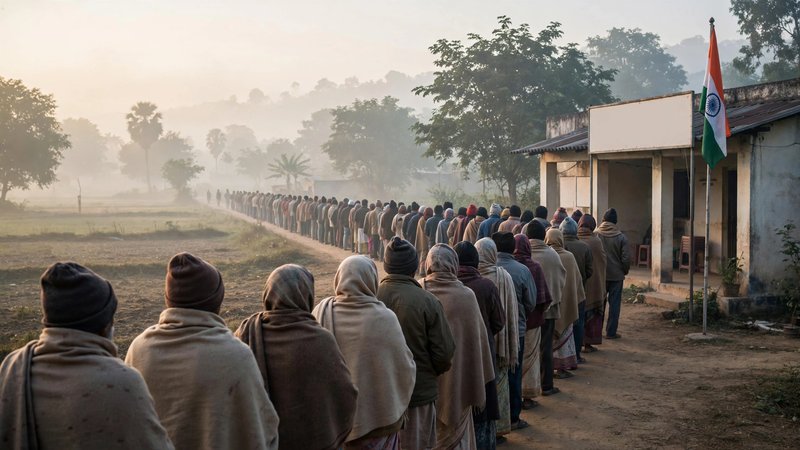
Months before Bihar went to the polls in 2025, the Election Commission of India ordered an exercise that would dominate headlines for over a year: a Special Intensive Revision (SIR) of the state’s electoral rolls. Around 65 lakh names were dropped from the draft rolls. Petitions flooded the Supreme Court, which on May 27, 2026 upheld the exercise as constitutional, ruling that it advanced the constitutional imperative of free and fair elections. Here is what the SIR is, how it works, and why it mattered.
What a Special Intensive Revision actually is
The Election Commission revises voter lists every year through a summary revision, adding new voters and deleting the ineligible. A Special Intensive Revision goes much further: it is a ground-up, door-to-door rebuilding of the roll. Booth-level officers visit every household, issue enumeration forms, and verify each elector’s details from scratch. Bihar’s last such exercise had been conducted in 2003 — a gap of over two decades. Under the 2025-26 SIR, voters whose names did not appear in the 2002 or 2003 rolls were asked to establish a linkage with someone listed in those records. Draft rolls were published, claims and objections invited, and only after verification did the Commission release the final list, which was shared with district election officers and all recognised political parties.
The scale of the operation is enormous: tens of thousands of booth-level officers fan out across the state, and the draft rolls are displayed publicly so that voters and political parties can file claims for inclusion and objections against ineligible entries. Every name deleted from a draft roll must pass through this scrutiny — which is why the Commission insists the exercise strengthens, rather than weakens, the franchise.
The SIR proceeds through a fixed sequence:
- Booth-level officers visit every household and issue enumeration forms
- Electors absent from the 2002/2003 rolls submit documents establishing linkage
- Draft rolls are published for public scrutiny
- Claims for inclusion and objections against ineligible names are heard
- After verification, the final roll is published and shared with political parties
The documents question — and the Aadhaar debate
The Commission prescribed a list of 11 specified documents for establishing eligibility, maintaining that Aadhaar and voter identity cards alone could not be treated as conclusive proof of citizenship. That position triggered the sharpest controversy. The Supreme Court stepped in to direct that Aadhaar be accepted as proof of identity for inclusion in the rolls — while clarifying that it could not establish citizenship. The final May 2026 verdict drew a clear line: the Election Commission may scrutinise eligibility for inclusion in the rolls and refer doubtful cases to the competent authority, but it does not decide citizenship, and the deletion of a name from the voter list does not strip anyone of citizenship.
Why it sparked a political storm
Petitioners, including the NGO Association for Democratic Reforms, argued that the exercise had turned into an “NRC-like process” that shifted the burden of proof onto ordinary voters and risked large-scale disenfranchisement, particularly of migrants and the poor. The Commission countered that it was acting squarely within its powers under Article 326 of the Constitution and the Representation of the People Act, 1950, which oblige it to prepare accurate rolls. A bench led by Chief Justice Surya Kant agreed with the Commission, holding that procedural concerns could not render the entire exercise illegal and that no ineligible person should figure on the voter list.
Why it matters beyond Bihar
The verdict settles, for now, the legal template for deep revisions anywhere in India. Supporters see it as essential hygiene for democracy — dead, duplicate and shifted voters routinely inflate rolls. Critics warn that the scale of deletions, and the documentary burden on voters, make such exercises risky in a country with vast internal migration. Either way, Bihar’s SIR has set the precedent every future revision will be judged against.
Legal scholars also note the ruling’s careful division of labour: electoral rolls are the Commission’s domain, citizenship is the Union government’s. That distinction is likely to be tested again wherever a future SIR is announced.
Source: ABP Live

Khabar 24h Editorial Desk — our explainers are prepared by the Khabar 24h editorial team using AI-assisted research tools, and every piece is reviewed by a human editor before publishing. We do not claim original reporting: our work is turning complex topics into simple, accurate summaries. Spotted an error? Write to contact@khabar24h.com — our corrections policy aims for same-day review.
More from this author →
Leave a Reply