MEGATRON maps the universe’s first stars
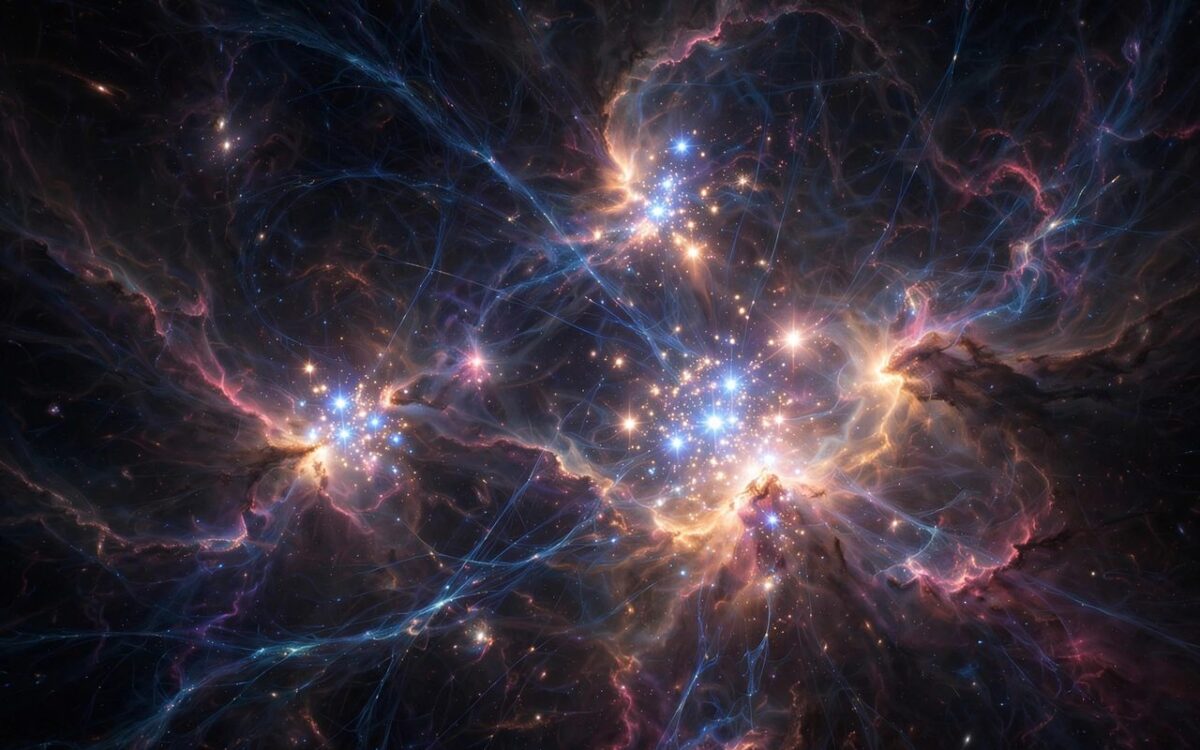
Researchers have used some of the most detailed simulations yet of the early universe to investigate how the first stars and galaxies formed and lit up a previously dark cosmos.
The MEGATRON project, led by the University of Bath with collaborators at the University of Chicago and the Institut d’Astrophysique de Paris, used supercomputers over three years to model a Milky Way-like galaxy’s first several billion years. The four studies are published in the Open Journal of Astrophysics.
The simulations achieve roughly three-parsec resolution and solve the non-equilibrium chemistry and radiative transfer of more than 80 primordial species, molecules and metal ions. They track the birth and supernova deaths of the first generation of stars, known as Population III stars.
Dr Martin Rey of Bath said MEGATRON provides a physical bridge between the James Webb Space Telescope’s view of the infant cosmos and the chemical fossil record preserved in ancient stars around the Milky Way.
The findings show that simplified models may underestimate the influence of stellar radiation and complex chemistry on surrounding gas. The team plans to use MEGATRON to test links between theory and new JWST data.

Khabar 24h Editorial Desk — our explainers are prepared by the Khabar 24h editorial team using AI-assisted research tools, and every piece is reviewed by a human editor before publishing. We do not claim original reporting: our work is turning complex topics into simple, accurate summaries. Spotted an error? Write to contact@khabar24h.com — our corrections policy aims for same-day review.
More from this author →
Leave a Reply