Webb Spots Wreckage of Mars-Scale Planet Collisions
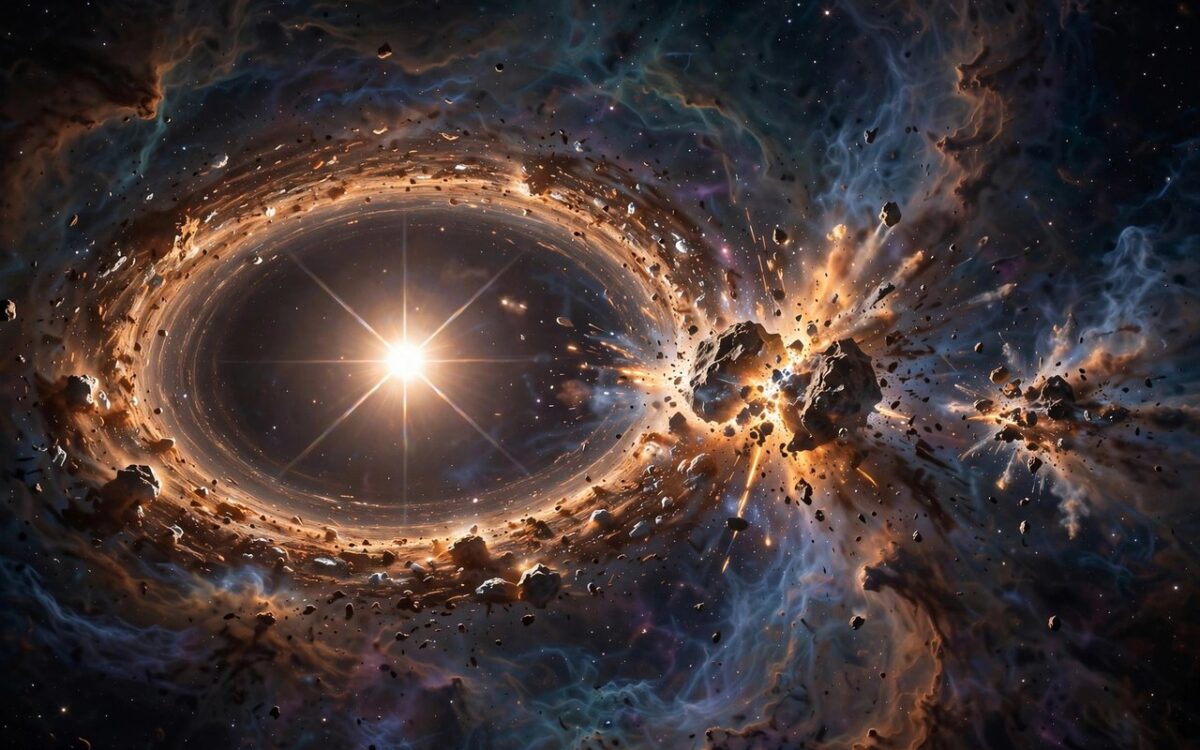
NASA’s James Webb Space Telescope has given astronomers a crash course on planet-shattering collisions. The findings were published this week in The Astrophysical Journal.
A team led by Kate Su of the Space Science Institute in Boulder studied 21 extreme debris disks, combining 16 Webb observations with five archival spectra from the retired Spitzer telescope. These disks hold unusually large amounts of warm dust close to young stars.
The spectra split into two clear classes. About one third were silica-rich, matching high-energy impacts between Mars-sized bodies that vaporised rock. The other two thirds were silica-poor, consistent with lower-energy grazing collisions between Moon-sized bodies.
Silica-rich disks appeared only around stars younger than about 300 million years. This supports models in which the giant-impact phase of planet formation fades early.
Co-author Agnes Kospal of Konkoly Observatory said there is no other way to study these planetary embryos directly because they are too small. The Moon is thought to have formed from a similar giant impact 4.5 billion years ago.

Khabar 24h Editorial Desk — our explainers are prepared by the Khabar 24h editorial team using AI-assisted research tools, and every piece is reviewed by a human editor before publishing. We do not claim original reporting: our work is turning complex topics into simple, accurate summaries. Spotted an error? Write to contact@khabar24h.com — our corrections policy aims for same-day review.
More from this author →
Leave a Reply