World War I Explained: Causes, Course and Consequences
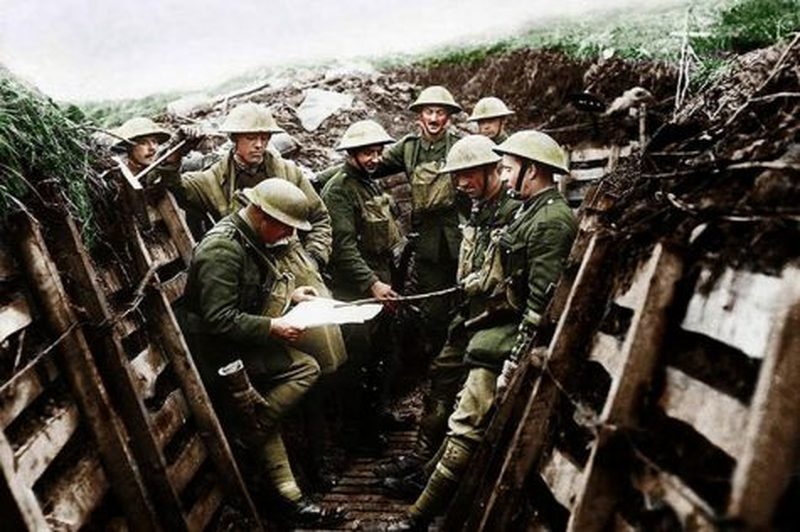
In the summer of 1914, Europe’s great powers, bound by alliances, armed to the teeth and confident in quick victory, stumbled into a war that would kill some 20 million people, topple four empires and shape the entire 20th century. World War I was the original catastrophe, the event that made the modern world: the trenches, the tanks, the collapse of old orders, the drawing of the Middle East’s borders. How did it happen, how was it fought, and why does it still matter?
The causes: a continent primed to explode
Historians cite a combustible mix. Alliance systems, Triple Entente versus Triple Alliance, turned a Balkan crisis into continental war. Militarism and arms races, especially the Anglo-German naval rivalry, normalised the expectation of conflict. Imperial rivalries festered over colonies. Nationalism, especially in the Balkans, where Serbia challenged Austria-Hungary, provided the spark. The assassination of Archduke Franz Ferdinand in Sarajevo on 28 June 1914 lit the fuse; within weeks, mobilisation timetables, rigid and nearly automatic, dragged every power in. Nobody planned a world war; everybody’s plans produced one.
The Western Front: the trenches
The war’s defining image is the Western Front: 400 miles of trenches from the Channel to Switzerland, where machine guns, barbed wire and artillery made attack suicidal and defence impregnable. Battles like the Somme (1916), where Britain suffered 60,000 casualties on the first day, and Verdun, where France and Germany bled each other for ten months, achieved nothing at staggering cost. New weapons, poison gas, tanks, aircraft, submarines, added horror without breaking the stalemate. Generals kept ordering offensives; soldiers kept dying in mud.
The wider war
The war was genuinely global. The Eastern Front saw vast, fluid battles and Russia’s eventual collapse into revolution. The Ottoman Empire’s entry spread war to the Middle East, Gallipoli, Mesopotamia, Palestine, and enabled the Armenian genocide. Japan seized German Pacific colonies; African and Asian troops fought and died for European empires; the war at sea, U-boats versus convoys, brought America in after 1917. Civilians suffered blockades, famines and the influenza pandemic that followed, killing tens of millions more.
1918: collapse and armistice
Germany’s 1918 spring offensives gambled everything and failed; with American troops arriving and the blockade starving Germany, its allies collapsed, Bulgaria, the Ottomans, Austria-Hungary, and revolution toppled the Kaiser. The armistice of 11 November 1918 ended the fighting, but the peace was made at Versailles in 1919: Germany was blamed, disarmed, stripped of territory and colonies, and saddled with crushing reparations. The Austro-Hungarian and Ottoman empires were dismantled, new nations born, and the League of Nations founded to keep the peace.
The consequences: the world remade
The war’s consequences cascade through the century. Four empires fell: German, Austro-Hungarian, Ottoman, Russian. The Middle East’s map was drawn by British and French mandates. The Russian Revolution created the Soviet Union. America’s rise as a global power began. Women’s suffrage advanced as women’s war work proved undeniable. And the punitive peace, combined with economic chaos, helped create the conditions for fascism and a second, worse war. The war to end war seeded the next one.
Why WWI still matters
The Great War invented the modern world: total war, propaganda, the surveillance state, the Middle East’s borders, the Soviet Union, even the poppy as remembrance. Its lessons, about alliance traps, the cult of the offensive, and the danger of sleepwalking into catastrophe, are cited in every modern crisis. A century on, the trenches are museums, but the map the war drew is still the map we live on.
FAQs
What started World War I? The assassination of Archduke Franz Ferdinand in June 1914 triggered a crisis that alliance systems and mobilisation plans turned into continental war.
How many people died? Around 10 million military and 10 million civilian deaths, plus tens of millions more from the ensuing influenza pandemic.
What was the Treaty of Versailles? The 1919 peace settlement that blamed Germany, imposed reparations and territorial losses, and redrew the map of Europe and the Middle East.
World War I was the hinge of modern history, the moment the old world died violently and the new one was born in blood and treaties. Its centenary passed; its consequences have not.
Source: Imperial War Museums

Khabar 24h Editorial Desk — our explainers are prepared by the Khabar 24h editorial team using AI-assisted research tools, and every piece is reviewed by a human editor before publishing. We do not claim original reporting: our work is turning complex topics into simple, accurate summaries. Spotted an error? Write to contact@khabar24h.com — our corrections policy aims for same-day review.
More from this author →