The Fall of the Soviet Union Explained: How a Superpower Collapsed
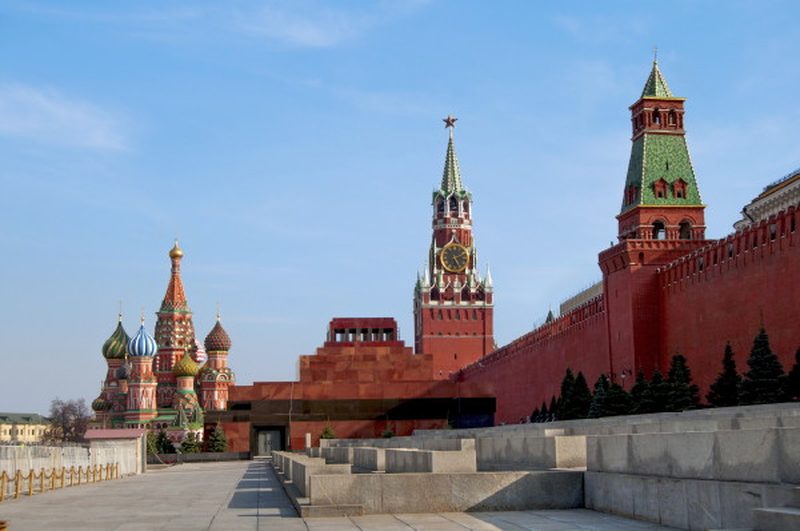
On Christmas Day 1991, the Soviet flag came down from the Kremlin for the last time, and the Union of Soviet Socialist Republics, a nuclear-armed superpower spanning eleven time zones, ceased to exist. Its collapse ended the Cold War, freed Eastern Europe, and created fifteen new nations. That it happened largely peacefully astonished the world. How did one of history’s mightiest states simply dissolve?
The rot: why the USSR was failing
By the 1980s the Soviet system was exhausted. Central planning produced stagnation: the economy grew barely, technology lagged the West by a generation, and consumer goods were shoddy and scarce. The war in Afghanistan bled resources and morale; the arms race bled more. Chernobyl exposed institutional lying. Nationalism festered in the Baltic states, Ukraine, the Caucasus and Central Asia. The system worked after a fashion, full employment, free healthcare, but it could neither innovate nor satisfy, and its legitimacy was hollow.
Gorbachev: the reformer who broke the machine
Mikhail Gorbachev, who took power in 1985, tried to save socialism through glasnost (openness) and perestroika (restructuring). Instead he destroyed it: free speech exposed the system’s crimes and failures, elections empowered nationalists, and economic half-reforms created chaos without markets. Crucially, Gorbachev refused to use mass violence to hold the empire together, a moral choice that made peaceful collapse possible. He is reviled in Russia as the man who lost the empire and revered in the West as the man who ended the Cold War. Both are true.
1989-1991: the empire unravels
The end came in a cascade. Eastern Europe’s communist regimes fell in 1989 as Moscow declined to intervene. The Baltic states declared independence; Boris Yeltsin, elected Russia’s president, championed sovereignty against the Soviet centre. In August 1991, hardliners attempted a coup against Gorbachev; Yeltsin’s defiance atop a tank broke it, but fatally wounded the Union’s authority. In December, the leaders of Russia, Ukraine and Belarus declared the USSR dissolved. Gorbachev resigned; the red flag fell. A superpower ended with paperwork.
Why it collapsed so peacefully
Empires usually fall in blood; the USSR mostly didn’t. Gorbachev’s refusal to order mass repression was decisive, as was the military’s unwillingness to fire on its own people. The Soviet elite, nomenklatura, calculated they could do better as capitalists than as apparatchiks, and many became the new oligarchs. Nationalism provided ready-made successor states. And sheer exhaustion: after 70 years, few were willing to kill for the system. Yugoslavia, which lacked these restraints, showed the alternative in the decade’s bloodiest European wars.
The aftermath: triumph and trauma
The 1990s were euphoric in the West and catastrophic in Russia: economic collapse, hyperinflation, plunging life expectancy, oligarch plunder, and NATO’s expansion eastward, which Russians experienced as humiliation. The Baltic states and Eastern Europe thrived in the EU; Central Asia got dictatorships; Ukraine’s path twisted toward today’s war. The Soviet collapse’s greatest paradox: it liberated millions and traumatised millions, sometimes the same people.
The Soviet Union’s long shadow
The USSR’s ghost haunts the present: Putin’s Russia explicitly seeks to reverse its verdict, calling the collapse the century’s greatest geopolitical catastrophe, and the war in Ukraine is its violent aftershock. The Soviet experience discredited central planning globally while its achievements, industrialisation, education, victory in WWII, complicate the epitaph. Fifteen successor states, frozen conflicts, and a revanchist Russia: the Soviet Union died in 1991, but its funeral is still underway.
What if it hadn’t happened?
Counterfactuals fascinate: had hardliners used force in 1991, or had Gorbachev never risen, the USSR might have decayed like a larger North Korea, or exploded like Yugoslavia. The peaceful dissolution was contingent, not inevitable, resting on individuals’ choices under pressure. History’s hinge moments turn on character as much as structure, and 1991 turned on a reformer who would not shoot and a rival who would stand on a tank.
FAQs
When did the Soviet Union collapse? It formally dissolved in December 1991, after the failed August coup destroyed central authority.
Why did it fall? Economic stagnation, Gorbachev’s destabilising reforms, rising nationalism, and the elite’s loss of faith, all without the will to use mass force.
How many countries emerged? Fifteen independent states, from Estonia to Tajikistan, plus the end of Soviet control over Eastern Europe.
The Soviet Union’s fall was the 20th century’s strangest miracle: an empire that voted itself out of existence. Its lessons, about reform, nationalism and the fragility of great powers, are more relevant now than ever.
Compiled by the Khabar 24h Editorial Desk from publicly available sources.

Khabar 24h Editorial Desk — our explainers are prepared by the Khabar 24h editorial team using AI-assisted research tools, and every piece is reviewed by a human editor before publishing. We do not claim original reporting: our work is turning complex topics into simple, accurate summaries. Spotted an error? Write to contact@khabar24h.com — our corrections policy aims for same-day review.
More from this author →