How Cricket Umpires Make Decisions: LBW Rules, DRS and the Third Umpire Explained
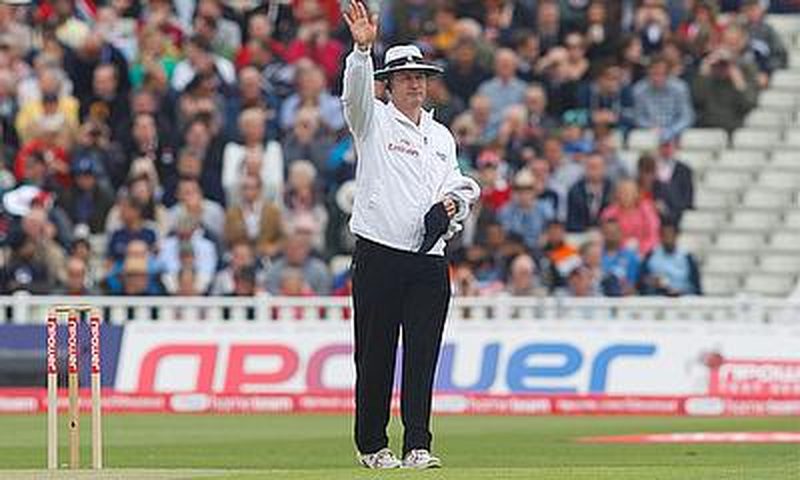
Cricket umpiring is decision-making under the most unforgiving spotlight in sport: every call is televised, replayed, analysed and argued about by millions. The on-field umpires must judge lbws in real time, detect edges invisible to the naked eye, and manage the conduct of 22 fiercely competitive professionals, all while the Decision Review System and the third umpire watch over their shoulders. This guide explains how umpires make their decisions, the lbw law in detail, how DRS works, and what the third umpire actually does.
How on-field umpires make decisions
An umpire’s core skill is positioning and stillness: getting into the right place, keeping the head still at the moment of delivery, and watching the ball all the way. For lbw appeals, the umpire must answer three questions in a fraction of a second: where did the ball pitch, where did it hit the batter, and would it have gone on to hit the stumps. They judge this from behind the stumps at the bowler’s end, reading the angle, the swing and the batter’s movement. For caught-behind and edges, they listen as much as watch, the sound of ball on bat carrying to the umpire in a way cameras sometimes miss. Concentration is the hidden superpower: umpires must be fully switched on for every ball of a six-hour day, because the one lapse will inevitably coincide with the match-defining moment. They also manage the game’s flow, warning bowlers for dangerous bowling, monitoring the ball’s condition, and keeping play moving within over-rate requirements.
LBW rules explained
The leg-before-wicket law is cricket’s most complex, and worth understanding properly. A batter can be given out lbw if, in the umpire’s judgement, the ball would have hit the stumps had their body not intervened, subject to three key conditions. First, the ball must not have pitched outside leg stump. Second, the point of impact must be in line with the stumps, unless the batter was not offering a shot, in which case impact outside off stump can still be out. Third, the ball must not have hit the bat first. The law also requires the umpire to project the ball’s path after impact, accounting for swing, seam and spin. This is why lbw decisions against spin, where the ball is turning, and against swing, where it is curving late, are so difficult: the umpire must imagine a trajectory that never happened. Umpire’s call, the DRS concept that preserves the on-field decision when technology shows a marginal verdict, exists precisely because this projection involves irreducible uncertainty.
DRS: how the review system works
The Decision Review System allows players to challenge on-field decisions using ball-tracking, UltraEdge and thermal imaging. Each team gets a limited number of reviews per innings, usually two in Tests, which are retained when a review succeeds. The process is theatre as much as technology: the captain signals within 15 seconds, the third umpire examines the replays, and the big screen shows ball-tracking’s verdict on pitching, impact and hitting the stumps. Reviews have transformed strategy, with teams now employing analysts to advise on when to challenge, and wicketkeepers, who hear edges best, becoming the de facto review captains. The system is not infallible: ball-tracking is a prediction, not a recording, which is why umpire’s call preserves marginal on-field decisions. But DRS has demonstrably reduced the howler, the obviously wrong decision, and umpires’ accuracy figures have risen markedly in the DRS era.
The third umpire and match officials
The third umpire, stationed off the field with the full television feed, handles run-outs, stumpings, boundary checks, no-ball verification and DRS reviews. Every ball is now checked for front-foot no-balls by the television umpire, a change that removed one of the on-field umpire’s hardest tasks and corrected a steady stream of missed calls. Above them sits the match referee, a former player or official who adjudicates conduct, over rates and playing-condition issues, handing out fines and suspensions. Together, the team of officials forms a layered system: human judgement first, technology as the safety net, and the referee as the guardian of the game’s standards. It is a long way from the days of a single umpire’s unchallengeable word, and the game is fairer for it.
- LBW requires: ball pitched in line or outside off, impact in line (unless no shot offered), and hitting the stumps.
- DRS uses ball-tracking for lbw, UltraEdge for edges, and thermal imaging as backup.
- Umpire’s call preserves the on-field decision when technology shows a marginal result.
- The third umpire checks every delivery for front-foot no-balls in international cricket.
FAQs
What is umpire’s call? When ball-tracking shows the ball only marginally hitting or missing the stumps, the on-field decision stands, recognising the limits of predictive technology.
How many reviews does each team get? Two per innings in Tests, with successful reviews retained; limited-overs formats allow fewer.
Can umpires change their own decision? Yes, umpires may consult and reverse a decision before the next ball, though it is rare and usually follows player input or clear error.
Umpiring will never be perfect, because cricket’s laws ask humans to judge the unjudgeable in real time. But the partnership of skilled officials and honest technology has never made the game fairer.
Compiled by the Khabar 24h Editorial Desk from publicly available sources.

Khabar 24h Editorial Desk — our explainers are prepared by the Khabar 24h editorial team using AI-assisted research tools, and every piece is reviewed by a human editor before publishing. We do not claim original reporting: our work is turning complex topics into simple, accurate summaries. Spotted an error? Write to contact@khabar24h.com — our corrections policy aims for same-day review.
More from this author →