The Cold War Explained: How Two Superpowers Divided the World
For nearly half a century, the United States and the Soviet Union confronted each other across a divided world, armed with tens of thousands of nuclear weapons, competing in every arena from space to sport to the jungles of proxy wars. The Cold War never turned hot between its principals, but it killed millions in its peripheries and shaped the lives of billions. How did this strange, terrifying standoff begin, how was it fought, and what did it leave behind?
Origins: from allies to enemies
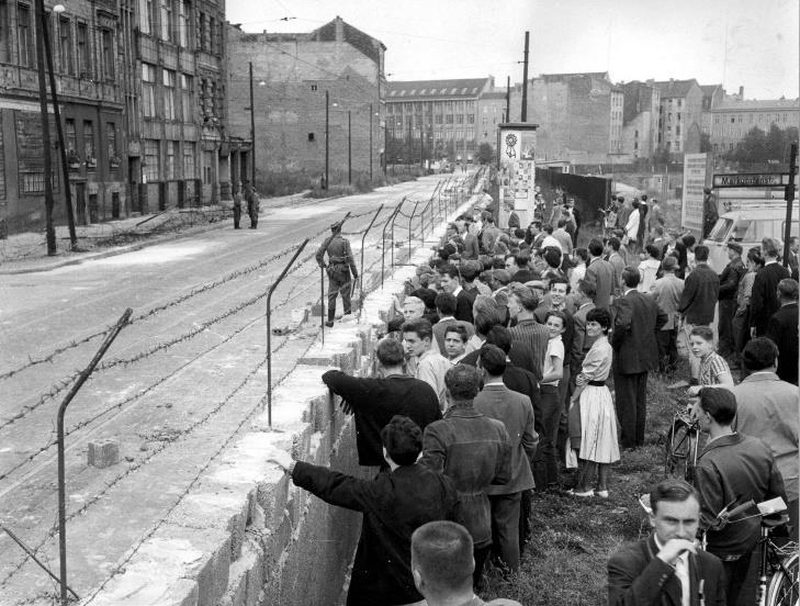
The Cold War grew from World War II’s ashes. The US and USSR had cooperated against Hitler while distrusting each other profoundly; once victory removed the common enemy, rivalry erupted over Europe’s future. The Soviets imposed communist regimes across Eastern Europe; America responded with the Truman Doctrine, the Marshall Plan and NATO. The 1949 Soviet atomic bomb and China’s communist revolution globalised the contest. By 1950 the world had two camps, two ideologies, and a German border, soon a wall, between them.
The nuclear terror
Nuclear weapons defined the Cold War’s strangeness: both sides could annihilate each other, so neither dared fight directly. Deterrence, mutually assured destruction, kept an uneasy peace while arsenals swelled to insane numbers, over 60,000 warheads at the peak. The logic produced paradoxes: building more weapons to feel safer, and crises, above all Cuba in 1962, when the world came closest to nuclear war. Arms control treaties later capped the madness, but the weapons, and the risk, never went away.
Proxy wars: the Cold War’s killing fields
Unable to fight each other, the superpowers fought through others. Korea (1950-53) killed millions and froze a peninsula’s division. Vietnam became America’s trauma and a communist victory. Afghanistan bled the Soviets in the 1980s, with US-backed mujahideen, a war whose veterans would later turn on their patrons. Latin America, Africa and the Middle East suffered coups, civil wars and dictatorships sponsored by one side or the other. The Cold War’s body count lies mostly in the developing world.
The contest for minds: space, culture, sport
The rivalry was total. The Space Race, Sputnik’s shock in 1957, Gagarin, then Apollo 11’s American triumph in 1969, was Cold War by other means. The Olympics became medal-table warfare. Propaganda machines, Radio Free Europe, Soviet cultural diplomacy, CIA-funded magazines, battled for global opinion. Science, education and living standards were all weapons: each side claimed its system delivered the better life. Even chess, Fischer versus Spassky in 1972, became a front.
Thaw, detente and the end
The Cold War was not uniformly frozen: detente in the 1970s brought arms treaties and Nixon’s China opening, before the Soviet invasion of Afghanistan refroze relations. The end came with surprising speed: Gorbachev’s reforms, glasnost and perestroika, unleashed forces he could not control; Eastern Europe’s revolutions in 1989, the Berlin Wall’s fall, and the USSR’s dissolution in 1991 ended it. The West declared victory and history’s end, prematurely, as it turned out.
The Cold War’s long shadow
The Cold War’s borders and wounds persist: Korea’s division, NATO’s expansion, Russia’s grievances, the Middle East’s proxy patterns, nuclear arsenals still on alert. Its institutions, NATO, the UN Security Council, the IMF, still order the world. And its habits, spheres of influence, ideological rivalry, proxy conflict, are back in fashion as US-China competition evokes a new cold war. The first one ended; its playbook did not.
The Cold War’s cultural front
Beyond missiles, the superpowers fought for hearts and minds: jazz tours and ballet exchanges, Olympic medal tables, the Space Race’s televised triumphs. Each side showcased its system as the future, America with supermarkets and rock and roll, the Soviets with Sputnik and free education. Culture was not decoration but weaponry, and the contest shaped global tastes that outlived the rivalry itself.
FAQs
Why was it called the Cold War? Because the US and USSR never fought each other directly; their rivalry played out through proxies, espionage, and economic and ideological competition.
When did the Cold War end? Symbolically with the Berlin Wall’s fall in 1989; formally with the Soviet Union’s dissolution in December 1991.
How close did we come to nuclear war? Terrifyingly close during the 1962 Cuban Missile Crisis, and possibly closer than known during incidents like 1983’s false alarms.
The Cold War was humanity’s strangest conflict: a war fought everywhere except between its warriors, under the shadow of weapons that made victory meaningless. Its end felt like liberation; its return, in new forms, feels like a warning.
Compiled by the Khabar 24h Editorial Desk from publicly available sources.

Khabar 24h Editorial Desk — our explainers are prepared by the Khabar 24h editorial team using AI-assisted research tools, and every piece is reviewed by a human editor before publishing. We do not claim original reporting: our work is turning complex topics into simple, accurate summaries. Spotted an error? Write to contact@khabar24h.com — our corrections policy aims for same-day review.
More from this author →