The Arab League Explained: 22 Nations, One Fractious Forum
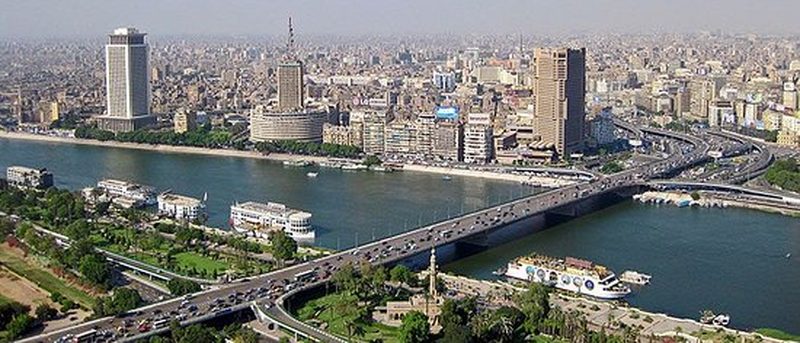
The Arab League brings together 22 nations from Mauritania to Oman, speaking one language and sharing one forum, yet it is famous for agreeing on almost nothing. Founded in 1945, it has presided over defeats, divisions and dictatorships, suspending members, boycotting Israel and watching crises from Libya to Yemen burn. Yet it endures, and occasionally matters. This explainer unpacks the world’s most fractious regional organisation.
How it was founded
The League was created in Cairo in 1945 by seven states, including Egypt, Saudi Arabia and Iraq, to coordinate Arab policy as colonialism retreated. Its charter promised cooperation and forbade members from using force against each other, a promise broken repeatedly. Early decades were dominated by the Arab-Israeli conflict: the League organised boycotts of Israel, rejected partition, and backed the Palestinians. Egypt’s 1979 peace with Israel got it suspended for a decade, a sign of how the Palestinian cause defined, and disciplined, the organisation.
A record of division
The League’s history is a catalogue of splits. It stood by during Iraq’s 1990 invasion of Kuwait, with members on both sides. It watched Syria’s civil war from the sidelines, suspending Damascus in 2011 only to readmit it in 2023. It has been impotent on Yemen, Libya and Sudan, where Arab states back rival factions. The 2017-2021 Qatar blockade saw members besiege a fellow member. Summit communiques are masterpieces of vagueness, and decisions require unanimity on the big questions, guaranteeing paralysis. The League’s defenders say it was never meant to be a government, only a forum; its critics say it is a forum that cannot even talk honestly.
Why it survives
Three things keep the League alive. First, symbolism: Arab unity remains a potent ideal, and no leader wants to be the one who killed its institution. Second, utility: the League provides diplomatic cover, election monitors, and a venue for back-channel talks. Third, money: Gulf states fund it, and its agencies do real work on education, culture and development. The Abraham Accords, normalising Israeli ties with the UAE, Bahrain and Morocco, bypassed the League entirely, showing how little members need it for big moves, yet none have left.
- 22 member states across the Middle East and North Africa.
- Headquartered in Cairo; founded March 1945, before the United Nations.
- Egypt was suspended 1979-1989 over its peace treaty with Israel.
- Syria was suspended in 2011 and readmitted in 2023.
The Palestine question
Palestine is the League’s founding cause and its enduring embarrassment. The 2002 Arab Peace Initiative offered Israel full normalisation for a Palestinian state, a landmark never taken up. As members normalise with Israel bilaterally, the collective position erodes, leaving the Palestinians with rhetoric instead of leverage. The Gaza war starkly exposed the gap: League summits condemned Israel and demanded ceasefires, but took no material action, while individual states pursued their own diplomacy. For Palestinians, the League is a reminder that Arab solidarity is proclaimed annually and practised rarely.
Can the League be fixed?
Reform proposals surface regularly: majority voting, a stronger secretary-general, real peacekeeping capacity. They go nowhere, because members prefer a weak League they can ignore to a strong one that might constrain them. The organisation’s future likely mirrors its past: surviving as a symbol, convening summits, issuing declarations, and mattering only when its most powerful members, Saudi Arabia, Egypt, the UAE, happen to agree. In a region of strongmen and rivalries, that may be all the unity available.
FAQs
What is the Arab League? A 22-member regional organisation founded in 1945 to coordinate Arab states politically, economically and culturally.
Why is it considered ineffective? Unanimity rules, deep rivalries among members, and no enforcement powers mean it rarely acts decisively on crises.
Does it include all Arab countries? All 22 Arab states are members; Syria’s membership was suspended 2011-2023 over the civil war.
The Arab League endures as the monument to an idea, Arab unity, that its members honour in speech and abandon in practice. As long as the idea matters, the League will survive; as long as members disagree, it will disappoint.
The League’s future likely mirrors its past: summits, communiques and symbolism, mattering only when Riyadh, Cairo and Abu Dhabi align. Reform proposals, majority voting, a stronger secretary-general, surface regularly and die quietly, because members prefer a weak League they can ignore. In a region of strongmen, that may be all the unity available, and the League will endure as its monument.
Compiled by the Khabar 24h Editorial Desk from publicly available sources.

Khabar 24h Editorial Desk — our explainers are prepared by the Khabar 24h editorial team using AI-assisted research tools, and every piece is reviewed by a human editor before publishing. We do not claim original reporting: our work is turning complex topics into simple, accurate summaries. Spotted an error? Write to contact@khabar24h.com — our corrections policy aims for same-day review.
More from this author →