Sea Level Rise Explained: Which Coastal Cities Face the Biggest Threat
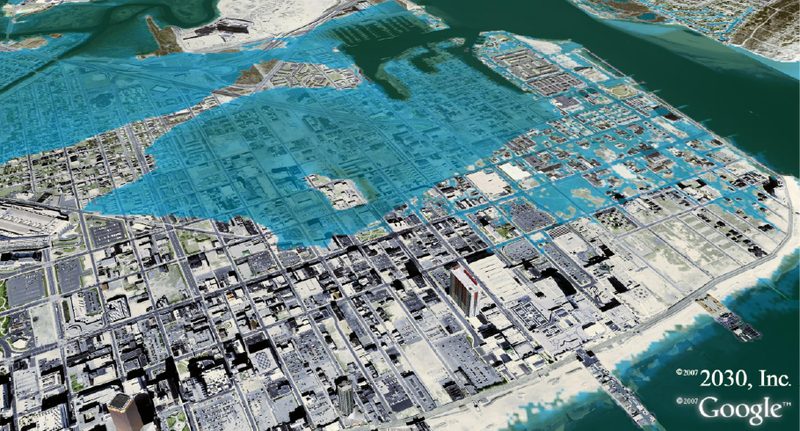
The oceans are rising, and accelerating: satellite measurements show seas climbing faster each decade as ice sheets melt and warming water expands. By century’s end, seas could be half a metre to over a metre higher, enough to redraw coastlines and drown the world’s great coastal cities. From Miami to Mumbai, Jakarta to Lagos, billions of people and trillions in assets sit in harm’s way. This explainer shows which cities face the biggest threat and what can be done.
Why seas are rising
Two forces drive sea-level rise. Thermal expansion: warmer water takes up more space, accounting for about half the rise so far. And melting land ice: Greenland and Antarctica shedding hundreds of billions of tonnes yearly, plus mountain glaciers. The rate has more than doubled since the 1990s, now exceeding 4 millimetres a year. The crucial uncertainty is the ice sheets: if Antarctic glaciers collapse rapidly, seas could rise far faster than models project. Past a point, the rise becomes unstoppable for centuries, however fast emissions fall.
Which cities are most threatened
The most vulnerable combine low elevation, sinking land, huge populations and weak defences. Jakarta is sinking up to 25 centimetres a year in places, prompting Indonesia to build a new capital. Miami faces sunny-day flooding as seawater bubbles through porous limestone no wall can seal. Mumbai, Dhaka, Lagos, Bangkok, Shanghai and Alexandria all crowd millions into zones a metre of rise would devastate. Small island states face existential threat: the Maldives, Tuvalu and Kiribati could become uninhabitable. Rich cities can engineer defences; poor ones cannot, making sea-level rise a justice issue as much as a physical one.
What cities are doing
Responses fall into three strategies: protect, accommodate, retreat. The Netherlands leads protection with storm-surge barriers and floating homes. Venice’s MOSE barriers now hold back acqua alta. Miami raises roads and pumps; Jakarta builds a giant sea wall. Accommodation means living with water: amphibious architecture, floodable parks, elevated buildings. Retreat, the hardest, means moving people: Indonesia’s capital move is the largest example, while buyout programmes inch forward in the US. Each strategy costs billions; none is permanent against multi-metre rise.
- Seas are rising at over 4mm a year, more than twice the 1990s rate.
- About 40% of humanity lives within 100km of a coast.
- Jakarta is sinking up to 25cm a year in the worst-affected areas.
- Under high-emissions scenarios, seas could rise over a metre by 2100.
The economic stakes
Coastal assets at risk run into tens of trillions of dollars: ports, airports, financial districts, refineries. Insurance markets are already retreating from flood zones, from Florida to France, a market signal of uninsurable futures. Fisheries, tourism and freshwater supplies face saltwater intrusion. The costs of inaction dwarf adaptation spending, but adaptation requires decades of planning and money that developing nations lack. Climate finance for coastal defence is a fraction of what is needed.
Can the rise be stopped?
Some rise is now inevitable: the oceans respond slowly, and past emissions guarantee decades of increase. But the difference between half a metre and two metres is the difference between manageable and catastrophic, and that depends on emissions cuts this decade. Every fraction of warming avoided saves coastlines. For cities, the task is twofold: cut global emissions while rebuilding for the water that is already coming. The sea will not negotiate; it will simply arrive.
FAQs
How fast are seas rising? Over 4 millimetres a year currently, accelerating; the rate has more than doubled since the 1990s.
Which cities are most at risk? Low-lying megacities like Jakarta, Mumbai, Dhaka, Lagos, Miami, Bangkok and Shanghai, plus small island nations.
Can sea walls solve it? They buy time for moderate rise, but no wall holds back multi-metre increases; long-term safety requires emissions cuts.
Sea-level rise is climate change made visible: slow, certain and merciless. The cities that thrive in the coming century will be those that respected the water early; those that did not will learn what the ocean has always known, that coastlines are temporary.
The century’s coastal story will be written in concrete and retreat lines. Cities that plan early, like Rotterdam, will adapt at manageable cost; those that deny the water will pay catastrophically later. The ocean does not negotiate, but it does give notice, decades of it. Whether humanity uses that notice wisely is the open question.
Compiled by the Khabar 24h Editorial Desk from publicly available sources.

Khabar 24h Editorial Desk — our explainers are prepared by the Khabar 24h editorial team using AI-assisted research tools, and every piece is reviewed by a human editor before publishing. We do not claim original reporting: our work is turning complex topics into simple, accurate summaries. Spotted an error? Write to contact@khabar24h.com — our corrections policy aims for same-day review.
More from this author →