Olympic Village Explained: How Athletes Live During the Games
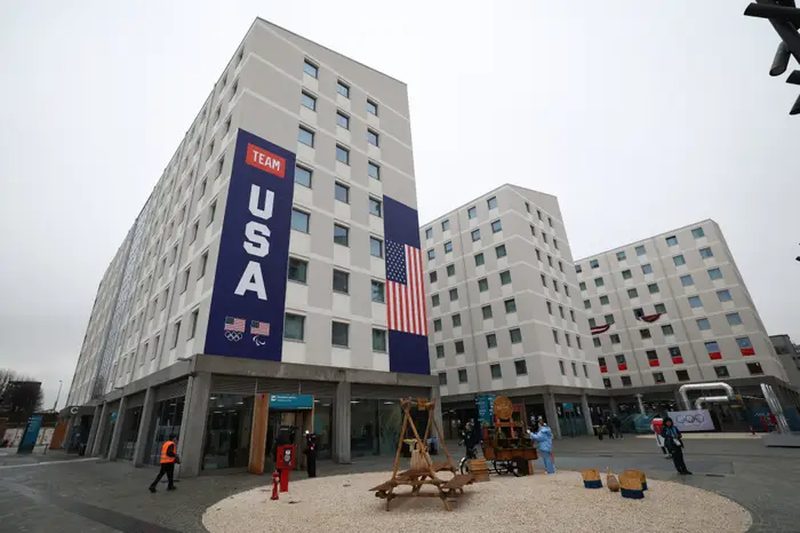
For two weeks every four years, the Olympic Village becomes the most exclusive neighbourhood on earth: home to over 10,000 of the world’s best athletes, their coaches and officials. Part high-security compound, part festival, part small city, the Village shapes the Olympic experience as much as any stadium. This is how it works: the housing, the food, the rules and the legendary atmosphere.
What is the Olympic Village?
The Village is the residential complex where athletes and team officials live during the Games. The concept dates to Los Angeles 1932, the first Games to house athletes together, and it has been central to the Olympic experience ever since. Modern Villages are purpose-built neighbourhoods: Paris 2024 constructed one across Saint-Denis, Saint-Ouen and L’Île-Saint-Denis, designed to become housing after the Games. The Village contains residential towers, a massive dining hall, training facilities, medical centres, recreation zones and transport hubs. Accreditation gates control every entrance, and inside, athletes from over 200 nations live side by side in a unique experiment in global coexistence.
Where do athletes sleep?
Athletes sleep in apartments shared with teammates, usually two to a room, with teams allocated blocks by delegation size. The beds became famous at Tokyo 2020: sturdy cardboard frames, designed for sustainability, sparked viral claims about their purpose that organisers cheerfully debunked. Rooms are functional rather than luxurious: single beds, basic furniture, blackout curtains for athletes competing at odd hours. Larger delegations bring their own touches, from coffee machines to physiotherapy tables. After the Games, Village apartments are typically converted to residential housing, a legacy requirement that shapes their design. For most athletes, the Village bedroom is simply a place to sleep between the two most important weeks of their lives.
How does food work in the Village?
The main dining hall is the Village’s beating heart: a cavernous space serving tens of thousands of meals daily, open 24 hours to accommodate every competition schedule and time zone. Menus are engineered for performance: high-carbohydrate stations, lean proteins, vegetarian and halal options, and cuisines from around the world so a Japanese gymnast and a Kenyan marathoner can both eat familiar food. Nutritionists from each delegation advise their athletes, and some teams bring their own chefs for key competitors. The dining hall is also the Village’s great social mixer, where athletes trade stories across sports and nations. Legends of the dining hall, from the famous McDonald’s queues of past Games to the endless chocolate muffins of Paris, are part of Olympic folklore.
What rules govern Village life?
Village life balances freedom with focus. Alcohol policies vary by delegation, with many teams imposing dry rules during competition. Security is absolute: accreditation checks, bag scans and restricted zones, with media kept firmly outside the residential areas. Medical and anti-doping facilities operate around the clock, and doping control officers can summon athletes for testing at any hour. Teams set their own curfews and discipline codes. The IOC enforces rules on political expression and commercial branding within the Village. And there is one famous tradition the organisers supply for: health clinics distribute hundreds of thousands of condoms, a practice dating to Seoul 1988 that acknowledges the Village’s legendary social atmosphere.
What is Village life actually like?
Ask athletes and they describe a surreal, wonderful bubble. Mornings begin with training; afternoons bring competitions; evenings bring the dining hall’s carnival of languages. Pin trading, the exchange of national Olympic pins, is the Village’s unofficial currency and icebreaker. Athletes queue for free haircuts, play video games in recreation lounges, and attend the Village’s own entertainment programme. Friendships form across impossible divides: a weightlifter from one nation bonding with a fencer from another. The atmosphere shifts as competition ends: early in the Games the Village hums with tension, while after finals it becomes a celebration. Many athletes call it the best fortnight of their lives.
What happens to the Village after the Games?
Legacy planning is now mandatory. Paris 2024 designed its Village to become 2,800 homes, including social housing, plus offices and shops, in a previously underdeveloped area. London 2012’s Village became the East Village residential neighbourhood. This conversion requirement disciplines costs and design: buildings must work as both athlete housing and future homes. Some Villages have struggled, Sydney’s became a suburb, Athens’ faced issues, but the principle is established: the Olympic Village should leave a neighbourhood, not a white elephant. Sustainability features, from geothermal heating to recycled materials, are now standard.
FAQs
How many athletes live in the Olympic Village? Around 10,000 athletes plus several thousand coaches and officials, depending on the Games.
Are the cardboard beds real? Yes. Tokyo 2020 used recyclable cardboard bed frames, which were sturdy enough for athletes and part of the Games’ sustainability programme.
Can the public visit the Olympic Village? No. Access is restricted to accredited athletes, officials and staff; media access is tightly controlled.
The Olympic Village is the Games’ hidden city: part fortress, part festival, entirely unforgettable. Medals are won in stadiums, but the Olympic spirit is lived in the Village.
Source: Paris 2024 organising committee village guide

Khabar 24h Editorial Desk — our explainers are prepared by the Khabar 24h editorial team using AI-assisted research tools, and every piece is reviewed by a human editor before publishing. We do not claim original reporting: our work is turning complex topics into simple, accurate summaries. Spotted an error? Write to contact@khabar24h.com — our corrections policy aims for same-day review.
More from this author →