Judaism Explained: History, Beliefs and Traditions of the Jewish People
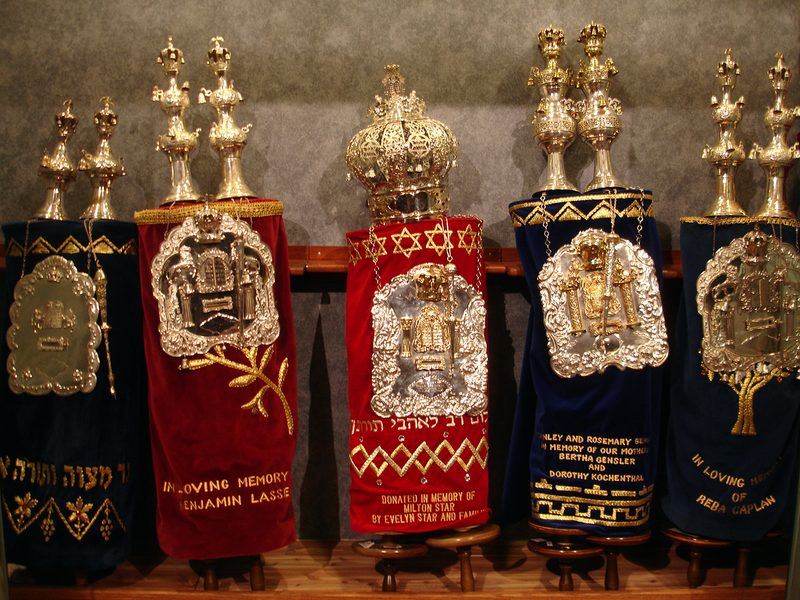
Judaism is among the oldest continuously practised religions on Earth, with roots stretching back some 3,500 years, and one of the smallest major faiths, with around 15 million Jews worldwide. Yet its influence is wildly disproportionate: it gave the world monotheism’s founding texts, shaped both Christianity and Islam, and produced a culture of learning, law and resilience that survived exile, persecution and genocide. This explainer covers what Jews believe, how they live, and the extraordinary history behind it.
The covenant at the heart of Judaism
Judaism centres on a covenant, a binding agreement between God and the Jewish people. In the biblical narrative, God chose Abraham, freed the Israelites from Egyptian slavery, and gave Moses the Torah at Mount Sinai: a law for living, not just believing. The core declaration is the Shema: Hear, O Israel, the Lord our God, the Lord is One. Judaism is thus a religion of practice as much as faith. What matters most is not creed but mitzvot, commandments, 613 of them in traditional counting, covering everything from prayer to business ethics to how food is prepared.
The texts: Torah, Talmud and commentary
The Hebrew Bible, which Christians call the Old Testament, is Judaism’s foundational text, above all the Torah, the Five Books of Moses. But Jewish life runs on interpretation: the Talmud, compiled over centuries, records rabbis debating law, stories and ethics in a sprawling conversation across generations. Around it grew libraries of commentary, codes and mystical works like the Kabbalah. Study itself is a form of worship; the yeshiva, where students argue over ancient texts, is Judaism’s characteristic institution, and the culture of questioning it bred has echoed far beyond religion.
A history of exile and survival
Jewish history is a long story of dispersion and endurance. The Babylonian exile, Roman destruction of the Second Temple in 70 CE, and centuries of life as minorities under Christian and Muslim rule scattered Jews across the world, from Spain to Poland to Yemen to India. Persecution recurred, expulsions, pogroms, blood libels, culminating in the Holocaust, the Nazi murder of six million Jews, which remains central to modern Jewish identity. In 1948 the State of Israel was founded as a Jewish homeland, home today to nearly half the world’s Jews, while large communities thrive in the United States and elsewhere.
The rhythms of Jewish life
Jewish time is marked by Shabbat, the Sabbath from Friday sunset to Saturday night, a day of rest, family meals, prayer and disconnection that many call Judaism’s greatest gift to the world. The calendar moves through Rosh Hashanah (New Year), Yom Kippur (the solemn Day of Atonement), Passover’s retelling of the Exodus, and festivals like Sukkot and Hanukkah. Life-cycle rituals, circumcision, bar and bat mitzvah, marriage under the chuppah, structure a lifetime. Dietary laws, kashrut, govern what observant Jews eat, turning even meals into acts of identity.
One people, many Judaisms
There is no single way to be Jewish. Orthodox Judaism holds the Torah as divine and binding; Conservative Judaism balances tradition with adaptation; Reform Judaism emphasises ethics and individual conscience. Secular and cultural Jews identify with peoplehood, history and values rather than observance. Jews are simultaneously a religion, an ethnicity and a civilisation, which is why debates over who is a Jew, and what Israel means, run so deep. What unites this diversity is a shared story, shared texts and a stubborn continuity across millennia.
Judaism’s imprint on the world
Monotheism, the seven-day week with a day of rest, the prophetic demand for justice, these Jewish innovations reshaped civilisation. Christianity and Islam both emerged from Jewish soil. Jewish ethics influenced Western law and human rights; Jewish learning traditions fed science and scholarship wildly out of proportion to numbers. Understanding Judaism matters not only for understanding Jews, but for understanding the moral vocabulary of much of the modern world.
FAQs
What is the difference between Judaism, Christianity and Islam? All three are Abrahamic monotheisms, but Judaism does not accept Jesus as divine or Muhammad as a prophet, and centres on the Torah’s covenant and law.
What is kosher? Food prepared according to Jewish dietary law: no pork or shellfish, no mixing meat and dairy, and meat slaughtered in a prescribed humane way.
Why is Israel important in Judaism? The land of Israel is central to Jewish scripture, history and longing through two millennia of exile; Zionism made return a modern political reality in 1948.
Small in numbers and vast in consequence, Judaism endures as a civilisation built on words: a book, a law, an argument across generations. Its central bet, that a people can survive on memory and meaning alone, has been tested by history’s worst and keeps winning.
Compiled by the Khabar 24h Editorial Desk from publicly available sources.

Khabar 24h Editorial Desk — our explainers are prepared by the Khabar 24h editorial team using AI-assisted research tools, and every piece is reviewed by a human editor before publishing. We do not claim original reporting: our work is turning complex topics into simple, accurate summaries. Spotted an error? Write to contact@khabar24h.com — our corrections policy aims for same-day review.
More from this author →