How Sweden’s Welfare Model Works: High Taxes, Free Healthcare and Social Trust
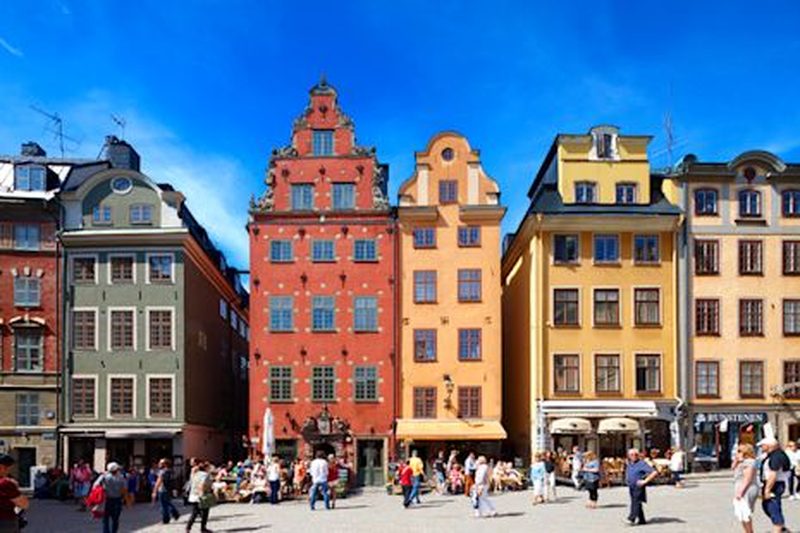
Sweden is the country most people picture when they hear the word welfare state: high taxes, free healthcare, generous parental leave, free universities, and a population that mostly trusts both its government and its neighbours. Sweden’s welfare model consistently tops global rankings for equality, innovation and quality of life. Yet it is also a system under strain, from integration challenges to rising healthcare waits. This explainer shows how the model actually works, why Swedes tolerate the taxes, and what threatens it.
Where the money goes
Sweden collects around 42-43 per cent of GDP in taxes, among the highest shares in the world. The money funds a comprehensive safety net: universal healthcare free at the point of use (with small capped fees), free education from preschool through university, 480 days of paid parental leave per child, generous unemployment insurance, and pensions that keep elderly poverty low. Crucially, benefits are mostly universal rather than targeted at the poor, which means the middle class uses and defends them. Local municipalities and regions, funded by local income taxes, deliver most services, keeping decisions close to citizens.
Why Swedes accept high taxes
The model’s secret ingredient is trust. Sweden has among the highest levels of social trust on earth: people believe taxes are spent honestly, that neighbours are not cheating the system, and that the state will deliver. This trust was built over a century of clean government, transparent administration and a broad political consensus that survived changes of government. The system is also designed to reward work: benefits are tied to employment history, childcare is heavily subsidised so parents, especially mothers, stay in the workforce, and female employment is among the highest in the world. High taxes buy services people can see, and the bargain has held.
How the economy pays for it
The welfare state rests on a fiercely competitive market economy, a fact often missed by admirers abroad. Sweden has no statutory minimum wage (wages are set by unions and employers), no wealth tax, low corporate taxes by European standards, and a tradition of letting uncompetitive firms fail. Spotify, IKEA, Volvo, Ericsson and Klarna were born in this environment. The model is sometimes summarised as: compete in the market, share the proceeds. Strong unions, covering most workers through collective agreements, keep wage inequality low without heavy-handed state wage-setting.
- 480 days of paid parental leave per child, shared between parents, with 90 days reserved for each.
- University tuition is free for EU citizens; student grants and loans cover living costs.
- Healthcare is universal, though patients pay small capped fees for visits.
- Union membership covers roughly two-thirds of workers, far above most Western countries.
The strains showing
The model faces real pressures. An ageing population means fewer workers supporting more pensioners and patients. Healthcare waiting times have grown, and the pandemic exposed gaps in elderly care. Integration of large numbers of refugees, particularly after 2015, has strained schools and housing and fuelled the rise of the anti-immigration Sweden Democrats, now one of the largest parties. Gang violence in segregated suburbs has shocked a country that prided itself on safety. And housing shortages in Stockholm have created insider-outsider divides. None of this has broken the model, but it has ended the era when Sweden’s success felt automatic.
Can others copy Sweden?
Politicians worldwide invoke Sweden, but the model is hard to transplant. It depends on a century of institution-building, a small and historically homogeneous population, powerful unions, and the trust that makes high taxes politically survivable. Countries with low trust, large informal economies or deep corruption cannot simply copy the tax rates and expect Swedish outcomes. What travels better are the principles: universal benefits that build middle-class buy-in, work incentives built into welfare, and transparency that sustains trust. Sweden’s lesson is not a policy list but a sequence: first build trustworthy institutions, then ask citizens to fund them.
FAQs
Is healthcare really free in Sweden? Essentially yes: care is tax-funded and universal, with only small capped patient fees, though waiting times for non-urgent treatment can be long.
Do Swedes pay the world’s highest taxes? Their overall tax burden is among the highest, but the system is broad-based: even lower earners pay significant income tax, which is part of why the model is financially stable.
Is Sweden socialist? No. It is a market economy with private ownership and global corporations, combined with comprehensive tax-funded welfare; economists call it a social market model.
Sweden’s welfare model works because it is a complete ecosystem: high taxes, universal services, competitive markets and deep trust, each holding up the others. The strains are real, but so is the achievement: a society that combined prosperity with equality more successfully than almost any other. Whether it can adapt to an older, more diverse Sweden is the defining question of its next chapter.
Compiled by the Khabar 24h Editorial Desk from publicly available sources.

Khabar 24h Editorial Desk — our explainers are prepared by the Khabar 24h editorial team using AI-assisted research tools, and every piece is reviewed by a human editor before publishing. We do not claim original reporting: our work is turning complex topics into simple, accurate summaries. Spotted an error? Write to contact@khabar24h.com — our corrections policy aims for same-day review.
More from this author →