Indian Badminton’s Rise: From Prakash Padukone to the Thomas Cup Win
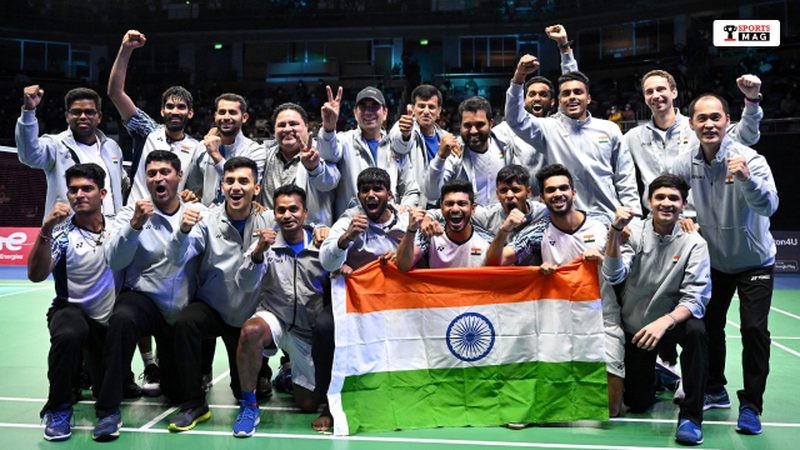
There was a time when Indian badminton meant one name, and for years that name carried the sport almost alone. From Prakash Padukone’s landmark All England triumph in 1980 to the men’s team’s historic Thomas Cup victory in 2022, Indian badminton has travelled from occasional brilliance to sustained world-class depth. This is the story of that rise: the pioneers, the academies, the Olympic medals and the generation that finally turned potential into trophies.
Prakash Padukone and the first golden age
Prakash Padukone was Indian badminton’s first global star. In 1980 he won the All England Open, then considered the unofficial world championship, becoming the first Indian to claim the sport’s most prestigious title. A year earlier he had won bronze at the World Championships in Copenhagen, and his elegant, technically flawless game made him a revered figure worldwide. Padukone’s success proved that an Indian shuttler could beat the best in the world, and after retiring he founded an academy in Bengaluru that would become the nursery of the next generation. For two decades, his shadow loomed large: Indian badminton had a hero but not yet a system.
How did the academy era change everything?
The turning point came with the rise of professional academies in the 2000s. Pullela Gopichand, himself an All England champion in 2001, mortgaged his own house to build an academy in Hyderabad that would produce Saina Nehwal and PV Sindhu. The Padukone academy in Bengaluru continued to develop talent, and improved funding from the Sports Authority of India and private sponsors meant young players could train full-time with world-class coaches, physios and sparring partners. The pipeline began to deliver: Saina Nehwal became world number one in 2015, Sindhu won silver at the Rio Olympics in 2016, and Kidambi Srikanth reached the top of the men’s rankings in 2018. India was no longer producing one star at a time; it was producing squads.
Olympic medals and world titles
India’s Olympic breakthrough in badminton began with Saina Nehwal’s bronze at London 2012, the country’s first Olympic medal in the sport. PV Sindhu then delivered back-to-back medals: silver at Rio 2016 after a final that captivated the nation, and bronze at Tokyo 2020, making her the first Indian woman to win two Olympic medals. At the World Championships, Sindhu went one better, winning gold in 2019 in Basel after two previous silvers. In doubles, Satwiksairaj Rankireddy and Chirag Shetty broke new ground by winning the Asian Games gold in 2023 and reaching world number one, proving India’s rise extended beyond singles.
The Thomas Cup triumph of 2022
The crowning team achievement came in Bangkok in May 2022, when India’s men’s team won the Thomas Cup, the world men’s team championship, for the first time in the tournament’s 73-year history. Led by Lakshya Sen, Kidambi Srikanth, HS Prannoy and the doubles pairs, India defeated 14-time champions Indonesia 3-0 in the final, a scoreline that stunned the badminton world. The victory was significant because the Thomas Cup had been the exclusive property of a handful of Asian powers: China, Indonesia, Malaysia, Japan and Denmark. India’s win announced that the country now had not just individual stars but genuine depth across five matches.
What powered the transformation?
Several forces combined to lift Indian badminton. The Premier Badminton League, launched in 2016, gave Indian players regular high-pressure matches against the world’s best on home soil and made the sport visible on television. Better sports science, including dedicated strength coaches and injury management, extended careers. Government schemes and corporate sponsorships provided financial security that earlier generations never had. And success bred success: every medal inspired a new wave of children to pick up a racket, swelling the talent pool that academies could draw from.
Challenges on the road ahead
The rise is real, but so are the challenges. Indian badminton still struggles for depth in women’s doubles and mixed doubles, and the conveyor belt of men’s singles talent needs constant renewal as the current generation ages. Injuries have repeatedly interrupted promising careers, raising questions about workload management on the demanding World Tour. Competition from China, Indonesia, Japan, Denmark and emerging nations keeps intensifying. The next frontier is converting team-event success into sustained dominance at the World Championships and Olympics across all five disciplines.
FAQs
Who was the first Indian to win the All England Open? Prakash Padukone, who won the men’s singles title in 1980, the first Indian to claim badminton’s most prestigious championship.
When did India win the Thomas Cup? In May 2022 in Bangkok, defeating Indonesia 3-0 in the final to win the men’s world team championship for the first time.
How many Olympic medals has India won in badminton? Three: Saina Nehwal’s bronze in 2012, and PV Sindhu’s silver in 2016 and bronze in 2020.
From one man’s artistry in 1980 to a team’s triumph in 2022, Indian badminton’s journey mirrors the country’s wider sporting evolution: from individual genius sustained by sacrifice to a professional system producing champions in batches. The Thomas Cup was not the end of the story. It was the proof that the system works.
Source: Badminton Association of India archives

Khabar 24h Editorial Desk — our explainers are prepared by the Khabar 24h editorial team using AI-assisted research tools, and every piece is reviewed by a human editor before publishing. We do not claim original reporting: our work is turning complex topics into simple, accurate summaries. Spotted an error? Write to contact@khabar24h.com — our corrections policy aims for same-day review.
More from this author →