How NATO Works: Article 5, Expansion and Collective Defence Explained
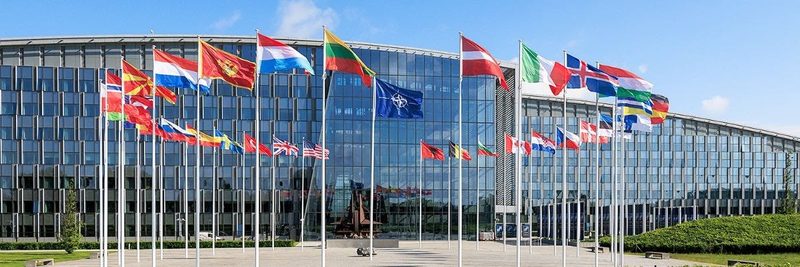
The North Atlantic Treaty Organization is the most powerful military alliance in history: 32 countries pledged that an attack on one is an attack on all. Born to deter the Soviet Union, it outlived the Cold War, expanded to Russia’s borders, fought in Afghanistan, and found new purpose after Russia’s invasion of Ukraine. NATO’s Article 5 has been invoked only once, after 9/11. This explainer shows how collective defence works, why the alliance keeps growing, and where its limits lie.
What Article 5 really says
Article 5 of the 1949 North Atlantic Treaty states that an armed attack against one member shall be considered an attack against them all, with each taking such action as it deems necessary, including the use of armed force. The crucial phrase is as it deems necessary: Article 5 does not automatically commit every ally to war. Each government decides its own response, which could range from troops to logistics to political support. The article has been invoked once, by the United States after September 11, 2001, leading to NATO’s two-decade mission in Afghanistan. Its power is deterrent: no adversary has ever tested whether the allies would actually fight.
How NATO is organised
NATO has two faces: a political alliance headquartered in Brussels, where the North Atlantic Council of ambassadors takes decisions by consensus, and a military command structure led by the Supreme Allied Commander Europe, always an American general. Members commit to spending at least 2 per cent of GDP on defence, a target many long ignored and most now scramble to meet. NATO runs joint exercises, integrates air defences, and maintains rapid-reaction forces, but it owns few assets itself: the fighting power belongs to member states, above all the United States, which provides the nuclear umbrella and the bulk of high-end capabilities.
Why it keeps expanding
NATO’s open-door policy has taken it from 12 founders to 32 members, with Finland and Sweden joining in 2023-24 after Russia’s invasion of Ukraine shattered their neutrality. Each wave, the 1999 and 2004 eastern enlargements especially, was driven by former Soviet-bloc states seeking protection from Moscow. Russia calls this expansion a betrayal and a threat; NATO calls it the free choice of sovereign democracies. The next candidates, Ukraine and Georgia, are the most contentious: admitting a country at war with Russia risks immediate Article 5 dilemmas, which is why membership remains a promise rather than a plan.
- 32 member countries across North America and Europe, after Finland and Sweden joined.
- Article 5 has been invoked exactly once: after the 9/11 attacks.
- Members pledge to spend at least 2% of GDP on defence; the US spends far more in absolute terms.
- NATO’s 2022 Strategic Concept named Russia the primary threat and China a systemic challenge.
The burden-sharing fight
Nothing strains the alliance like money. American presidents from Eisenhower to Trump have complained that Europeans free-ride on US protection, and Trump turned the complaint into a threat, suggesting he might not defend allies that underpay. The pressure worked: European defence spending has surged since 2022, with most allies now near or above 2 per cent. But the deeper imbalance remains: only the US can provide the intelligence, airlift, and nuclear deterrence that make the alliance credible. Debates over a more autonomous European defence will run for years without changing that fact.
What NATO cannot do
NATO’s limits are real. It acts by consensus, so one member, Turkey or Hungary, can block action. It has no mandate outside its members’ defence unless the UN or members agree, which made interventions like Libya divisive. It cannot force members to spend, fight, or even agree on what the threat is: southern allies worry about migration and terrorism while eastern allies fixate on Russia. And Article 5’s credibility ultimately rests on a political question no treaty can answer: would Americans really risk Chicago for Tallinn? Deterrence works until the day it is tested.
FAQs
Does Article 5 mean automatic war? No. Each ally decides its own response; the commitment is political and deterrent rather than automatic.
Why did Finland and Sweden join? Russia’s 2022 invasion of Ukraine convinced both that neutrality no longer guaranteed security.
Can Ukraine join NATO? Allies agree it will one day, but membership while at war with Russia is off the table because it could trigger Article 5 immediately.
Seventy-five years after its founding, NATO is larger, better funded and more purposeful than at any point since the Cold War, revived by the very threat it was built to deter. Its future will be decided by the same question as its past: whether 32 democracies, each with its own politics, can keep believing an attack on one is an attack on all.
Compiled by the Khabar 24h Editorial Desk from publicly available sources.

Khabar 24h Editorial Desk — our explainers are prepared by the Khabar 24h editorial team using AI-assisted research tools, and every piece is reviewed by a human editor before publishing. We do not claim original reporting: our work is turning complex topics into simple, accurate summaries. Spotted an error? Write to contact@khabar24h.com — our corrections policy aims for same-day review.
More from this author →