G7 vs G20 Explained: What the Two Summits Actually Do
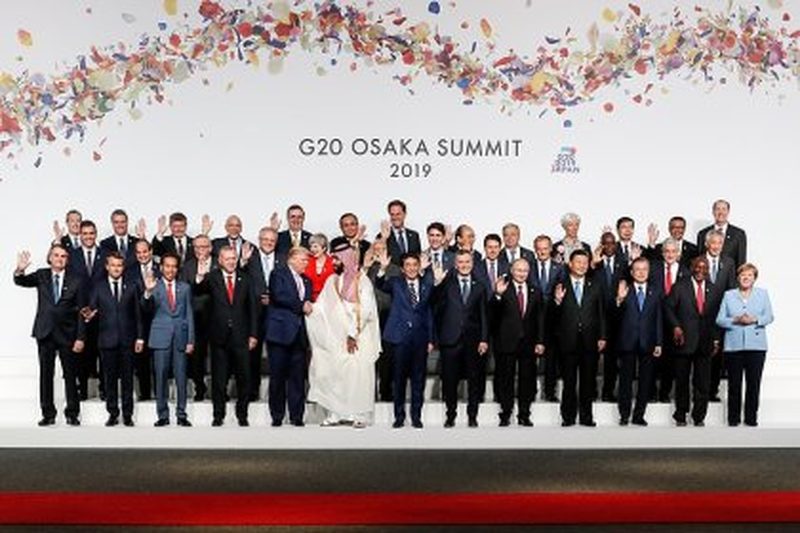
Every year, the world’s most powerful leaders gather for two summits that look similar but do very different things. The G7 is an intimate club of seven advanced democracies; the G20 is a sprawling forum of 19 countries plus the EU and African Union, representing most of the world economy. One coordinates Western policy, the other manages global crises. This explainer compares what the two summits actually do, and which one matters more.
How the G7 works
The G7, the US, UK, France, Germany, Italy, Canada and Japan, plus the EU as a non-enumerated member, began in the 1970s as a fireside chat among finance ministers facing oil shocks. It has no charter, no headquarters and no binding powers; its strength is intimacy. Leaders meet annually, hosted on rotation, and issue communiques on everything from Ukraine sanctions to AI governance. The G7’s real product is coordination: aligning sanctions on Russia, capping Russian oil prices, and presenting a united democratic front. Critics call it an outdated rich-countries’ club; members call it the steering committee of the free world.
How the G20 works
The G20 was born in crisis: after the 1997 Asian financial meltdown, and elevated to leaders’ level by the 2008 global crash. Its members, spanning the US and China, India and Saudi Arabia, Argentina and South Korea, account for about 85 per cent of global GDP and two-thirds of world population. The 2023 addition of the African Union as a permanent member answered long-standing complaints about representation. G20 summits produce sprawling declarations on debt relief, climate finance, digital taxation and pandemic preparedness. Implementation is voluntary, but the forum is where the world’s creditors and debtors actually sit at one table.
What they actually decide
Neither summit passes laws; both work through peer pressure and follow-up. The G7’s hits include the 2021 global minimum corporate tax deal, coordinated Russia sanctions, and debt relief initiatives. The G20’s include the 2009 pledge against protectionism that arguably stopped a 1930s-style trade collapse, the Common Framework for debt treatment, and pandemic-era debt suspension for poor countries. The misses are legion: climate communiques long on promise and short on cash, debt frameworks creditors ignore, and summits, like Delhi 2023 on Ukraine, where divisions produced lowest-common-denominator text.
- G7: 7 members plus the EU; founded 1975; represents advanced democracies.
- G20: 19 countries plus EU and African Union; leaders’ summits since 2008.
- G20 members account for roughly 85% of global GDP.
- Neither body has enforcement powers; both rely on voluntary compliance.
G7 vs G20: which matters more?
It depends on the problem. For Western security and sanctions, the G7 is the action forum: it moves markets and coordinates real policy. For anything requiring China, India or the Gulf, from debt restructuring to climate finance, only the G20 includes the necessary players. The trend favours the G20: as economic power shifts east and south, a club of rich democracies looks increasingly insufficient. But the G20’s very inclusiveness is its weakness: with rivals like the US and China, Russia and the West at one table, consensus often means blandness. The G7 gets things done among friends; the G20 keeps adversaries talking.
The summits’ critics
Detractors make familiar charges: photo-ops over policy, communiques nobody reads, and carbon-spewing jamborees of hypocrisy. Developing countries note that both forums exclude most of the world’s states while deciding their fates. Defenders reply that in a world without a global government, leader-level coordination is the only mechanism available, and that the alternative to imperfect summits is no coordination at all. The 2008 crisis response remains the exhibit: without the G20, the argument goes, the Great Recession could have become a depression.
FAQs
Who is in the G7? The US, UK, France, Germany, Italy, Canada and Japan, with the EU participating; Russia was expelled from the G8 in 2014.
Who is in the G20? 19 major economies plus the EU and, since 2023, the African Union, spanning rich and emerging powers.
Do summit decisions bind anyone? No. Both rely on voluntary implementation and peer pressure, not enforcement.
The G7 and G20 are imperfect instruments for an imperfect world: one a council of allies, the other a parliament of rivals. Between them they cover most of what global governance can currently achieve, which says as much about the limits of the system as about the summits themselves.
Source: Associated Press

Khabar 24h Editorial Desk — our explainers are prepared by the Khabar 24h editorial team using AI-assisted research tools, and every piece is reviewed by a human editor before publishing. We do not claim original reporting: our work is turning complex topics into simple, accurate summaries. Spotted an error? Write to contact@khabar24h.com — our corrections policy aims for same-day review.
More from this author →