Nuclear clocks, explained: why scientists are rebuilding time itself
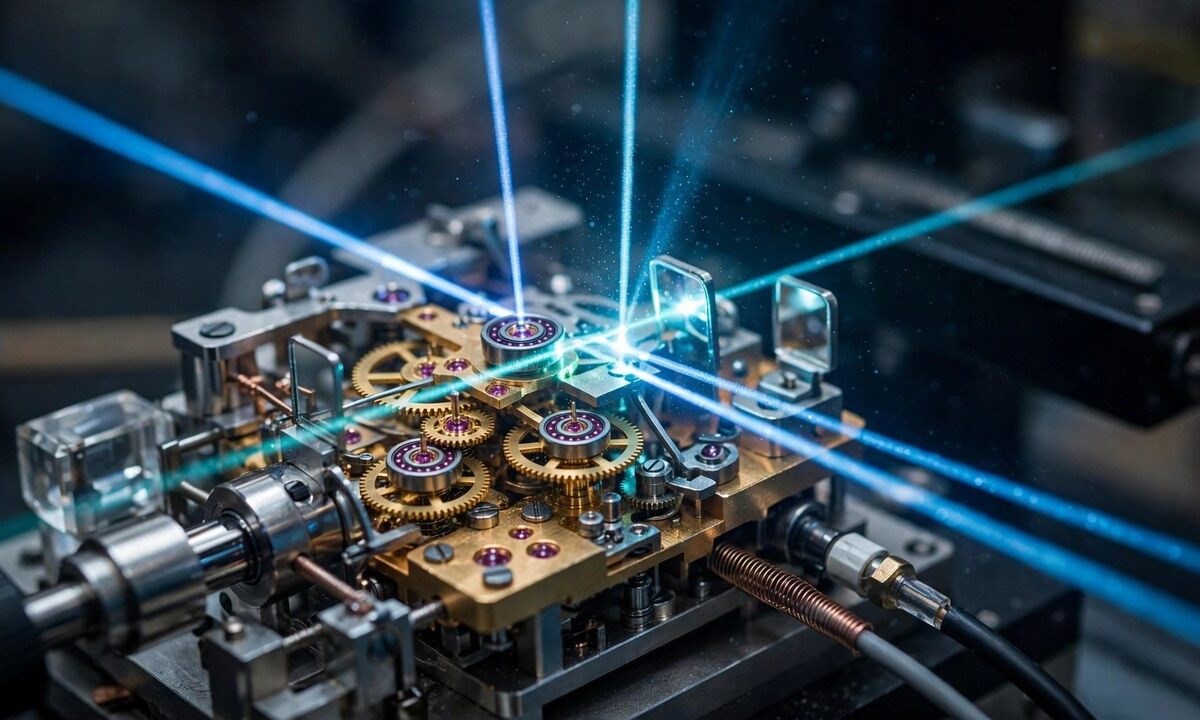
Scientists have built the first operating nuclear clock, and it could change timekeeping forever.
Today’s atomic clocks count the vibrations of electrons, losing less than a second over millions of years. Nuclear clocks go deeper, tracking transitions inside the atomic nucleus, which is shielded from outside disturbances.
The key is thorium-229, an isotope with a rare low-energy nuclear transition that lasers can reach. A working nuclear clock could be ten to a hundred times more precise than the best atomic clocks.
That matters for GPS, which depends on exact timing, and for testing whether the fundamental constants of nature are truly constant. It could even help hunt for dark matter.
After decades of failed attempts, researchers have finally isolated the signal and kept a nuclear clock running. The race is now on to make the technology practical.
For now, nuclear clocks remain laboratory instruments, but history suggests today’s experiments become tomorrow’s infrastructure. The atomic clock itself was once a lab curiosity before it started running the modern world.
Related stories
View all →
Bitcoin’s $83,000 rebound explained
Why bitcoin bounced above $83,000: Trump's Iran statement, ETF outflows, and the key levels traders watch.

Starlink Mobile explained: SpaceX’s carrier play
How SpaceX's 800 MHz spectrum deal and 15,000 new satellites could turn Starlink Mobile into a US carrier.

El Nino explained: why Maharashtra is parched
What El Nino is, how it weakens the monsoon, and why it left Maharashtra declaring drought in 265 talukas.

Khabar 24h Editorial Desk — our explainers are prepared by the Khabar 24h editorial team using AI-assisted research tools, and every piece is reviewed by a human editor before publishing. We do not claim original reporting: our work is turning complex topics into simple, accurate summaries. Spotted an error? Write to contact@khabar24h.com — our corrections policy aims for same-day review.
More from this author →
Leave a Reply