The hypernova debate explained: what really forged ancient stars
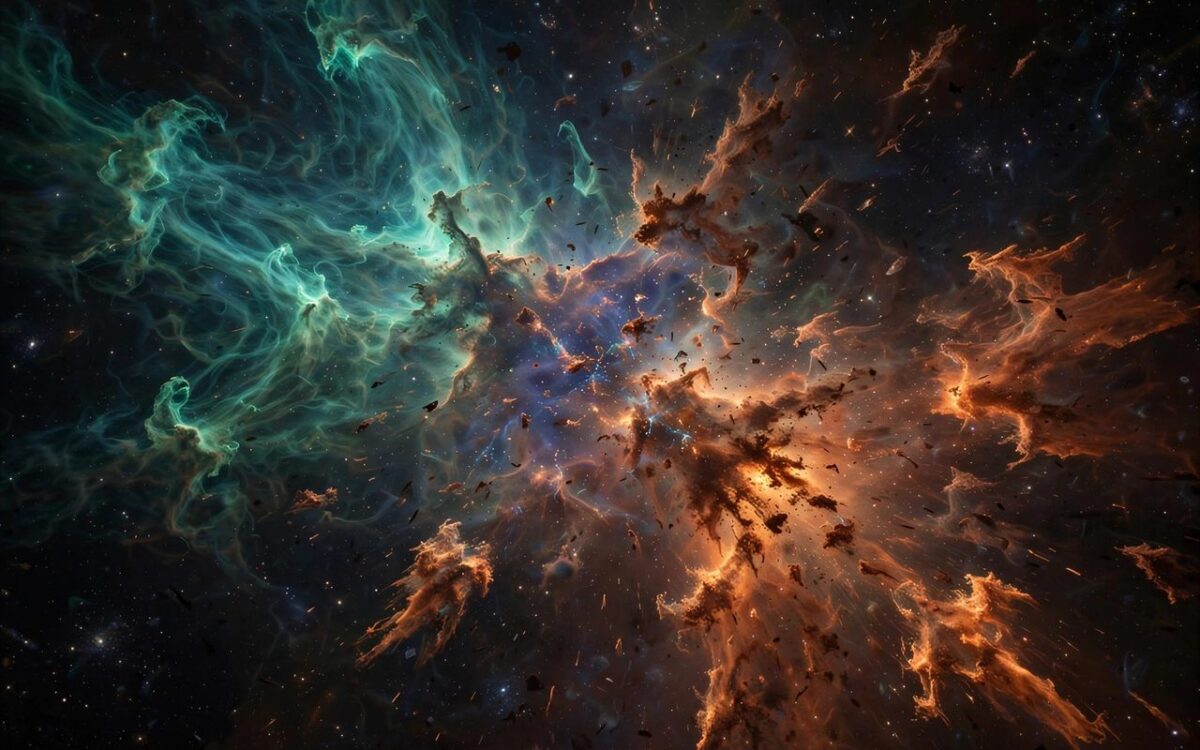
Astronomers are rethinking what forged the oldest stars in the Milky Way. New research says ordinary stellar explosions may explain their strange chemistry, and hypernovae may not be needed at all.Hypernovae are exceptionally powerful stellar explosions, packing about ten times the energy of a regular supernova. When scientists found ancient stars in the galaxy's outer halo with an unusual mix of elements, hypernovae seemed the only possible source of such extreme chemical fingerprints.The new study by Anmol Aggarwal and colleagues challenges that. Its key insight is that supernova debris does not spread evenly. One side of a star-forming cloud might receive more oxygen, another more nickel. Accounting for this lopsided mixing, their models matched the observed element ratios as well as, or better than, hypernova models.The researchers propose one unusual star formed from a neutron star merger plus a single ordinary supernova, inside a small dwarf galaxy later absorbed by the Milky Way. Hypernovae are not ruled out. But the debate has shifted: astronomers can no longer assume that strange chemistry demands an extreme explosion.
Related stories
View all →
Bitcoin’s $83,000 rebound explained
Why bitcoin bounced above $83,000: Trump's Iran statement, ETF outflows, and the key levels traders watch.

Starlink Mobile explained: SpaceX’s carrier play
How SpaceX's 800 MHz spectrum deal and 15,000 new satellites could turn Starlink Mobile into a US carrier.

El Nino explained: why Maharashtra is parched
What El Nino is, how it weakens the monsoon, and why it left Maharashtra declaring drought in 265 talukas.

Khabar 24h Editorial Desk — our explainers are prepared by the Khabar 24h editorial team using AI-assisted research tools, and every piece is reviewed by a human editor before publishing. We do not claim original reporting: our work is turning complex topics into simple, accurate summaries. Spotted an error? Write to contact@khabar24h.com — our corrections policy aims for same-day review.
More from this author →
Leave a Reply