The Race to 6G: What Comes After 5G and Where India Stands on Its 2030 Bet
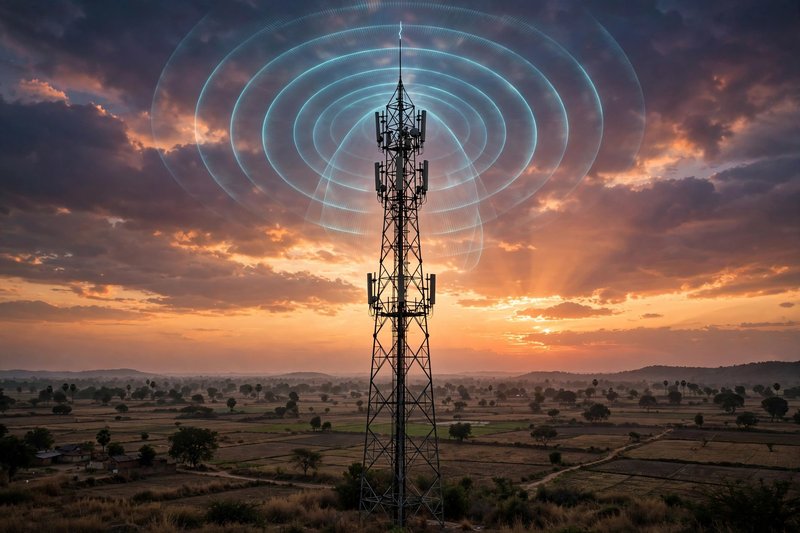
India’s 5G rollout was among the fastest in the world, and the conversation has already moved on. In laboratories from Bengaluru to Seoul, researchers are now building the sixth generation of mobile networks, and India has formally declared that it intends to be among the global leaders when 6G arrives. No country has launched commercial 6G yet, and none is expected to before the end of this decade. But the race to define what comes after 5G is very much underway. Here is what 6G promises, and where India stands on its ambitious roadmap.
What 6G actually is — and isn’t
Every mobile generation has been defined less by speed alone than by what it made possible: 2G gave us text messaging, 3G the mobile internet, 4G video streaming and the app economy, 5G industrial automation and fixed-wireless broadband. 6G’s defining idea is convergence — the network stops being just a pipe for data and becomes a sensing, computing fabric.
Three technical shifts separate 6G from a faster 5G. First, spectrum: 6G is expected to open up the terahertz bands (roughly 100 GHz to 1 THz), frequencies with enormous bandwidth but very short range, which will demand dense small-cell deployments and entirely new antenna designs. Second, the network becomes AI-native rather than AI-assisted — machine learning embedded in the radio access network itself, optimising spectrum, power and routing in real time instead of as an afterthought. Third, joint communication and sensing: the same radio signals that carry data will map the physical environment, so a 6G base station could in principle detect objects, movement and even vital signs — turning the network into a planetary sensor grid. Target figures discussed in research circles include peak data rates around 1 terabit per second, latencies under a millisecond, and reliability an order of magnitude beyond 5G’s ultra-reliable modes.
None of this is settled. 6G has no frozen standard yet, and researchers disagree on which of these visions will survive contact with physics, economics and regulation. Anyone describing 6G as a finished blueprint in 2026 is describing a wish list.
How the standards race works
Mobile generations are not invented by one company; they are negotiated. The International Telecommunication Union (ITU) sets the vision and requirements, and the 3GPP — the industry body that writes the actual specifications — turns them into standards that equipment makers build to. 5G’s specifications were frozen in 3GPP Releases 15 and 16; 6G study items began appearing in Release 19 and 20, with the first true 6G specifications expected towards the end of this decade and commercial launches around 2030.
This process is where the real race happens. Whoever contributes the most accepted technology to the standard collects patent royalties for a decade and shapes what the technology can and cannot do. China, South Korea, the United States, the European Union and Japan all run state-backed 6G programmes precisely because standards meetings, not laboratories, decide winners. India’s stated goal of securing a tenth of global 6G patents is best understood as a bid for a seat at this table.
India’s roadmap: the Bharat 6G Vision
In March 2023, the Department of Telecommunications released the Bharat 6G Vision document, setting the objective of positioning India among global leaders in 6G by 2030. The plan rests on three pillars. First, research funding: under the Telecom Technology Development Fund, 104 projects worth about 271 crore rupees had been approved for 6G research as of early 2026, according to a statement by the Minister of State for Communications in the Rajya Sabha. Second, spectrum: the government has published a dedicated spectrum roadmap for 6G, laying out availability and timelines across radio frequency bands over three horizons — the short term of 2025 to 2026, the medium term of 2027 to 2030, and the long term stretching to 2035. Third, an ecosystem: the Bharat 6G Alliance brings together government, industry and academia, the government has set up 100 5G use-case laboratories in academic institutions to build skills for future networks, and work is underway on 6G testbeds including terahertz communication, the extremely high frequencies expected to carry 6G’s fastest links.
The targets and the reality check
India’s stated ambitions are bold. The vision document speaks of securing a tenth of global 6G patents and making substantial contributions to international standards, a marked shift from earlier generations where India was largely a consumer of foreign technology. The country’s arguments are real: a massive domestic market, a deep software talent pool, and the credibility earned by the rapid 5G rollout and by developing indigenous 5G technology.
The challenges are equally real, and worth stating plainly. Research funding, while growing, remains modest beside what China, South Korea and the United States are spending — and in telecom, standards influence correlates strongly with R&D spend. India’s telecom operators are financially stretched after the 5G auctions and rollout, which constrains their appetite for another capital-intensive cycle. Spectrum pricing and availability will decide whether 6G is affordable to deploy at Indian price points. And the history of telecom generations counsels humility: the gap between laboratory demonstrations and the network in your pocket is always wider than it looks. 5G’s most hyped consumer promises — holographic calls, the metaverse — largely failed to materialise; its real wins came in fixed wireless and industry, use cases nobody marketed.
What it means for ordinary users
For now, 6G changes nothing about the phone in your hand, and anyone selling you a “6G-ready” device in 2026 is selling marketing, not technology. The practical significance lies in the decade ahead:
- Watch the standards process, not the hype. Real 6G begins when global specifications are frozen, expected towards the end of this decade.
- Expect the first benefits in industry before consumers. Factories, ports, healthcare and smart infrastructure are likely to feel 6G first — just as 5G’s real wins were industrial.
- India’s patent and standards push matters because it decides whether the country shapes the technology or merely buys it — and pays royalties on it for a decade.
- The terahertz and sensing research underway today is what will decide whether 6G is a genuine leap or just a faster 5G.
FAQs
When will 6G launch commercially?
The industry consensus points to around 2030, after 3GPP freezes the first 6G specifications. Early “6G” branding before then should be treated as marketing.
Will I need a new phone for 6G?
Yes — 6G will use new spectrum bands and radio technologies that current phones cannot support. No phone sold in 2026 is genuinely 6G-capable.
Why does India care about 6G patents?
Standard-essential patents generate licensing revenue and, more importantly, give the holder influence over what the global standard requires. For earlier generations India paid; for 6G it wants a share of the returns.
The race to 6G will be won in laboratories and standards meetings long before it reaches a single smartphone. India’s bet is that this time, it will be at the table where the rules are written.
Compiled by the Khabar 24h Editorial Desk from publicly available sources.

Khabar 24h Editorial Desk — our explainers are prepared by the Khabar 24h editorial team using AI-assisted research tools, and every piece is reviewed by a human editor before publishing. We do not claim original reporting: our work is turning complex topics into simple, accurate summaries. Spotted an error? Write to contact@khabar24h.com — our corrections policy aims for same-day review.
More from this author →
Leave a Reply