Webb finds planet-shattering collisions in debris disks
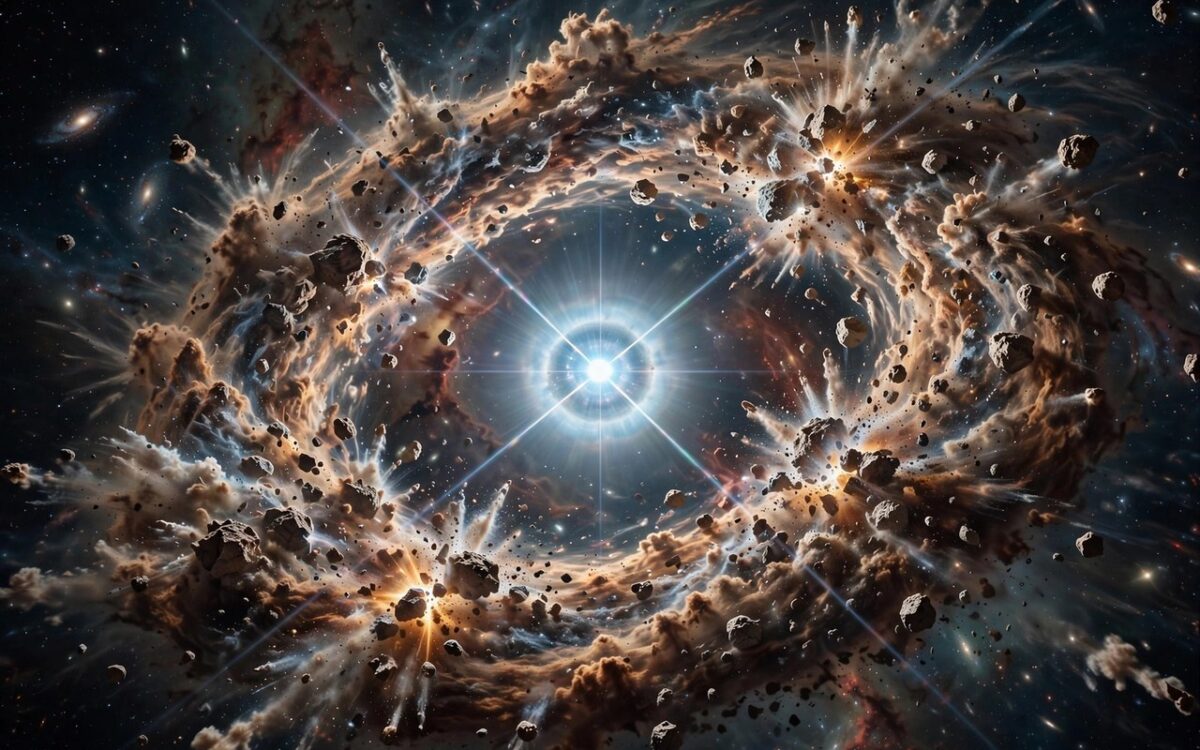
Astronomers using the James Webb Space Telescope have studied 21 young star systems where planet-sized worlds appear to be colliding.
The team, led by Kate Su of the Space Science Institute in Boulder, Colorado, examined extreme debris disks. Their findings were published in The Astrophysical Journal.
Extreme debris disks hold unusually large amounts of warm dust close to the star. They share three traits: smaller dust grains, high warm dust concentration and irregular brightness changes.
The sample included 16 disks observed by Webb and five from the retired Spitzer telescope’s archives. Only about 1% of young stars show signs of this phase.
The researchers found two kinds of collisions. Silica-rich disks show high-energy impacts between Mars-sized bodies, vaporising large chunks of the planets. These appear only around stars younger than 300 million years.
Silica-poor disks involve moon-sized objects grazing or hitting each other. These appear across a wider range of star ages and show erratic swings in brightness.

Khabar 24h Editorial Desk — our explainers are prepared by the Khabar 24h editorial team using AI-assisted research tools, and every piece is reviewed by a human editor before publishing. We do not claim original reporting: our work is turning complex topics into simple, accurate summaries. Spotted an error? Write to contact@khabar24h.com — our corrections policy aims for same-day review.
More from this author →
Leave a Reply