How to Build a Smart Home in India: Devices, Hubs and Voice Assistants Explained
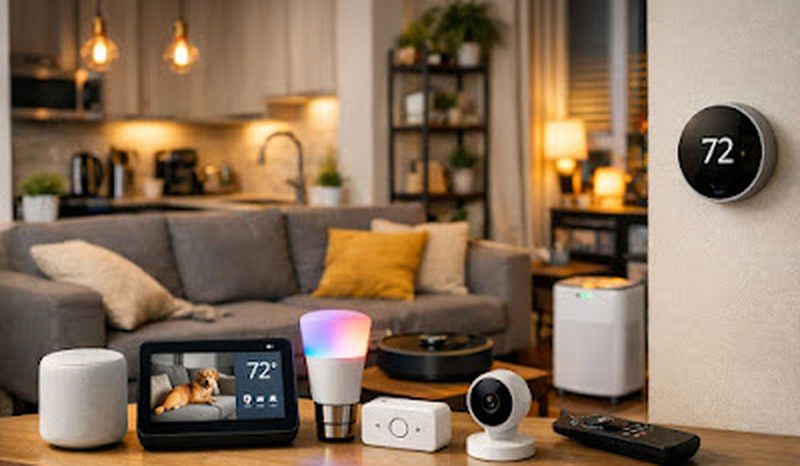
Imagine lights that dim themselves at bedtime, a geyser that heats water before your morning alarm, and a single voice command that locks up the house at night. Smart home technology, once a luxury import, is now affordable and widely available in India, with devices starting at a few hundred rupees. But the market is a maze of brands, protocols and assistants that do not always work together. This guide explains how to build a smart home in India: the devices, the hubs, the voice assistants, and how to avoid expensive mistakes.
Start with the foundation: Wi-Fi and a voice assistant
Every smart home stands on two foundations. First, solid Wi-Fi: smart devices are only as reliable as the network, so a good dual-band router covering your home, possibly with a mesh node for larger houses, comes before any gadget. Second, pick one voice assistant ecosystem and build around it: Amazon Alexa, with the widest device support in India and affordable Echo speakers, or Google Home, strong for those already in Google’s world. Apple HomeKit exists but has thinner device availability locally. Sticking to one assistant avoids the most common beginner frustration: devices that work with one platform but not the other. You can always add the second later; starting with one keeps things simple.
The devices: what to buy first
Build in layers, starting with the highest-impact, lowest-cost devices.
- Smart bulbs and plugs: the cheapest entry point; automate lamps, fans and the geyser on schedules.
- Smart speakers: the voice control hub for everything else, from a few thousand rupees.
- IR blasters: make dumb ACs and TVs smart by mimicking their remotes.
- Smart locks and video doorbells: keyless entry and knowing who is at the door from anywhere.
- Sensors: motion, door and leak sensors that trigger automations, like lights that follow you.
- Cameras: indoor and outdoor security with phone alerts, from Indian brands with local cloud options.
- Appliances: smart TVs, washing machines and air purifiers from mainstream brands now include app and voice control.
Buy one category, live with it for a month, then expand; this prevents the graveyard of incompatible gadgets.
How devices talk: Wi-Fi, Zigbee and Matter
Smart devices communicate over several protocols, and this is where compatibility lives or dies. Wi-Fi devices connect directly to your router; simple to set up but they crowd your network as numbers grow. Zigbee and Z-Wave are low-power mesh protocols needing a hub, but they are reliable and keep Wi-Fi uncongested; many sensors and bulbs use them. The big development is Matter, a new universal standard backed by Apple, Google, Amazon and Samsung, designed so certified devices work across all major platforms. When buying today, prefer Matter-certified devices where available; they are the best insurance against ecosystem lock-in. For the hub question: you need one only for Zigbee or Z-Wave devices; pure Wi-Fi setups and many Matter devices work hub-free.
Automations: where the magic actually is
Voice control is fun, but automations, routines that run themselves, are the real payoff. Start with schedules: geyser on at 6 AM, porch light at sunset, AC pre-cooling before you reach home. Add sensor triggers: motion sensors that light hallways at night, door sensors that announce visitors. Build scenes: a Good Night routine that locks doors, switches off lights and arms cameras with one command. Use presence: geofencing that turns things off when the last person leaves. The art is starting simple and adding complexity only where it genuinely saves effort; an automation nobody notices is a good automation, while a flaky one trains the family to distrust the whole system.
India-specific considerations
Local realities shape smart home choices. Power cuts demand devices that recover gracefully and resume schedules; a small UPS for the router keeps automations alive. Voltage fluctuations argue for quality power supplies on always-on devices. Many Indian homes have concrete walls that weaken Wi-Fi, making mesh systems or well-placed access points important. Check voltage and plug compatibility on imported devices. Prefer brands with Indian warranty and service; a cheap import with no support is a liability. And consider data residency for cameras: some users prefer brands storing footage on Indian servers or offering local storage options.
FAQs
How much does a basic smart home cost? A starter setup, speaker, two bulbs and a smart plug, costs under 10,000 rupees. Whole-home setups with locks, cameras and sensors run from 50,000 upward.
Do smart devices work during internet outages? Cloud-dependent features like voice control usually fail, but local protocols like Zigbee and Matter can keep basic automations running.
Are smart home devices a privacy risk? Microphones and cameras deserve caution: review privacy settings, mute speakers when sensitive, and choose reputable brands with clear data policies.
Build on good Wi-Fi, commit to one assistant, buy Matter where you can, and automate gradually. Done this way, a smart home in India is not a luxury project but a practical upgrade, one routine at a time.
Source: Consumer Technology Association

Khabar 24h Editorial Desk — our explainers are prepared by the Khabar 24h editorial team using AI-assisted research tools, and every piece is reviewed by a human editor before publishing. We do not claim original reporting: our work is turning complex topics into simple, accurate summaries. Spotted an error? Write to contact@khabar24h.com — our corrections policy aims for same-day review.
More from this author →