Protein Folding Solved: How AI Cracked Biology’s Grand Challenge
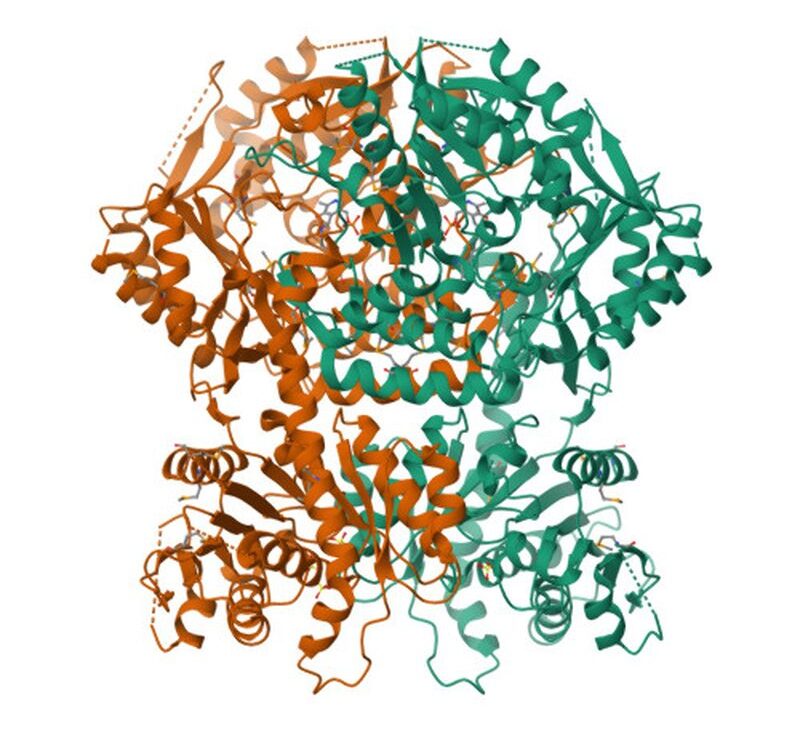
Proteins are the workhorses of life: enzymes, antibodies, hormones, the molecular machines that do nearly everything in every cell. A protein’s function is dictated by its three-dimensional shape, and that shape is encoded in its one-dimensional sequence of amino acids, a chain that folds into an intricate origami in milliseconds. For half a century, predicting the folded shape from the sequence, the protein folding problem, was biology’s grand challenge: conceptually simple, computationally monstrous, with a protein of 100 amino acids having more possible shapes than atoms in the universe. Experimental methods like X-ray crystallography could determine shapes, but slowly and expensively, one protein at a time. Then in 2020, DeepMind’s AlphaFold 2 predicted protein structures with atomic accuracy, solving in hours what took years, and biology changed overnight. It was, by wide agreement, the most significant AI achievement in science.
Why folding was so hard
The difficulty is combinatorial explosion. Amino acid chains can twist at each link, so even a small protein has an astronomical number of possible conformations; yet real proteins fold reliably to one shape, guided by physics, in milliseconds, a puzzle called Levinthal’s paradox. The energy landscape is a vast mountain range, and the protein must find the deepest valley without exploring everywhere. Physicists developed energy functions to score shapes, but they were too crude; experimentalists determined structures directly, but each required months of crystallisation and X-ray work, and many proteins, especially flexible membrane proteins, refused to crystallise at all. By 2020, after decades of effort, only about 170,000 protein structures were known, while DNA sequencing had revealed hundreds of millions of protein sequences, an ever-widening gap between sequence and structure. The CASP competition, a blind biennial test of prediction methods, measured progress in agonisingly small increments for 25 years. Biology was drowning in sequences it could not interpret.
How AlphaFold cracked it
AlphaFold 2’s insight was to treat folding as a pattern-recognition problem rather than a physics simulation. Its neural network ingests the amino acid sequence plus evolutionary information: related proteins in other species, whose sequences reveal which amino acid positions evolved together, a strong clue that they sit close in the folded shape. Through its Evoformer architecture, the network iteratively refines two representations, the sequence relationships and a hypothesised 3D structure, letting each inform the other, then a structure module folds the chain directly into atomic coordinates. At CASP14 in 2020, AlphaFold 2 achieved a median accuracy score above 90, essentially experimental quality, where the best previous methods managed 60s. DeepMind then released predicted structures for over 200 million proteins, nearly every known protein, in a free database with the European Bioinformatics Institute, used since by over two million researchers. AlphaFold 3 extended the method to protein interactions with DNA, RNA and small molecules. The grand challenge, as posed, was solved.
What the solution unlocked
The impact has been explosive. Drug discovery, which once waited years for a target’s structure, now starts from accurate predictions: researchers are designing drugs against previously structureless proteins, including targets in neglected diseases and antibiotic-resistant bacteria. Enzymologists are engineering new enzymes for breaking down plastic waste and synthesising chemicals sustainably. Biologists studying everything from crop resilience to the malaria parasite suddenly have structural roadmaps. Indian researchers are among the heavy users, applying AlphaFold to tuberculosis proteins, snake venom components and crop pathogens. But the problem has also evolved rather than vanished: AlphaFold predicts static structures, while proteins are dynamic machines that flex, bind and change shape; predicting those dynamics, protein-protein interactions and the effects of mutations remains frontier work. And the deeper scientific question, the physical principles of folding that Levinthal posed, was bypassed rather than answered; AI learned to predict without explaining. Still, a fifty-year grand challenge fell in a single bound, and biology will never be the same.
- AlphaFold 2 achieved experimental-level accuracy at the CASP14 competition in 2020.
- The AlphaFold database holds predicted structures for over 200 million proteins, free to all.
- Only about 170,000 experimental structures existed after decades of crystallography.
- AlphaFold 3 predicts how proteins interact with DNA, RNA and drug-like molecules.
- Demis Hassabis and John Jumper won the 2024 Nobel Prize in Chemistry for AlphaFold.
FAQs
Did AlphaFold solve all of biology? No. It solved structure prediction for single proteins; dynamics, interactions, and the physics of folding remain active research areas.
Is AlphaFold free to use? Yes. The database of 200 million predicted structures is freely available, and the software is open for academic use.
Will AI replace structural biologists? No. Experimental methods remain essential for validating predictions and studying dynamics, complexes and unusual cases AI handles poorly.
Fifty years of struggle, one neural network, 200 million structures: AlphaFold showed that biology’s hardest problems can yield to intelligence, artificial or otherwise, that learns the patterns evolution spent billions of years writing.
Compiled by the Khabar 24h Editorial Desk from publicly available sources.

Khabar 24h Editorial Desk — our explainers are prepared by the Khabar 24h editorial team using AI-assisted research tools, and every piece is reviewed by a human editor before publishing. We do not claim original reporting: our work is turning complex topics into simple, accurate summaries. Spotted an error? Write to contact@khabar24h.com — our corrections policy aims for same-day review.
More from this author →