Canadian telescope maps ancient hydrogen glow
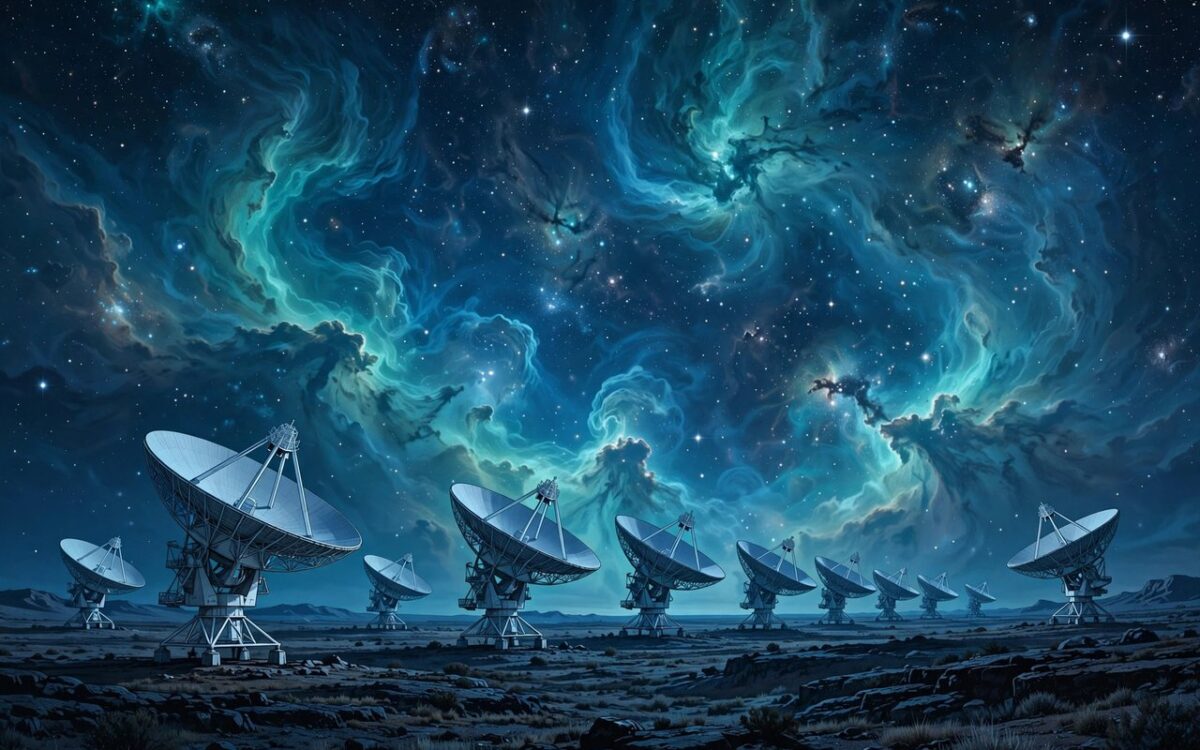
Astronomers have made the first standalone detection of the faint glow of hydrogen from about five billion years ago. The discovery was made with Canada’s CHIME telescope.
The signal comes from the time when dark energy began to push the universe’s expansion faster. It was published in The Astrophysical Journal. The team mapped how hydrogen was spread across the young cosmos.
The detection is difficult because the signal is extremely weak. It is buried under radio noise from our own galaxy. New analysis techniques made it possible to pull the glow from the background. The detection used 94 nights of observations collected in 2019. Earlier, CHIME had to cross-check its data with galaxy surveys. This time it found the signal in its own data alone. Dr. Arnab Chakraborty of the University of Toronto first proposed the finding. The team spent over a year testing the signal to rule out a false alarm.
The work involves a large international team. India’s Raman Research Institute participated, including scientist Arnab Chakraborty. The technique could become a new way to study dark energy. Bigger radio telescopes may map the glow across cosmic history.

Khabar 24h Editorial Desk — our explainers are prepared by the Khabar 24h editorial team using AI-assisted research tools, and every piece is reviewed by a human editor before publishing. We do not claim original reporting: our work is turning complex topics into simple, accurate summaries. Spotted an error? Write to contact@khabar24h.com — our corrections policy aims for same-day review.
More from this author →
Leave a Reply