Girls in School Sports: Barriers and How India Can Fix Them
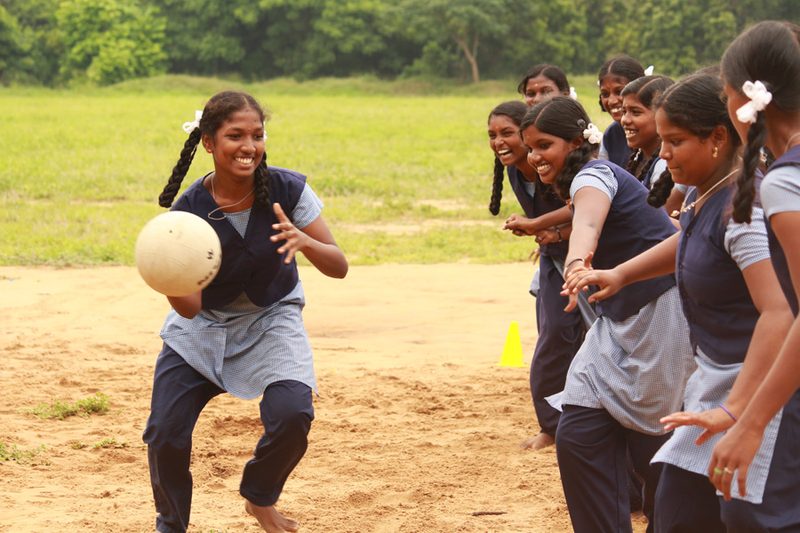
India’s next Olympic champion is probably sitting in a classroom right now, and there is a fair chance she will never play competitive sport. Girls drop out of school sports at far higher rates than boys, not for lack of talent but for lack of opportunity, safety and encouragement. The barriers are well documented, and so are the solutions. This is what keeps Indian schoolgirls from sport, and how the country can fix it.
Why do girls drop out of sport?
The dropout curve is steep and familiar: girls participate enthusiastically in primary school, then vanish from playing fields around puberty. The reasons compound. Safety concerns top the list: parents fear for daughters travelling to training, using public facilities or playing after dark. Cultural expectations intensify with adolescence: sport is seen as unfeminine, a distraction from studies, or incompatible with domestic responsibilities that fall disproportionately on girls. The onset of menstruation, poorly managed with inadequate facilities and lingering taboos, ends many sporting journeys. Peer pressure matters: when friends quit, staying becomes socially costly. And the absence of female coaches and role models means few girls see a future in sport worth fighting for.
How do facilities fail schoolgirls?
Infrastructure tells girls they are an afterthought. Many schools lack separate changing rooms and functional toilets, making sport logistically impossible after puberty. Playing fields, where they exist, are monopolised by boys’ teams; girls get inconvenient timings or inferior grounds. Equipment is sized and purchased for boys. Transport to inter-school competitions is arranged around boys’ teams. These are not grand injustices but daily frictions, and daily frictions defeat daily participation. A girl who must change in a classroom, play on a rock-strewn corner and miss the bus home will not play for long, however much she loves the game.
What role do families and schools play?
Families are the gatekeepers, and their calculus is understandable: in a country where a daughter’s safety and marriage prospects feel precarious, sport can look like a risk. The families that support daughters’ sport often do so because a coach, teacher or relative championed it; the intervention of one believer changes everything. Schools, meanwhile, treat girls’ sport as optional where boys’ sport is institutional. Physical education periods are sacrificed to academics, girls’ teams receive less coaching time, and achievements go uncelebrated. The schools that succeed share traits: committed PE teachers, principals who value sport, and timetables that protect playing time for everyone.
What fixes actually work?
The evidence points to practical interventions rather than slogans:
- Safe infrastructure: separate changing rooms, functional toilets, secure transport and well-lit facilities remove the logistical barriers.
- Women coaches: female coaches and referees provide role models, understand girls’ needs and reassure parents.
- Protected time: timetabled sport that cannot be sacrificed to extra classes, with equal ground access for girls’ teams.
- Menstrual support: education, products and facilities that normalise periods instead of ending participation.
- Parent engagement: demonstration events and meetings that show families what sport offers their daughters.
- Celebration: assemblies, notice boards and local media that make girl athletes visible and valued.
Programmes that combine these elements, from Khelo India’s girls’ initiatives to NGO-run leagues, show measurable retention improvements.
How does the talent pipeline suffer?
The cost of dropout is sporting as well as social. Talent identification depends on participation: the champion who never plays cannot be discovered. India’s women’s teams in every sport draw from a fraction of the potential pool, because most girls never get the chance to be scouted. The sports where India excels internationally for women, wrestling, boxing, weightlifting, are often those with residential academies that solved the safety and family-support problems structurally. Broadening the base is not charity; it is competitive strategy. Nations that keep girls in sport win more medals. The mathematics is inexorable.
What can parents do?
Parents hold the decisive vote. The single most powerful action is simple: let her play, and keep letting her play through adolescence. Find programmes with women coaches and safe facilities. Treat her training with the seriousness given to tuition classes: consistent schedules, proper nutrition, rest. Talk to other parents; collective demand moves schools faster than individual requests. And when relatives question the choice, the growing roll of Indian sportswomen, from village akhadas to Olympic podiums, provides the answer. Every champion’s story begins with a family that said yes.
FAQs
At what age do most girls drop out of sport? Dropout peaks around puberty, roughly ages 12 to 15, when safety concerns, cultural pressures and inadequate facilities converge.
What is the biggest barrier to girls’ school sports in India? Safety concerns and inadequate facilities, particularly changing rooms and toilets, combined with cultural expectations.
Do girls’ sports programmes improve retention? Yes. Programmes with women coaches, safe infrastructure and parent engagement show significantly better retention rates.
The barriers keeping girls from sport are built, which means they can be dismantled. Fix the toilets, hire the coaches, protect the timetable, and watch what happens.
Source: UNESCO girls’ sports participation studies

Khabar 24h Editorial Desk — our explainers are prepared by the Khabar 24h editorial team using AI-assisted research tools, and every piece is reviewed by a human editor before publishing. We do not claim original reporting: our work is turning complex topics into simple, accurate summaries. Spotted an error? Write to contact@khabar24h.com — our corrections policy aims for same-day review.
More from this author →