The Taiwan Question Explained: History, Status Quo and Global Stakes
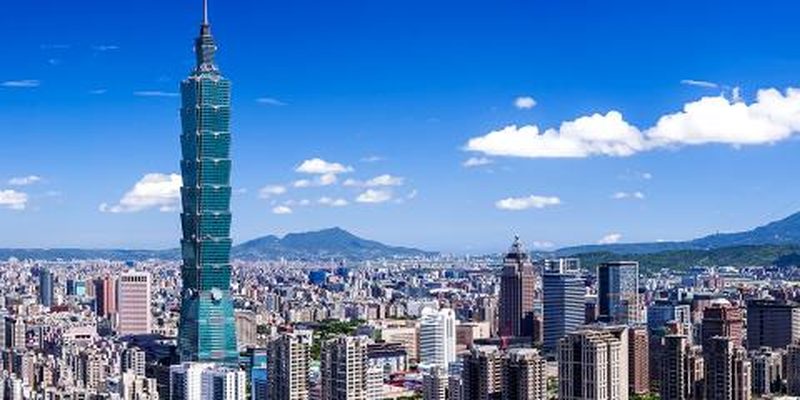
Taiwan — a democratic island of 23 million people off China’s coast — is the most dangerous flashpoint in world politics. Beijing claims it as a breakaway province to be reunified, by force if necessary; Washington is committed by law to helping Taiwan defend itself; and the island’s world-dominating semiconductor industry means a conflict would shatter the global economy. Understanding the Taiwan question requires grasping a century of history and the delicate status quo all sides claim to defend.
How did the Taiwan question arise?
The story begins with China’s civil war: when the Communists won in 1949, Chiang Kai-shek’s Nationalists fled to Taiwan, and both sides claimed to be the legitimate government of all China. For decades most countries recognised Taipei; then, in 1971, the UN seat switched to Beijing, and in 1979 Washington derecognised Taiwan too. The island democratised in the 1990s, developing its own distinct identity — most Taiwanese today identify as Taiwanese, not Chinese. Beijing’s position hardened in parallel: the 2005 Anti-Secession Law authorises force if Taiwan declares independence or reunification becomes impossible.
What is the status quo?
The status quo is a masterpiece of constructive ambiguity. The United States maintains strategic ambiguity — neither confirming nor denying whether it would fight for Taiwan — while the Taiwan Relations Act obliges it to provide defensive arms. Most countries, including India, do not recognise Taiwan diplomatically but maintain robust unofficial ties. Taiwan governs itself, holds elections and fields an army, while participating in global trade as an economic heavyweight. All sides officially oppose changing this arrangement unilaterally — yet each defines it differently, which is why the ambiguity both preserves peace and breeds miscalculation.
Why does Taiwan matter so much?
Three stakes make Taiwan irreplaceable. Strategically, the island anchors the first island chain containing Chinese naval power; its fall would transform the Pacific balance. Economically, Taiwan’s TSMC fabricates the overwhelming majority of the world’s most advanced semiconductors — the chips in everything from phones to fighter jets — making a conflict an instant global depression. Ideologically, Taiwan is proof that Chinese culture and democracy are compatible, a standing rebuke to Beijing’s claim that authoritarianism suits China. These overlapping stakes explain why Washington, Tokyo and increasingly Europe treat Taiwan’s fate as their own.
How close is conflict?
Tensions have risen sharply: China conducts near-daily military incursions around the island, practises blockades in exercises, and its leadership speaks of reunification as a historic mission tied to national rejuvenation. American intelligence assessments of timelines vary, and deterrence — arms sales, allied coordination, economic warnings — aims to keep invasion unthinkable. The most likely scenarios analysts discuss are not full invasion but coercion: blockades, grey-zone pressure and cyber campaigns designed to subjugate Taiwan without war.
- Deterrence: US arms packages, Japanese contingency planning and allied statements raise Beijing’s expected costs.
- Reassurance: Washington simultaneously restrains Taipei from formal independence moves that could trigger war.
- Economic shield: the semiconductor dominance some call Taiwan’s silicon shield complicates any attacker’s calculus.
- Miscalculation risk: with military activity at record levels, accident or misreading remains the gravest near-term danger.
The Taiwan question has no agreed solution — only management. The status quo survives because every alternative is worse for someone powerful. Keeping it that way, through deterrence and diplomacy in equal measure, is the central security challenge of our time.
India’s delicate Taiwan tightrope
India does not recognise Taiwan diplomatically, adhering to a version of the One China policy — yet ties have deepened steadily. The India-Taipei Association functions as a de facto embassy, trade is growing, and Taiwanese firms are investing in Indian electronics manufacturing as both sides diversify from China. After the 2020 Galwan clash, Indian commentary grew openly sympathetic to Taiwan, and parliamentary exchanges increased. New Delhi’s calculus is careful: stronger Taiwan ties signal resolve to Beijing without crossing red lines that could escalate the Himalayan standoff.
FAQs
Is Taiwan a country?
It functions as one — with elections, currency, military and passports — but only a dozen states recognise it diplomatically; most countries maintain unofficial relations.
Would the US fight for Taiwan?
Washington keeps strategic ambiguity: the Taiwan Relations Act requires helping Taiwan defend itself, without explicitly committing American forces.
Why are semiconductors central?
Taiwan’s TSMC makes most of the world’s advanced chips; a conflict would halt production of phones, cars and weapons globally — an instant economic catastrophe.
Compiled by the Khabar 24h Editorial Desk from publicly available sources.

Khabar 24h Editorial Desk — our explainers are prepared by the Khabar 24h editorial team using AI-assisted research tools, and every piece is reviewed by a human editor before publishing. We do not claim original reporting: our work is turning complex topics into simple, accurate summaries. Spotted an error? Write to contact@khabar24h.com — our corrections policy aims for same-day review.
More from this author →