Reserved Constituencies in India: How SC and ST Seat Reservation and Rotation Work
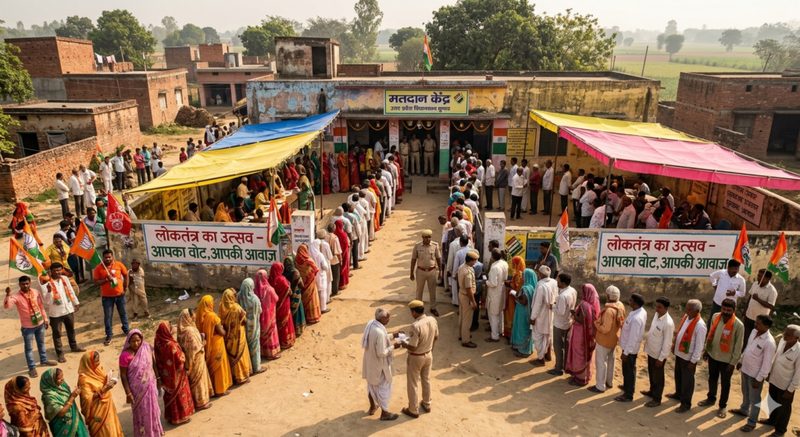
India’s Constitution guarantees political representation for its most disadvantaged communities through reserved constituencies: parliamentary and assembly seats where only candidates belonging to the Scheduled Castes or Scheduled Tribes can contest. This system of political reservation, distinct from reservations in jobs and education, has shaped Indian democracy since the first general election. Here is how it works and why it remains debated.
Why reservation in legislatures exists
The framers feared that in a caste-divided society, SCs and STs might never win elections in open competition against dominant castes. Political reservation was the answer: a guaranteed minimum presence in every legislature, ensuring the concerns of these communities could not be ignored. The provision was originally meant to last ten years but has been extended repeatedly, most recently to 2030, reflecting the judgment that the underlying disadvantage persists. It is the oldest surviving affirmative-action measure in Indian constitutional law.
How reserved constituencies are chosen
The Delimitation Commission decides which constituencies are reserved, based on the concentration of SC and ST populations. Seats are reserved in proportion to each group’s share of the state’s population: if SCs form 16 per cent of a state’s people, roughly 16 per cent of its seats are reserved for them. The Commission selects constituencies where the SC or ST population is largest, spreading reservation across the state. Everyone votes in a reserved constituency, but only SC or ST candidates can stand, a design meant to make representatives accountable to the whole electorate while guaranteeing direct community representation.
How rotation works
Reserved status is not permanent for any constituency. Each delimitation exercise rotates reservation among constituencies, so that seats reserved in one cycle may become open in the next and vice versa. Rotation serves two purposes: it prevents the emergence of entrenched fiefdoms in reserved seats, and it spreads the experience of electing SC and ST representatives across regions. For sitting MLAs and MPs, rotation can be brutal: a representative may find their own constituency de-reserved, forcing them to seek a new seat or sit out.
The impact on representation
Political reservation has brought thousands of SC and ST legislators into public life and ensured that issues like atrocities, land rights and welfare delivery reach legislative agendas. Critics argue it has produced tokenism: representatives dependent on dominant-caste votes may avoid assertive advocacy, and parties often field pliant candidates. Defenders respond that without reservation there would be near-zero representation, and that even constrained presence changes what legislatures discuss. The truth contains both: reservation guarantees seats, but not always voice.
The debate over extension and expansion
Every extension of political reservation sparks debate. Supporters cite continuing caste discrimination and underrepresentation in power structures; opponents argue that seven decades of reservation should have sufficed and that it entrenches caste identities in politics. Parallel demands have grown: for reservation for Other Backward Classes in legislatures, and most prominently, for women’s reservation, which was finally enacted in 2023 with implementation tied to the next delimitation. The reserved-constituency system is thus both a settled feature and a live controversy.
Women’s reservation: the next frontier
In 2023, Parliament enacted the women’s reservation law, reserving one-third of seats in the Lok Sabha and state assemblies for women, including within the SC and ST quotas. Implementation, however, is tied to the next Census and delimitation, meaning the first elections under the new system are still years away. The law’s design, rotation of reserved seats for women, mirrors the SC and ST rotation system and will pose similar challenges for incumbents. When implemented, it will be the largest expansion of political reservation since Independence.
FAQs
Do only SC voters vote in SC-reserved seats? No. All registered voters in the constituency vote; only the candidates are restricted to the SC community, and likewise for ST seats.
How long will political reservation continue? It is currently extended to 2030 by constitutional amendment; further extension requires Parliament to act again.
Are there reserved seats in the Rajya Sabha? No. Reservation applies to the Lok Sabha and state assemblies, not to the indirectly elected upper House.
Reserved constituencies embody Indian democracy’s founding compromise: formal political equality was not enough, so the Constitution engineered representation for those whom history had silenced.
The system’s endurance testifies to a hard truth: representation must sometimes be engineered before it can be equal.
Compiled by the Khabar 24h Editorial Desk from publicly available sources.

Khabar 24h Editorial Desk — our explainers are prepared by the Khabar 24h editorial team using AI-assisted research tools, and every piece is reviewed by a human editor before publishing. We do not claim original reporting: our work is turning complex topics into simple, accurate summaries. Spotted an error? Write to contact@khabar24h.com — our corrections policy aims for same-day review.
More from this author →