No-Confidence Motions Explained: How Governments Are Tested in Parliament
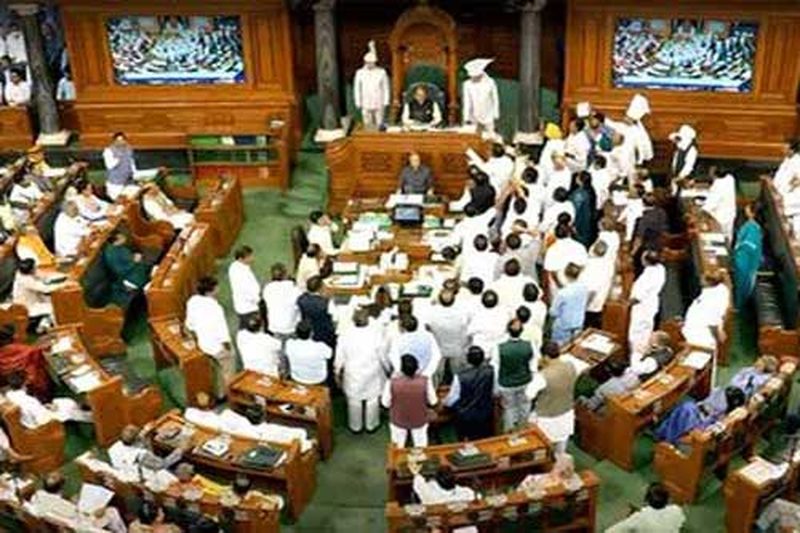
Few parliamentary moments are as dramatic as a no-confidence motion: the government of the day forced to defend its record in open debate, with its survival hanging on a single vote. In India’s parliamentary system, where the executive lives or dies by the legislature’s confidence, the no-confidence motion is the ultimate test of a government’s legitimacy. Here is how it works and why it matters.
What a no-confidence motion is
A no-confidence motion is a formal proposal, moved by a member of the Lok Sabha, declaring that the House has no confidence in the Council of Ministers. It is the direct expression of the principle of collective responsibility: a government that cannot command the House’s confidence cannot continue in office. The motion can be moved only in the Lok Sabha, never in the Rajya Sabha, because only the lower House determines the government’s survival. At least 50 members must support the motion for it to be admitted, a threshold that prevents frivolous use.
How the procedure unfolds
Once admitted, the Speaker allots a date for discussion, usually within ten days. The debate is wide-ranging: unlike most parliamentary business, a no-confidence debate allows the opposition to raise any aspect of the government’s record, from economic policy to national security. The Prime Minister traditionally replies to the debate, defending the government point by point. At the end, the House votes. If the motion is carried, the government must resign. If it is defeated, the government continues, politically strengthened by having survived the test.
What defeat or victory means
A defeated motion often helps the government: it forces fence-sitters to declare their support publicly and lets the Prime Minister dominate the national conversation for days. Opposition parties know this, which is why motions are sometimes moved even when defeat is certain, to compel a debate the government would rather avoid. A carried motion, by contrast, is immediately fatal. The Council of Ministers must resign, and the President must explore alternatives, inviting another leader to try to command a majority or dissolving the House for fresh elections.
Famous no-confidence battles
India’s parliamentary history is studded with memorable motions. In 1979, the Morarji Desai government resigned before a no-confidence vote it was certain to lose, the first fall of a non-Congress government at the Centre. In 1993, the Narasimha Rao government survived a no-confidence motion by a razor-thin margin amid allegations that would haunt it for years. In 2003, the Vajpayee government comfortably defeated a motion over Gujarat. In 2018 and again in 2023, opposition motions against the Modi government were defeated numerically but used as platforms for extended political attack. Each episode shows the motion’s dual character: a survival test and a debating stage.
No-confidence versus other confidence tests
The no-confidence motion is not the only way a government’s majority is tested. Governments can themselves move a confidence motion to prove their support, as often happens after a coalition realignment. Financial defeats, such as the rejection of the budget or a cut motion, are also treated as expressions of no confidence. And in the states, the equivalent drama plays out through floor tests ordered by Governors or courts. The no-confidence motion remains distinctive because it is the opposition’s weapon, forcing the debate on its terms and timing.
Why motions still matter in an era of majorities
In an era of single-party majorities, no-confidence motions rarely threaten governments numerically. Their value lies elsewhere: they guarantee the opposition a full-scale debate with the Prime Minister’s reply, command days of media attention, and put the government’s record under sustained scrutiny. For citizens, the debate offers a rare, structured accounting of power. The motion’s real audience is often not the House, whose arithmetic is known in advance, but the electorate watching from outside.
FAQs
Can a no-confidence motion be moved in the Rajya Sabha? No. Only the Lok Sabha, to which the Council of Ministers is collectively responsible, can entertain it.
How many members must support it for admission? At least 50 members must rise in support when leave is sought; otherwise the motion is not admitted.
What happens if the government loses the vote? The Council of Ministers must resign immediately, and the President decides the next step: an alternative government or fresh elections.
The no-confidence motion distils parliamentary democracy to its essence: power exercised in public, defended in debate, and held only so long as the people’s representatives permit.
Compiled by the Khabar 24h Editorial Desk from publicly available sources.

Khabar 24h Editorial Desk — our explainers are prepared by the Khabar 24h editorial team using AI-assisted research tools, and every piece is reviewed by a human editor before publishing. We do not claim original reporting: our work is turning complex topics into simple, accurate summaries. Spotted an error? Write to contact@khabar24h.com — our corrections policy aims for same-day review.
More from this author →