How the Indian Census Shapes Political Representation
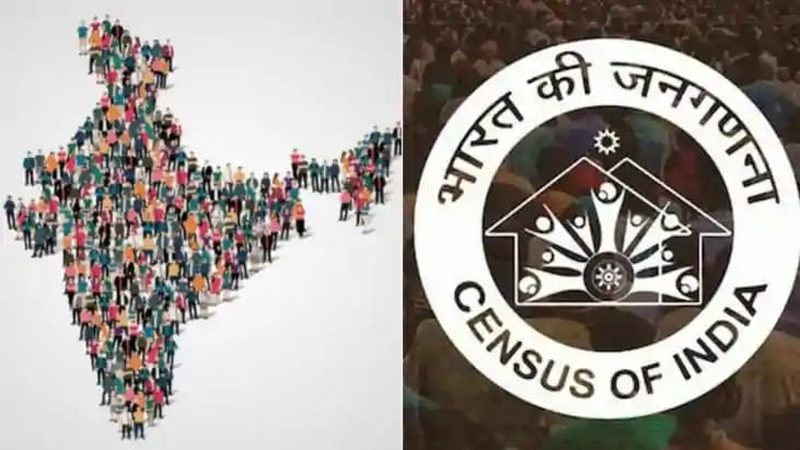
India’s Census is the largest administrative exercise in the world, counting more than 1.4 billion people house by house. The last completed Census was in 2011, and every year of delay deepens the data gap. Beyond its statistical value, the Census is profoundly political: it determines how parliamentary and assembly seats are distributed among states, how constituencies are drawn, and how reservations are calculated. The delayed Census and the coming delimitation exercise make this one of the most sensitive subjects in Indian politics.
What the Census counts and why it matters politically
The Census records population, age, sex, religion, language, literacy, occupation and housing, among dozens of variables. Politically, three uses dominate. First, the allocation of Lok Sabha seats among states is based on population: more people means more seats. Second, the Delimitation Commission redraws constituency boundaries within states to keep populations roughly equal per seat. Third, the number of seats reserved for Scheduled Castes and Scheduled Tribes is fixed in proportion to their population. Every one of these decisions shifts political power.
Delimitation: how the map is redrawn
Delimitation is the redrawing of constituency boundaries after each Census to reflect population changes. An independent Delimitation Commission, chaired by a retired Supreme Court judge with the Chief Election Commissioner as member, carries out the exercise: publishing draft proposals, hearing public objections, and finalising boundaries. Its orders have the force of law and cannot be challenged in court. Delimitation also determines which constituencies are reserved for SCs and STs, rotating reserved status to spread representation.
The freeze and why it exists
After the 1971 Census, Parliament froze the allocation of Lok Sabha seats among states until 2001, later extended to 2026, based on the 1971 population figures. The freeze was a bargain: states that succeeded in controlling population growth, mostly in the south, would not be punished with fewer seats relative to states where population grew faster. Within states, however, delimitation continued on updated figures, most recently in 2008. The freeze expires after 2026, meaning the next delimitation will use current population data for interstate allocation for the first time in half a century.
Why the next delimitation is so contentious
Population growth has diverged sharply between regions. Northern states have grown much faster than southern ones, so a fresh allocation would shift seats northward, reducing the south’s share of the Lok Sabha. Southern states argue this punishes their success in development and family planning and would dilute their voice in national decisions. Proposals to address the imbalance include expanding the Lok Sabha’s total strength so no state loses seats in absolute terms, but the relative shift in influence would remain. The debate fuses demography, development and federalism into a single explosive question. The law caps the Lok Sabha at 550 elected members, and the new Parliament building’s larger chamber was designed with expansion in mind, signalling that a bigger House is the likely compromise.
The delayed Census
The 2021 Census, which would have provided the data for all of this, was postponed due to the pandemic and has not yet been conducted, leaving India without fresh population data for over a decade. The delay has also stalled the women’s reservation law, whose implementation is tied to the next Census and delimitation, linking gender representation to the same demographic timetable. The delay affects not only delimitation but welfare targeting, reservation calculations and economic planning, all of which still run on 2011 figures. When the Census finally happens, its results will trigger the delimitation process and force the political system to confront the representation question it has deferred for fifty years.
FAQs
What is delimitation? The redrawing of parliamentary and assembly constituency boundaries to reflect population changes recorded in the Census.
Can delimitation orders be challenged in court? No. The Constitution bars courts from questioning the Delimitation Commission’s orders or the validity of laws relating to delimitation.
Why was the seat allocation frozen? To avoid penalising states that controlled population growth, by keeping interstate seat shares fixed at 1971 population levels until after 2026.
The Census is never just a count: in India, it is the periodic renegotiation of who gets how much voice in the republic, counted house by house.
When the count finally happens, it will redraw not just maps but the balance of power itself.
Compiled by the Khabar 24h Editorial Desk from publicly available sources.

Khabar 24h Editorial Desk — our explainers are prepared by the Khabar 24h editorial team using AI-assisted research tools, and every piece is reviewed by a human editor before publishing. We do not claim original reporting: our work is turning complex topics into simple, accurate summaries. Spotted an error? Write to contact@khabar24h.com — our corrections policy aims for same-day review.
More from this author →