How the European Union Is Governed: Parliament, Commission and Council Explained
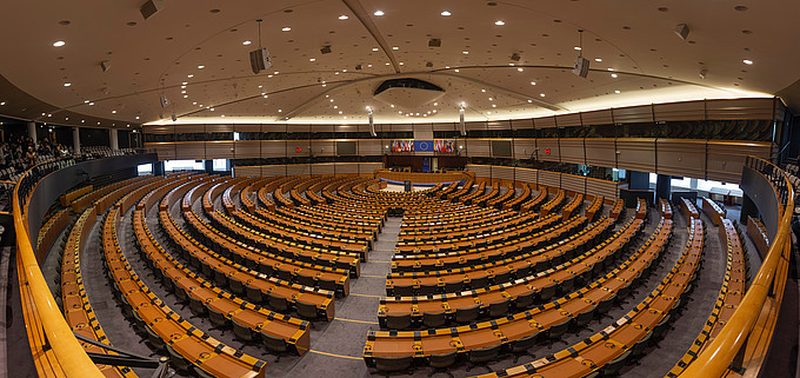
The European Union governs 450 million people across 27 countries through an institutional triangle found nowhere else: a directly elected Parliament, a Commission that proposes laws, and a Council where national governments decide. Understanding how these three bodies interact is the key to understanding how Europe is run, and why EU decision-making often seems so bewilderingly complex. Its decisions shape daily life more directly than most realise, from the air Europeans breathe to the data on their phones.
The European Parliament: the elected voice
The European Parliament is the world’s only directly elected transnational legislature, with 720 members chosen every five years by proportional representation in each member state. It shares legislative power with the Council under the ordinary legislative procedure: most EU laws need Parliament’s approval. It also approves the EU budget, confirms the Commission President and the College of Commissioners, and can dismiss the Commission by censure. Its power has grown with every treaty, transforming it from a talking shop into a genuine co-legislator.
The European Commission: the executive
The Commission is the EU’s executive and civil service, with one commissioner per member state, including a President proposed by national leaders and approved by Parliament. It holds the sole right to propose EU legislation, enforces EU law against member states, manages the budget, and negotiates trade deals. Commissioners swear allegiance to Europe, not their home countries, embodying the supranational ideal. The Commission’s power to take member states to court for breaking EU law makes it the guardian of the treaties.
The Council: the member states’ chamber
The Council of the European Union brings together national ministers by policy area, agriculture ministers for farm policy, finance ministers for economic matters, to legislate jointly with Parliament and coordinate policy. Above it sits the European Council of heads of state and government, which sets the EU’s strategic direction by consensus. Voting in the Council uses qualified majority voting for most matters: 55 per cent of states representing 65 per cent of the population, a double-majority system balancing states and citizens.
How EU laws are made
The ordinary legislative procedure is a three-way negotiation: the Commission proposes, Parliament and the Council amend and must agree on an identical text, with conciliation committees resolving differences. The process is slow and consensus-seeking, designed to ensure no major interest is overridden. Regulations apply directly across the Union; directives set goals that member states transpose into national law. The result is a body of law that shapes everything from food safety to digital privacy across the continent. Informal trilogue negotiations between Parliament, Council and Commission now settle most legislation before formal votes, a practice critics call opaque but defenders call efficient.
The democratic deficit debate
The EU’s perennial criticism is the democratic deficit: the Commission, which proposes laws, is not directly elected, and turnout in European elections is lower than in national ones. Defenders respond that the Parliament is directly elected, national parliaments scrutinise EU business, and the Council represents elected governments, creating multiple democratic channels. The debate reflects a deeper question: can democracy function beyond the nation-state, or does legitimate self-government require a single people?
Democratic innovations and their limits
The EU has experimented with democratic innovations: European Citizens’ Initiatives let a million citizens demand Commission proposals, and lead-candidate systems link European elections to the Commission presidency. Turnout, however, remains stubbornly below national levels, and most citizens still experience the EU through their national governments rather than directly. Bridging that distance remains the Union’s central democratic challenge.
FAQs
What is the difference between the European Council and the Council of the EU? The European Council gathers heads of state to set strategy; the Council of the EU gathers ministers to legislate.
Who leads the EU? No single person: the Commission President runs the executive, the European Council President chairs summits, and the rotating Council presidency sets ministerial agendas.
Can EU law override national law? Yes. The EU’s highest court has held that EU law takes precedence over conflicting national law, a cornerstone of the system.
The EU’s institutional triangle is an experiment in governing beyond the nation-state: messy, slow and compromise-bound, yet the most ambitious democratic project of the modern age by far.
Whether Europe’s experiment succeeds will shape the future of democracy beyond the nation-state.
Compiled by the Khabar 24h Editorial Desk from publicly available sources.

Khabar 24h Editorial Desk — our explainers are prepared by the Khabar 24h editorial team using AI-assisted research tools, and every piece is reviewed by a human editor before publishing. We do not claim original reporting: our work is turning complex topics into simple, accurate summaries. Spotted an error? Write to contact@khabar24h.com — our corrections policy aims for same-day review.
More from this author →