PMAY Explained: How the Government Builds Homes for the Urban and Rural Poor
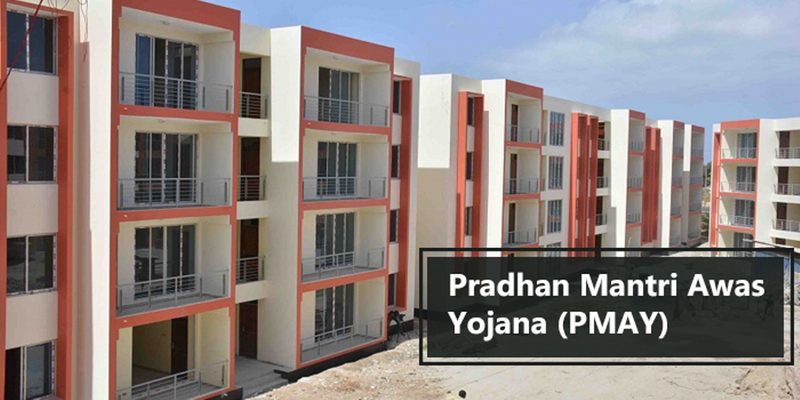
Housing is the most visible marker of poverty in India: the thatched roof, the leaking slum shack, the family that has lived for generations without a pucca house. The Pradhan Mantri Awas Yojana, launched in 2015, set out to end this with the boldest housing promise in Indian history: a pucca house for every poor family, in villages under PMAY-Gramin and in cities under PMAY-Urban. The targets ran into crores of houses, backed by tens of thousands of crores in subsidies. This explainer looks at how the two missions work, who actually gets a house, and what independent assessments found.
PMAY-Gramin: houses for the rural poor
PMAY-Gramin gives rural beneficiaries a subsidy, currently 1.2 lakh rupees in plain areas and 1.3 lakh in hilly and difficult areas, to build their own house, paid in instalments directly into bank accounts as construction progresses. Beneficiaries are identified through the Socio-Economic Caste Census and verified by gram sabhas, prioritising the houseless and those in kutcha houses. The houses must include a toilet, and convergence with other schemes provides LPG connections, electricity and water. The design insists on owner-driven construction: the family builds, choosing the design within minimum size norms, which keeps costs down and dignity up. Over two crore rural houses have been completed, making it among the world’s largest housing programmes.
PMAY-Urban: four routes to a city home
Urban housing is more complex, and PMAY-Urban offers four verticals. In-situ slum redevelopment rebuilds slums with private developers, giving residents free apartments funded by market-sale components. The credit-linked subsidy gives interest subsidies on home loans to economically weaker sections and middle-income buyers. Affordable housing in partnership supports projects where states or private builders create budget homes. And beneficiary-led construction gives subsidies to families building on their own urban land. The urban mission’s progress has been slower than the rural one: land is scarce and contested in cities, slum redevelopment depends on developer economics, and identifying beneficiaries in fluid urban populations is hard.
Who gets left out
Targeting is the programme’s perennial challenge. The SECC-based lists miss the newly poor and include inclusion errors; migrants, who need urban housing most, often lack the documents to qualify; and the urban homeless fall through the cracks of schemes designed for settled families. In cities, the credit-linked subsidy disproportionately benefited the lower-middle class rather than the poorest, who cannot access formal home loans at all. Rental housing, the actual need of most urban poor, was barely addressed until the later Affordable Rental Housing Complexes sub-scheme. The pattern is familiar: the scheme serves the settled, documented poor far better than the mobile, undocumented ones.
Quality and corruption
Building crores of houses invites the classic pathologies: inflated muster rolls, substandard construction, and middlemen skimming instalments. The programme’s defences are direct benefit transfer, geo-tagged photographic monitoring of construction stages, and social audits. Independent assessments found real improvements over earlier housing schemes but also persistent leakages and quality issues, particularly where monitoring was weak. The shift to DBT cut out many intermediaries, but the last-mile, the junior engineer who must certify each construction stage, remains the point of maximum discretion and maximum rent-seeking.
The next phase
With the original targets substantially met in rural areas, the government has approved PMAY-G 2.0 for additional rural houses and PMAY-Urban 2.0 with a crore more urban homes, redesigned verticals and a bigger rental-housing push. The challenges for the next phase are harder: urban land, migrant inclusion, and housing finance for the informally employed. The first phase proved India can build houses at scale; the second must prove it can house the urban poor, not just the rural one, and the migrant, not just the settled.
FAQs
What is PMAY? The Pradhan Mantri Awas Yojana: the central housing mission building pucca houses for poor families, split into rural (PMAY-Gramin) and urban (PMAY-Urban) components.
How much subsidy does a rural family get? Rs 1.2 lakh in plain areas and Rs 1.3 lakh in hilly/difficult areas, paid in instalments via DBT as construction progresses.
What are PMAY-Urban’s four verticals? In-situ slum redevelopment, credit-linked interest subsidy, affordable housing in partnership, and beneficiary-led construction.
PMAY is the largest housing effort India has ever attempted, and its rural arm is a genuine success story. Its urban frontier, housing the migrant, the slum dweller, the homeless, is where the promise will ultimately be judged.
Source: Press Information Bureau

Khabar 24h Editorial Desk — our explainers are prepared by the Khabar 24h editorial team using AI-assisted research tools, and every piece is reviewed by a human editor before publishing. We do not claim original reporting: our work is turning complex topics into simple, accurate summaries. Spotted an error? Write to contact@khabar24h.com — our corrections policy aims for same-day review.
More from this author →