Noida International Airport at Jewar: What Asia’s Biggest Upcoming Airport Means for Delhi-NCR
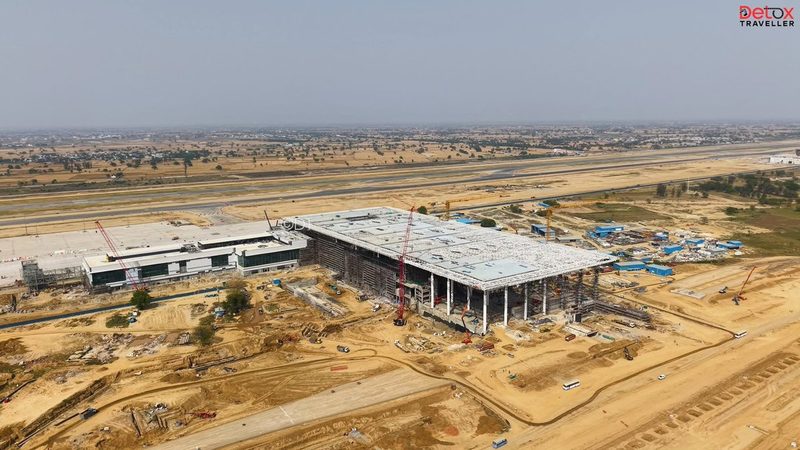
Delhi’s Indira Gandhi International Airport is among the world’s busiest, but it is running out of room to grow. The answer, rising from the fields of Jewar in western Uttar Pradesh, is the Noida International Airport: a greenfield airport planned ultimately for six runways, which would make it among the largest airports in Asia. Developed by the Zurich Airport International consortium under a public-private partnership with the Uttar Pradesh government, the airport began commercial operations in its first phase and is designed to serve the vast eastern and southern catchments of the National Capital Region. This explainer looks at what the airport is, what it means for Delhi-NCR, and the challenges of building an aviation giant from scratch.
The plan
The airport is being built in phases on over 5,000 hectares acquired at Jewar, about 75 kilometres from central Delhi. Phase one delivers a single runway and a terminal with capacity for around 12 million passengers a year; the masterplan scales to six runways and a capacity exceeding 100 million passengers annually, which would put it in the league of the world’s mega-hubs. The concessionaire, majority-owned by Zurich Airport, holds a 40-year concession. The airport is designed as a full-service international gateway with cargo facilities, maintenance-repair-overhaul zones and an aerotropolis of commercial development around it.
Why Delhi needs a second airport
IGI Airport, despite expansions, faces structural constraints: it is hemmed in by the city, night operations are restricted, and peak-hour slots are scarce. Delhi-NCR’s air traffic is projected to keep growing strongly, driven by rising incomes and the region’s economic weight. A second airport relieves the pressure, adds resilience, and, crucially, serves the NCR’s east: Noida, Greater Noida, Ghaziabad and the Yamuna Expressway belt, whose residents currently drive across the capital to fly. Mumbai’s experience with Navi Mumbai airport offers the parallel: mega-cities eventually outgrow one airport, and planning the second early is far cheaper than retrofitting later.
Connectivity: the make-or-break factor
An airport 75 kilometres from the city lives or dies on ground connectivity. The Jewar airport’s plan includes direct links to the Yamuna Expressway, a dedicated metro or rapid-rail connection to Delhi and Noida, and integration with the Delhi-Mumbai Expressway via a spur. The Delhi-Varanasi high-speed rail corridor, if built, would also serve the airport. History is littered with well-built airports that struggled because the last mile was missing; Jewar’s planners know the airport’s catchment will only materialise if the journey from South Delhi or Gurugram is predictable and fast. The rapid-rail and metro links are therefore as important as the runways.
Economic and real estate effects
Even before flights began, the airport repriced real estate across the Yamuna Expressway belt, with land prices and housing projects multiplying around Jewar, Dankaur and Tappal. The Uttar Pradesh government has planned industrial and logistics clusters, a film city and commercial zones around the airport, betting that aviation-linked development will transform one of the state’s most backward regions. Cargo is a particular focus: with dedicated freight facilities and 24-hour operations, the airport aims to capture perishables, electronics and e-commerce flows. The employment effects, from construction through operations to the aerotropolis, run into the lakhs over the project’s life.
Risks and open questions
Greenfield airports face classic risks: traffic may ramp up slower than projected, airlines may be reluctant to split operations across two Delhi airports, and the ground-connectivity projects may lag the runways. Environmental clearances for a project of this scale, on former farmland near sensitive zones, have required careful management, and farmer compensation for land acquisition was a political issue for years. Competition with IGI, operated by a different private group, will play out in airline incentives and slot strategies. The airport’s success ultimately depends on the NCR’s growth story continuing, and on the state delivering the roads and rails that make Jewar feel close.
FAQs
Where is Noida International Airport? At Jewar in Gautam Buddh Nagar district, Uttar Pradesh, about 75 km from central Delhi, off the Yamuna Expressway.
How big will it be? The masterplan envisages six runways and capacity of over 100 million passengers a year, which would rank it among Asia’s largest airports.
Who is building it? Zurich Airport International leads the concessionaire under a PPP with the Uttar Pradesh government.
Jewar is a bet that Delhi-NCR’s growth has decades to run and that aviation infrastructure must be built ahead of demand, not behind it. If the bet pays off, the fields of Jewar will become the eastern gateway to the capital.
Source: The Times of India

Khabar 24h Editorial Desk — our explainers are prepared by the Khabar 24h editorial team using AI-assisted research tools, and every piece is reviewed by a human editor before publishing. We do not claim original reporting: our work is turning complex topics into simple, accurate summaries. Spotted an error? Write to contact@khabar24h.com — our corrections policy aims for same-day review.
More from this author →