NCC Explained: Inside India’s Largest Uniformed Youth Organisation
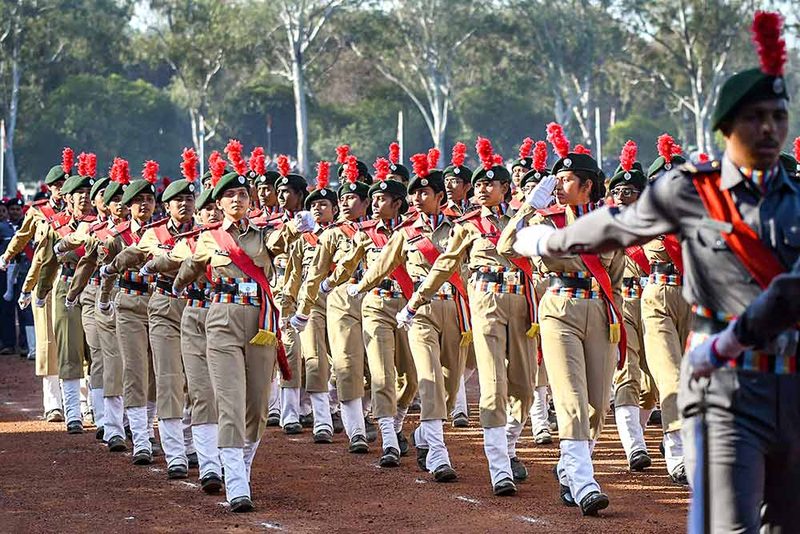
Fourteen lakh young Indians wear the uniform: the National Cadet Corps, with cadets in schools and colleges across the country, is the largest uniformed youth organisation in the world. Part military training, part leadership school, part adventure programme, the NCC has shaped generations of Indians, including some of the country’s most distinguished soldiers, administrators, and public figures. As the government expands its footprint and adds new initiatives, the corps is more visible than ever. This is inside India’s NCC.
What the NCC is
The NCC is a tri-services organisation, Army, Navy, and Air Force wings, administered by the Ministry of Defence, enrolling students from Class 8 upward in junior and senior divisions. Its motto, unity and discipline, captures the dual mission: to develop character, comradeship, and leadership among youth, and to create a pool of trained, motivated young people available for national service, including a pipeline for the armed forces. Training is weekly at the unit level, parades, weapon training, map reading, first aid, disaster management, plus annual training camps and prestigious national camps. Cadets wear the uniform, follow military courtesies, and absorb, in the corps’ phrase, the values of the services. Enrolment is voluntary, and the organisation’s scale, 14 lakh cadets and growing toward 20 lakh under expansion plans, makes it a unique national institution.
Camps: the heart of the experience
Ask any NCC alumnus about the corps and they will talk about camps. The annual training camps bring cadets together for ten days of intensive routine: reveille, parade, classes, competitions, and camaraderie. Above them sits a pyramid of prestigious national camps: the Republic Day Camp in Delhi, where the best cadets from every state march on Rajpath and compete for the Prime Minister’s banner; the Thal Sainik Camp for Army wing cadets; Nau Sainik and Vayu Sainik camps for Navy and Air Force wings; and adventure camps offering trekking, mountaineering, sailing, and parasailing. The attachment camps with regular army, navy, and air force units give cadets a taste of service life. For many cadets, especially from small towns and rural colleges, camps are transformative: the first time away from home, the first experience of national diversity, the first test of endurance. The campfire friendships, NCC lore holds, last lifetimes.
The armed forces pipeline
The NCC’s most tangible institutional role is as a feeder for the armed forces. NCC certificate holders get tangible advantages: C certificate holders with the required grades can apply for officer entry through the NCC special entry scheme, bypassing the written examination; Agniveer recruitment offers bonus marks and reservations for NCC cadets; and the training itself, drill, firing, fieldcraft, gives cadets a head start. A significant share of officers and soldiers come through NCC ranks, and the corps takes pride in its gallantry award winners. Beyond the military, the NCC certificate carries weight in public sector hiring, state police recruitment, and educational admissions, making it a genuine asset for youth employment. For the defence establishment, the corps is a strategic reserve of basic-trained youth, a consideration that gained salience in recent security debates.
Discipline, service, and criticism
The NCC’s educational philosophy is character through military method: drill instils discipline, camp life teaches self-reliance, and social service, blood donation, tree plantation, Swachh Bharat activities, anti-drug campaigns, connects cadets to community. Supporters credit the corps with building confidence, leadership, and national integration, bringing together cadets across region, religion, and class in a shared uniform. Critics raise familiar questions: whether military-style training is appropriate for all youth, whether the corps’ resources might be better spent on other youth programmes, and whether its expansion sometimes outpaces the availability of quality training staff and infrastructure. There are also perennial concerns about the quality of training in remote units and the uneven experience across states. The corps’ leadership acknowledges the challenges while pointing to demand: institutions queue for NCC units, and expansion, not contraction, is the policy direction.
The NCC’s next chapter
The corps is evolving. Expansion toward 20 lakh cadets, with new units in border and coastal areas, reflects a strategic view of youth mobilisation. New initiatives include greater emphasis on disaster management training, cyber awareness, and skill development aligned with national missions. The NCC’s role in national events, from Republic Day to disaster relief deployments, keeps it in the public eye. Digital systems for administration and training content are modernising the corps’ back end. Through all this, the core proposition remains what it was at the corps’ founding in 1948: that wearing the uniform, however briefly, changes young people, teaching them discipline, service, and the meaning of the nation. Fourteen lakh cadets, and counting, suggest the proposition still resonates.
FAQs
Who can join the NCC? Students from Class 8 upward in schools and colleges with NCC units; enrolment is voluntary through the institution’s NCC officer.
What are NCC certificates? Graded qualifications, A, B, and C certificates, earned through training and examinations, with C certificate holders eligible for special officer entry into the armed forces.
Is NCC training military service? No, it is voluntary youth training with no service liability, though it provides advantages in defence recruitment.
Unity and discipline: the NCC’s motto describes both its method and its product. As the world’s largest uniformed youth organisation, it remains one of independent India’s most distinctive nation-building institutions.
Compiled by the Khabar 24h Editorial Desk from publicly available sources.

Khabar 24h Editorial Desk — our explainers are prepared by the Khabar 24h editorial team using AI-assisted research tools, and every piece is reviewed by a human editor before publishing. We do not claim original reporting: our work is turning complex topics into simple, accurate summaries. Spotted an error? Write to contact@khabar24h.com — our corrections policy aims for same-day review.
More from this author →