MSP Explained: How Minimum Support Prices Are Set, and Who Really Benefits
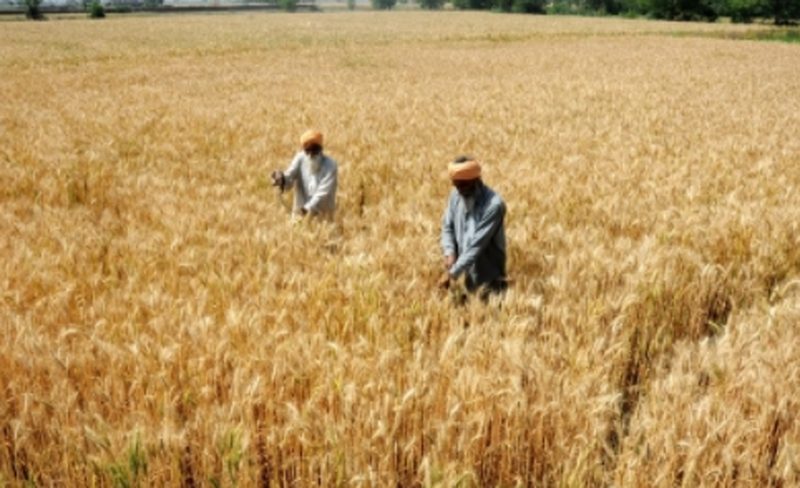
Minimum Support Prices are the Indian state’s promise to farmers: that for 23 notified crops, the government will buy at a pre-announced floor price if the market falls below it. Born in the Green Revolution 1960s, MSP underpins the procurement of rice and wheat that feeds the public distribution system, shapes cropping choices across the country, and triggers some of India’s fiercest political battles, most recently the year-long farmer protests of 2020-21 that began over laws perceived as threatening it. This explainer covers how MSPs are set, who really benefits, and why the system endures despite its critics.
How MSPs are set
The process runs through the Commission for Agricultural Costs and Prices, CACP, an expert body that recommends MSPs each season for kharif and rabi crops. The Commission computes the cost of cultivation using three measures: A2, actual paid-out costs plus imputed family labour; A2+FL, adding family labour; and C2, the comprehensive cost including rental value of owned land and interest on capital. Since 2018, the government’s stated principle has been to fix MSP at 1.5 times the A2+FL cost, a formula whose adequacy farmers dispute, since it excludes the fuller C2 cost. The CACP also weighs demand-supply, price trends, inter-crop parity, and the implications for consumers and the food subsidy bill. The Cabinet then approves the recommendations, usually with minimal changes. The announced MSPs cover 23 crops: cereals, pulses, oilseeds, cotton, jute, and copra, though effective procurement concentrates overwhelmingly on rice and wheat.
The procurement machine
MSP is only as real as procurement, and procurement is where the system’s geography skews. The Food Corporation of India and state agencies buy rice and wheat at MSP in massive quantities, concentrated in Punjab, Haryana, Madhya Pradesh, and western Uttar Pradesh, where mandi infrastructure, commission agents, and state procurement machinery are deeply entrenched. For most other crops and most other states, MSP exists on paper: market prices frequently rule below MSP for pulses, oilseeds, and coarse grains, with only token procurement through NAFED and state agencies under the Price Support Scheme. The result is a dual reality: for wheat and paddy farmers in the procurement belt, MSP is a genuine floor price that shapes every sowing decision; for a pulses farmer in Maharashtra or a cotton farmer facing a price crash, it is often a number announced in Delhi and ignored in the mandi. This gap between promise and procurement is the system’s central inequity.
Who really benefits
The data on beneficiaries is sobering for MSP’s egalitarian image. NSS surveys have consistently found that a minority of farming households, often under 10 per cent for paddy and wheat, actually sell to procurement agencies; the beneficiaries are disproportionately larger farmers in the procurement states, while smallholders, tenant farmers, and those in non-procurement regions sell to private traders at market rates. Yet the system’s defenders argue its benefits diffuse: MSP sets a reference price that lifts even private market rates, and the procurement apparatus, whatever its inequities, built the grain surplus that ended India’s dependence on food aid. The political economy is undeniable: MSP is the most credible income assurance Indian farmers have, and attempts to dilute it, real or perceived, provoke existential resistance, as the farm-law agitation demonstrated. Any reform must reckon with the fact that for crores of farmers, MSP is not a policy detail but the difference between viability and ruin.
The distortions critics cite
Economists’ critique of MSP is well-rehearsed. By guaranteeing rice and wheat prices, the system incentivises their cultivation far beyond agronomic sense: Punjab’s paddy, grown in a semi-arid state with plummeting water tables, is the prime exhibit, with stubble burning, the residue of the paddy-wheat cycle, choking Delhi’s air each winter. The procurement concentration starves pulses and oilseeds, crops India needs, of price signals, perpetuating import dependence. The fiscal cost is enormous: FCI’s overflowing godowns carry tens of millions of tonnes above buffer norms, with storage losses and a food subsidy bill running into lakhs of crores. And WTO constraints limit how far price support can go without breaching subsidy caps. Reform proposals abound: deficiency payments that pay farmers the difference between market and MSP without physical procurement; diversification incentives for water-frugal crops; and shifting support toward per-acre income transfers like PM-KISAN. Each has been debated for years; none has displaced the procurement machine.
Why MSP endures
MSP endures because it works politically even where it fails technically: it is legible, it is bankable, and it is the one farm policy every farmer understands. Reforms that look elegant in seminars, deficiency payments, direct income support, stumble on implementation realities: price data, payment infrastructure, and trust. The 2020-21 protests taught Delhi that farmers experience MSP as a right, not a scheme, and that dismantling it without a trusted replacement is politically impossible. The likely future is incremental: better procurement for pulses and oilseeds, incentives for diversification, and income transfers layered alongside, not instead of, MSP. The floor price will remain the foundation of India’s farm economy; the question is whether the building constructed on it can be made less crooked.
FAQs
How many crops have MSP? 23: cereals including paddy and wheat, pulses, oilseeds, cotton, jute, and copra, announced for kharif and rabi seasons.
Is MSP legally guaranteed? No, MSP is an administrative announcement, not a legal right; farmers’ groups have demanded a legal guarantee, which governments have resisted.
What is 1.5 times A2+FL? The formula for MSP since 2018: 50 per cent margin over paid-out costs plus imputed family labour, a measure farmers consider inadequate.
Minimum Support Prices are India’s farm policy in miniature: vital to those they reach, inadequate for those they miss, distorting in their side effects, and politically untouchable. Understanding MSP is understanding why Indian agriculture reforms so slowly, and matters so much.
Compiled by the Khabar 24h Editorial Desk from publicly available sources.

Khabar 24h Editorial Desk — our explainers are prepared by the Khabar 24h editorial team using AI-assisted research tools, and every piece is reviewed by a human editor before publishing. We do not claim original reporting: our work is turning complex topics into simple, accurate summaries. Spotted an error? Write to contact@khabar24h.com — our corrections policy aims for same-day review.
More from this author →