Lok Adalat: How India’s People’s Courts Settle Cases Without Trial
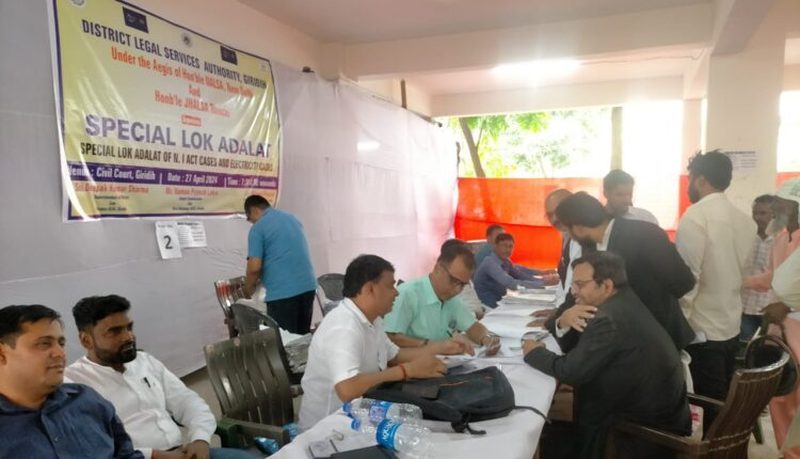
Every year, on designated National Lok Adalat days, court compounds across India fill with a different kind of proceeding: no witness boxes, no cross-examination, just disputing parties sitting across a table with a panel of conciliators, working toward a settlement. Lok Adalats, people’s courts, disposed of lakhs of cases in recent national sittings, from motor accident claims to bank loan recoveries to family disputes. They are one of India’s most successful experiments in alternative dispute resolution, and one of the least understood. This is how they work.
What a Lok Adalat is
A Lok Adalat is a forum where pending or pre-litigation disputes are settled through conciliation and compromise, presided over by a panel typically comprising a judicial officer, a lawyer, and a social worker. The institution has statutory backing under the Legal Services Authorities Act of 1987, which gives Lok Adalats the powers of a civil court for summoning witnesses and receiving evidence, while freeing them from the strict procedures of the Code of Civil Procedure and the Evidence Act. The key feature: a Lok Adalat cannot decide a case on its merits against a party’s will. It can only record a settlement that both sides accept. If no settlement is reached, the case returns to the regular court, with nothing said in the Lok Adalat usable against either party. This voluntary, no-coercion design is what distinguishes Lok Adalats from courts, and it is the source of both their strength and their limits.
How a case moves through the system
Cases reach Lok Adalats in two ways: pending cases are referred by regular courts with the parties’ consent, and pre-litigation disputes, matters that have not yet been filed, can be brought directly, a feature that prevents litigation from starting at all. On Lok Adalat day, the panel hears each matter informally, often in minutes rather than hours: the conciliators identify the core dispute, reality-test each side’s expectations, and propose compromise terms. Motor accident claims are the classic example: the insurer and the claimant’s family negotiate a compensation figure, and if they agree, the award is recorded. The process is fast because it is stripped of adversarial procedure, and it is popular because it is free, no court fee is charged, and any fee already paid is refunded on settlement. National Lok Adalats, organised by the National Legal Services Authority on single days across the country, have settled lakhs of cases in a day, a scale no other dispute-resolution mechanism matches.
What kinds of cases get settled
Lok Adalats handle compoundable matters, cases where the law permits compromise. The bulk of the docket is predictable: motor accident compensation claims, cheque bounce cases under the Negotiable Instruments Act, bank loan and financial recovery matters, labour disputes, family and matrimonial disputes, and public utility bill disputes. Permanent Lok Adalats, a separate tier established for public utility services like transport, power, and water, can additionally decide cases on merits up to a specified value when settlement fails, giving them a hybrid character. What Lok Adalats cannot take: non-compoundable criminal offences, serious crimes where the state, not the parties, is the aggrieved party. Within their domain, though, they are remarkably effective, particularly for high-volume, low-complexity disputes where both sides prefer a quick, certain settlement to years of litigation.
Why the awards are final
Perhaps the most striking feature of the Lok Adalat is finality: its award is deemed a decree of a civil court, executable as such, and no appeal lies against it. This finality is the price and the prize of voluntariness; because both sides consented, the law treats the matter as closed. For litigants, this means certainty: the motor accident victim’s family gets compensation without years of appeals, the bank recovers its dues without protracted execution proceedings. For the system, it means cases leave the docket permanently, unlike regular judgments that ascend through appeals. Critics note the risk: unequal bargaining power can produce settlements that shortchange the weaker party, particularly in consumer or labour disputes, and the absence of appeal removes a safety net. The safeguard is supposed to be the panel’s vigilance against coercion, a responsibility that makes the quality of conciliators decisive.
The quiet workhorse of Indian justice
Lok Adalats rarely make headlines, but their contribution to unclogging Indian courts is enormous. They embody a distinct philosophy of justice: that for many disputes, a fair compromise reached quickly serves people better than a perfect judgment delivered after a decade. Their limitations are real, they cannot handle contested questions of law, serious crimes, or disputes where power imbalances defeat genuine consent, and their quality varies with the panels. But as a complement to formal courts, they are unmatched in scale and accessibility. In a system drowning in arrears, the people’s courts offer a simple lesson: not every dispute needs a trial, and sometimes justice is a settlement both sides can live with.
FAQs
Is Lok Adalat’s decision binding? Yes, the award is deemed a civil court decree and is final; no appeal lies against it.
What does it cost? Nothing. No court fee is charged, and fees paid on pending cases are refunded when settled.
What if no settlement is reached? The case returns to the regular court, and nothing discussed in the Lok Adalat can be used against either party.
Lok Adalats prove that speed and justice are not opposites. For lakhs of Indians each year, the people’s court delivers what the formal system promises but postpones: a resolution, in a day, that both sides accept.
Compiled by the Khabar 24h Editorial Desk from publicly available sources.

Khabar 24h Editorial Desk — our explainers are prepared by the Khabar 24h editorial team using AI-assisted research tools, and every piece is reviewed by a human editor before publishing. We do not claim original reporting: our work is turning complex topics into simple, accurate summaries. Spotted an error? Write to contact@khabar24h.com — our corrections policy aims for same-day review.
More from this author →