Internal Migration in India: The Invisible Workforce Behind the Cities
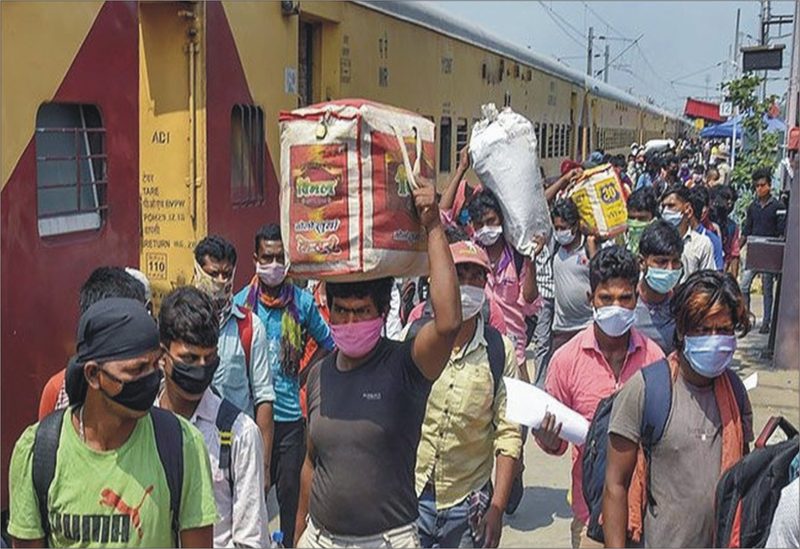
India’s cities are built and serviced by people who officially don’t exist there: the construction workers who raise the towers, the domestic workers who run the homes, the delivery riders, security guards, factory hands and street vendors who keep urban life running. The 2011 Census counted over 45 crore internal migrants; more recent estimates put the migrant workforce above 10 crore. They are the invisible workforce: essential to the economy, excluded from its protections, counted nowhere properly. The COVID-19 lockdowns, when lakhs walked hundreds of kilometres home, briefly made them visible to the nation. This explainer looks at who they are, how they live, and what has changed since the exodus.
Who migrates, and why
Migration in India is predominantly economic and circular: workers move from the poorer states, Bihar, Uttar Pradesh, West Bengal, Odisha, Jharkhand, Madhya Pradesh, Rajasthan, to construction sites, factories and cities across the country, returning home for harvests and festivals. Young men dominate the flows, though women’s migration, for domestic work, construction and increasingly factory jobs, is large and undercounted. The drivers are agrarian distress, the lack of local non-farm jobs, and the wage gaps between source and destination. Remittances sent home sustain entire rural economies; in some districts, migration income exceeds farm income.
How they live
The migrant’s city is a shadow city: labour camps and rented rooms on construction sites, overcrowded tenements in urban villages, pavements and night shelters. Most migrants rent informally, without contracts, and live with minimal services. At work, they cluster in the informal economy: construction, where contractors and labour intermediaries control hiring; domestic work, largely unregulated; and the gig economy’s newest precariat. Wages are often below statutory minimums, working hours are long, and occupational safety is poor. Women migrants face the double burden of wage gaps and unsafe living conditions. The defining feature of migrant life is precarity: no savings, no safety net, one crisis from destitution.
The great exodus
The March 2020 lockdown turned this precarity into a national trauma. With work vanishing overnight and no transport, lakhs of migrants began walking home, hundreds of kilometres, carrying children and belongings. The images, of workers on highways, of deaths from exhaustion and accidents, shamed the nation. The crisis exposed every failure: the absence of migrant databases, the non-portability of rations and welfare, employers who abandoned workers, and states that had no plans. Relief followed: Shramik Special trains, free rations, and the announcement of the One Nation One Ration Card to make food security portable. But the exodus also showed something else: the migrants’ resilience and the rural homes that absorbed them.
What changed after
Post-pandemic reforms have been real but partial. One Nation One Ration Card now lets migrants draw subsidised grain anywhere in the country, a genuine transformation for food security. The e-Shram portal registered crores of unorganised workers, creating the first national database, though linking registration to actual benefits remains weak. The new labour codes subsume migrant-worker protections, but their implementation is pending in many states. Affordable Rental Housing Complexes for urban migrants have been slow to materialise. The fundamental gaps, portable social security, decent rental housing, enforcement of wage and safety laws, remain largely unaddressed.
The city-migrant bargain
India’s urbanisation runs on a bargain it rarely acknowledges: migrants build the cities but cannot afford to live in them as citizens. They vote in their villages, not where they work; they access welfare at home, not at the destination; they are governed as temporary though their stay is permanent. Economists argue this circularity is a feature, letting migrants diversify household income, but the pandemic showed its fragility. A fairer bargain would mean portable welfare, rental housing, worksite safety and political voice at the destination. Until then, the invisible workforce will keep building visible India, one precarious journey at a time.
FAQs
How many internal migrants does India have? The 2011 Census counted over 45 crore; estimates of the migrant workforce exceed 10 crore, though the delayed census leaves current numbers uncertain.
What is One Nation One Ration Card? A system letting ration-card holders draw subsidised foodgrain at any fair-price shop in India, crucial for migrants far from home.
What is e-Shram? A national database for unorganised workers, including migrants, intended as the basis for portable social security.
The pandemic exodus forced India to see its invisible workforce. The question since is whether visibility leads to dignity: portable rights, decent housing and a city that acknowledges the people who built it.
Compiled by the Khabar 24h Editorial Desk from publicly available sources.

Khabar 24h Editorial Desk — our explainers are prepared by the Khabar 24h editorial team using AI-assisted research tools, and every piece is reviewed by a human editor before publishing. We do not claim original reporting: our work is turning complex topics into simple, accurate summaries. Spotted an error? Write to contact@khabar24h.com — our corrections policy aims for same-day review.
More from this author →