How DRDO Works: The Labs Behind India’s Missiles and Fighter Jets
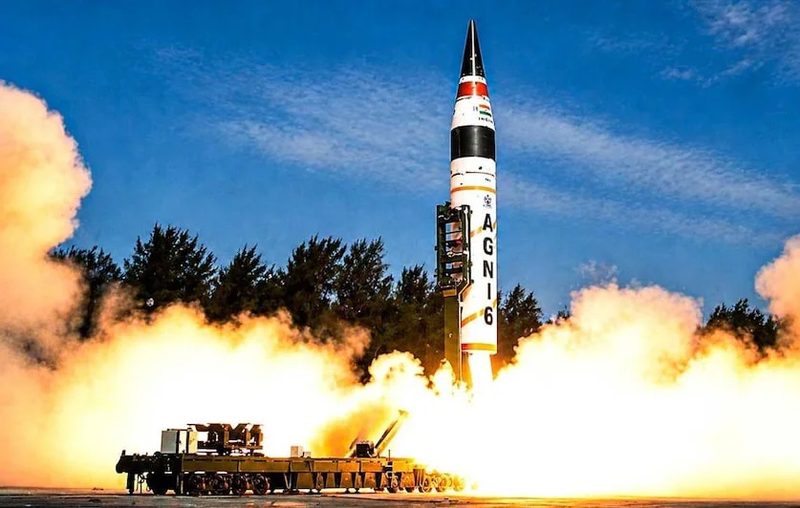
Behind India’s missiles, fighter aircraft upgrades, radars, and electronic warfare systems stands the Defence Research and Development Organisation: a network of over 50 laboratories employing thousands of scientists, with an annual budget running into tens of thousands of crores. DRDO’s record is fiercely debated: celebrated for the Agni and Prithvi missiles, the Tejas fighter’s Indian systems, and recent triumphs in air defence; criticised for decades of delays, cost overruns, and the import dependence that persists. This is how DRDO works and what it has actually delivered.
How DRDO is organised
DRDO is structured as clusters of laboratories grouped by domain: missiles and strategic systems, centred on Hyderabad’s Defence Research and Development Laboratory and the Advanced Systems Laboratory; aeronautics, led by the Aeronautical Development Agency and Bengaluru’s labs; electronics and radars; armaments; naval systems; and life sciences. The organisation sits under the Department of Defence R&D, headed by the DRDO chairman, who is also the Scientific Adviser to the Defence Minister. The development model is lab-to-user: laboratories develop systems, prove them in trials, and transfer technology to production agencies, primarily defence public sector units and increasingly private companies. Recent reforms have pushed for greater private industry participation, technology transfer to startups, and mission-mode projects with fixed timelines, responding to long-standing criticism of the lab-centric, timeline-free culture.
The missile programme: the crown jewel
DRDO’s undisputed triumph is the Integrated Guided Missile Development Programme, launched in 1983 under A.P.J. Abdul Kalam: the Agni series of ballistic missiles, now spanning intercontinental ranges with MIRV capabilities demonstrated in Mission Divyastra; the Prithvi tactical missiles; the Akash air defence system; the Nag anti-tank missile; and the BrahMos supersonic cruise missile, developed with Russia and now among the world’s most successful missile programmes, exported to the Philippines. The strategic systems, Agni and the submarine-launched K-series, underpin India’s nuclear deterrent and represent genuine technological sovereignty: systems no country would sell India, built indigenously. The missile cluster’s record of on-time, on-target deliveries stands in contrast to other DRDO domains and is the organisation’s answer to its critics: given focus, funding, and leadership, Indian labs deliver world-class weapons.
Aeronautics: the harder road
Aircraft have been DRDO’s difficult frontier. The Tejas light combat aircraft, developed by ADA with DRDO labs, took over three decades from sanction to squadron service, becoming a symbol of both indigenous capability and institutional delay; its Indian radar, electronic warfare suite, and weapons integration are genuine achievements, even as the engine remains imported. The Kaveri engine programme’s failure to power the Tejas is the canonical DRDO shortfall, though its technology feeds into drone and marine applications. Current programmes, the Tejas Mk2, the Advanced Medium Combat Aircraft fifth-generation fighter, and the Ghatak stealth drone, are the organisation’s biggest bets, with timelines stretching into the 2030s. The contrast with missiles is instructive: aeronautics demands integration of thousands of systems and sustained funding through failures, a test DRDO is still passing imperfectly.
Radars, air defence, and recent triumphs
DRDO’s quieter successes in sensors and air defence have gained prominence. The organisation’s radars, from battlefield surveillance to long-range tracking, equip the services widely; electronic warfare systems have proven themselves; and the indigenous air defence architecture, layered from Akash to the Ballistic Missile Defence programme’s interceptors, demonstrated real capability in recent crises. Operation Sindoor in 2025 showcased integrated Indian air defence, with DRDO-developed systems prominent in the official accounts. The organisation has also moved into emerging domains: anti-drone systems, directed-energy weapons, quantum communications, and hypersonic technology demonstrators. These programmes reflect a strategic shift: from platform-centric development to networked, layered capabilities suited to modern warfare.
Reforming the behemoth
DRDO reform is a perennial agenda. Expert committees have recommended restructuring into mission-mode teams, empowering project directors, opening labs to private collaboration, and fixing accountability for timelines. Recent years have seen movement: DRDO-industry partnerships, technology transfers to private firms under development-cum-production models, and the opening of test facilities to startups. The Atmanirbhar Bharat push gave political tailwind: import embargo lists for defence items force the services to buy Indian, creating demand for DRDO-developed systems. The fundamental challenge remains cultural: transforming a research organisation into a delivery organisation, where timelines are commitments and users’ needs drive priorities. The missile programme proves it can be done; extending that DNA across 50 labs is the work of a generation.
FAQs
What is DRDO’s biggest success? The missile programme: Agni, Prithvi, Akash, Nag, and BrahMos, which underpin India’s strategic deterrent and air defence.
Why is Tejas delayed? The light combat aircraft took three decades from sanction to service, reflecting the difficulty of indigenous fighter development; Mk1A variants now equip IAF squadrons.
How is DRDO funded? Through the defence budget’s R&D allocation, running into tens of thousands of crores annually, plus project-specific funding.
DRDO is India’s bet that strategic autonomy must be built, not bought. Its missiles guard the nation; its aircraft programmes test its patience. Reforming the organisation to deliver at the speed of its ambitions is among India’s most important technology tasks.
Compiled by the Khabar 24h Editorial Desk from publicly available sources.

Khabar 24h Editorial Desk — our explainers are prepared by the Khabar 24h editorial team using AI-assisted research tools, and every piece is reviewed by a human editor before publishing. We do not claim original reporting: our work is turning complex topics into simple, accurate summaries. Spotted an error? Write to contact@khabar24h.com — our corrections policy aims for same-day review.
More from this author →