Ethanol Blending in India: How Sugarcane Became Fuel
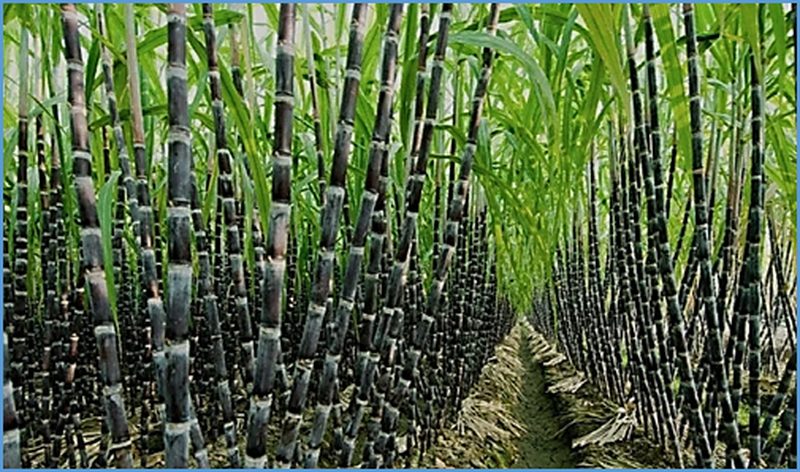
At petrol pumps across India, the fuel you buy now contains 20 per cent ethanol: the national E20 target, originally set for 2030, was advanced and achieved in 2025, one of the fastest ethanol blending ramp-ups anywhere in the world. The programme has redirected millions of tonnes of sugarcane, and increasingly grain, into fuel, paid thousands of crores to farmers and distilleries, and cut oil import dependence. It has also ignited a fierce debate about food versus fuel, vehicle compatibility, and whether the green claims survive scrutiny. This is how sugarcane became fuel.
How the blending programme works
The Ethanol Blended Petrol programme, running since 2003 but supercharged after 2014, mandates oil marketing companies to blend ethanol into petrol, with the percentage rising from 1-2 per cent in the early years to 10 per cent by 2022 and 20 per cent by 2025. Ethanol is procured from distilleries at administered prices differentiated by feedstock: sugarcane juice and syrup, B-heavy and C-heavy molasses, damaged foodgrain, and maize, with maize emerging as a major feedstock. Long-term offtake agreements and interest subvention for distillery capacity drove investment: distillation capacity roughly tripled in a decade. The mechanics at the pump are invisible to the consumer, but the supply chain behind E20, from cane fields to distilleries to oil depots, is now a major agro-industrial complex employing lakhs.
The economics: who gains
The programme’s economic logic has several layers. For sugarcane farmers, especially in Uttar Pradesh and Maharashtra, ethanol offtake provided an alternative revenue stream for surplus sugar, helping mills clear cane arrears that had plagued the sector; payments to farmers and distilleries run into tens of thousands of crores annually. For the exchequer, every percentage point of blending displaces imported crude: the government credits the programme with saving tens of thousands of crores in foreign exchange and cutting millions of tonnes of CO2. For the sugar industry, ethanol transformed the business model: mills became biorefineries, with distillery revenues stabilising an industry notorious for cyclicality. Maize farmers gained a new demand source, with ethanol procurement supporting maize prices. The programme is, in effect, a large transfer from fuel consumers and the exchequer to the rural economy, and its beneficiaries are concentrated and politically significant.
Food versus fuel
The central critique is food versus fuel: diverting sugarcane and grain to ethanol while India faces nutritional challenges and the world faces food price volatility. The government counters that ethanol comes from surplus sugar, not from grain needed for food, and that the feedstock policy prioritises molasses and damaged grain. But the scale complicates this defence: as blending targets rose, so did the diversion of cane juice and then maize, a food and feed crop, raising concerns about feed prices for poultry and dairy. Water is the sharper constraint: sugarcane is among the thirstiest crops, and expanding cane for fuel in water-stressed Maharashtra and Karnataka alarms hydrologists. Environmental economists also question the net carbon benefit once land-use change, fertiliser, and distillation energy are fully accounted. The debate mirrors global biofuel controversies, with India’s distinctive twist: a programme driven as much by farm politics as by energy policy.
Vehicles and the E20 rollout
The consumer side brought its own controversy. E20 is not universally compatible: older vehicles designed for E10 can face material degradation and efficiency losses with higher ethanol blends, though the efficiency effect is modest, a few per cent. The rollout proceeded with assurances: vehicles manufactured from 2023 are E20-material-compliant, fuel stations label blends, and the transition was phased. Automakers and consumer groups raised concerns about warranty implications for older vehicles, and the debate over fuel efficiency, ethanol has lower energy content than petrol, became a political talking point. The government’s position: the transition was telegraphed, the vehicle fleet turns over, and the national gains outweigh individual costs. The episode illustrates a recurring pattern of the blending programme: speed of execution outpacing the deliberation its critics wanted.
Beyond E20: what’s next
With E20 achieved, the programme looks outward and upward: discussions of E27 or flex-fuel vehicles, ethanol blending in diesel, and sustainable aviation fuel from ethanol pathways. Second-generation ethanol, from agricultural residue like paddy straw, promises to address the food-versus-fuel critique, though commercial-scale 2G plants have been slow to materialise. The programme’s global significance is growing: India has positioned biofuels in its G20 and Global Biofuels Alliance diplomacy as a developing-world energy transition pathway. Whether ethanol remains the answer depends on electric vehicles’ trajectory: as transport electrifies, liquid biofuels’ role narrows to hard-to-electrify segments like aviation. For now, though, the sugarcane-to-fuel pipeline is one of India’s most consequential agro-energy experiments, and its lessons, on farm-industry linkages, on execution speed, on the politics of green transitions, will outlast the blend percentages.
FAQs
What is E20? Petrol blended with 20 per cent ethanol, the national target India achieved in 2025, up from E10 in 2022.
Where does the ethanol come from? Mainly sugarcane derivatives, sugarcane juice, B-heavy and C-heavy molasses, plus maize and damaged foodgrain.
Is E20 safe for my vehicle? Vehicles made from 2023 are E20-compliant; older vehicles may see minor efficiency effects, a subject of ongoing debate.
Ethanol blending turned a farm surplus into an energy strategy, executed at remarkable speed. Its benefits, to farmers, to forex, to emissions, are real; its costs, in water, food trade-offs, and consumer friction, are real too. India’s fuel now grows in fields, and the country is still reckoning with what that means.
Compiled by the Khabar 24h Editorial Desk from publicly available sources.

Khabar 24h Editorial Desk — our explainers are prepared by the Khabar 24h editorial team using AI-assisted research tools, and every piece is reviewed by a human editor before publishing. We do not claim original reporting: our work is turning complex topics into simple, accurate summaries. Spotted an error? Write to contact@khabar24h.com — our corrections policy aims for same-day review.
More from this author →