BRO Explained: The Border Roads Organisation and the Highways That Guard India’s Frontiers
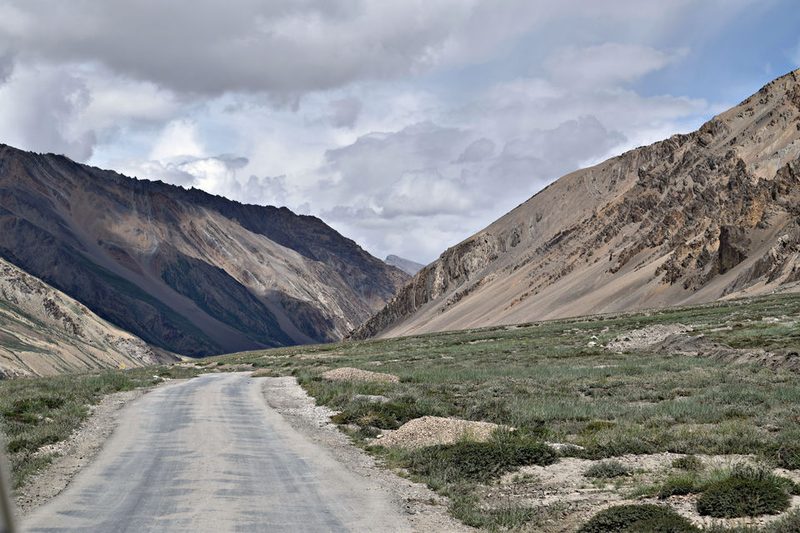
When India needed a road to the world’s highest motorable passes, through avalanche zones and across disputed frontiers, it turned to an organisation that is part engineer, part soldier: the Border Roads Organisation. Raised in 1960 after the border war with China exposed India’s lack of frontier connectivity, the BRO builds and maintains roads in the toughest terrain in the country, from the glaciers of Ladakh to the jungles of Arunachal Pradesh. Its projects have names that have entered national lore: the Atal Tunnel under Rohtang, the road to Daulat Beg Oldie near the Karakoram, the Sela Tunnel in Arunachal. This explainer looks at how the BRO works and why its roads are among India’s most strategic assets.
Why the BRO was created
The 1962 war revealed that Indian troops could not be supplied by road in the border regions, while the adversary moved on better infrastructure. The BRO was raised to ensure that never happened again, with the mandate to build and maintain roads in border areas. It operates under the Ministry of Defence, staffed by a mix of army engineers from the Corps of Engineers and the civilian General Reserve Engineer Force. Its project organisations, with names like Project Himank, Project Beacon and Project Vartak, each take charge of a frontier sector. The BRO’s workforce includes thousands of casual labourers, many from border villages and Nepal, who do the hardest manual work at altitude.
What it builds
The BRO maintains tens of thousands of kilometres of roads, including the strategic arteries to forward areas: the Darbuk-Shyok-Daulat Beg Oldie road in Ladakh, the Leh-Manali and Leh-Srinagar lifelines, the roads to Tawang and the Line of Actual Control in Arunachal, and the frontier highways along the borders with Myanmar and Bhutan. Its signature achievements are tunnels that defeat winter: the 9.02-km Atal Tunnel under Rohtang Pass, which keeps Manali connected to Lahaul-Spiti year-round, and the Sela Tunnel, which ensures all-weather access to Tawang. Bridges over Himalayan rivers, often built with modular steel designs that can be launched quickly, complete the toolkit. Every BRO road is dual-use: civilian lifeline in peace, military artery in crisis.
Building where nothing wants to be built
BRO construction faces conditions that defeat ordinary contractors: working seasons of barely five months at high altitude, temperatures that freeze concrete, landslides that erase a season’s work in a night, and sites accessible only by air or on foot. Workers face altitude sickness, avalanches and rockfall. Materials, from cement to steel to fuel, must be hauled over passes that are themselves the project. The organisation has steadily mechanised, with modern excavators, crushers and pavers replacing some manual labour, but at the farthest sites the work remains brutally physical. Casualties from accidents and the elements are an occupational reality the BRO rarely publicises.
The strategic logic
Every BRO road near the northern borders is a statement of deterrence and a tool of logistics. All-weather connectivity to forward areas means troops, artillery and supplies can move in winter, when passes close and the risk of miscalculation rises. The pace of BRO construction accelerated sharply after the 2020 Ladakh standoff, with emergency procurement powers, extra funding and round-the-clock working on priority axes. China builds on its side at formidable speed, and the infrastructure race along the LAC is now an explicit element of national strategy. Roads, in this context, are not development projects; they are instruments of statecraft.
Beyond roads
The BRO’s mandate has expanded to airfields, with the organisation resurfacing and extending advanced landing grounds near the borders, and to bridges of strategic importance. It has also taken on projects abroad, including roads in friendly neighbouring countries. For border villages, a BRO road is often the first reliable connection to markets, schools and hospitals, and the organisation’s presence brings employment and, sometimes, the only medical aid for miles. The soldier-engineers of the BRO occupy a unique place in India’s imagination: builders who work where the map turns white.
FAQs
When was the BRO founded? In 1960, after the border conflict with China exposed the lack of road connectivity in frontier areas.
What is the Atal Tunnel? A 9.02-km tunnel under Rohtang Pass in Himachal Pradesh, built by the BRO, providing year-round connectivity between Manali and Lahaul-Spiti.
Who works in the BRO? A mix of army engineers, civilian GREF personnel and thousands of casual labourers, many from border regions.
The BRO’s roads do not appear in tourism brochures, but they decide what is possible at India’s frontiers. In the infrastructure race that now defines the Himalayan borders, the organisation’s bulldozers are as strategic as any weapon system.
Source: Press Information Bureau

Khabar 24h Editorial Desk — our explainers are prepared by the Khabar 24h editorial team using AI-assisted research tools, and every piece is reviewed by a human editor before publishing. We do not claim original reporting: our work is turning complex topics into simple, accurate summaries. Spotted an error? Write to contact@khabar24h.com — our corrections policy aims for same-day review.
More from this author →