Aadhaar Explained: Enrolment, Updates, and the Number Behind India’s Welfare
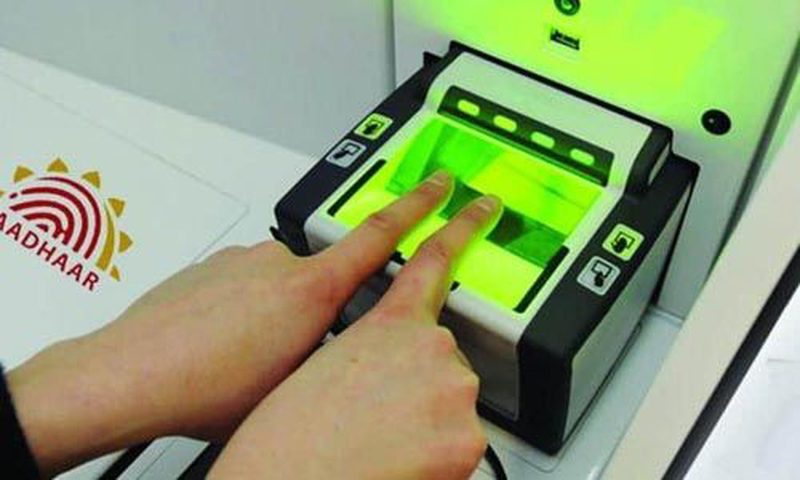
Aadhaar is the world’s largest biometric identity programme: a 12-digit number issued to over 130 crore residents, linked to fingerprints, iris scans, and demographic data, and used to authenticate identity for everything from ration shops to bank accounts to mobile connections. Conceived as a way to clean up welfare delivery by eliminating duplicates and ghosts, it has become the foundational layer of India’s digital public infrastructure. It has also been the subject of one of independent India’s great constitutional battles over privacy. This explainer covers how Aadhaar works, from enrolment to authentication, and the safeguards around it.
Enrolment: how you get an Aadhaar
Enrolment is free and open to all residents, defined as those who have lived in India for at least 182 days in the preceding year, including children, for whom a Baal Aadhaar is issued without biometrics. The process runs through authorised enrolment centres: the applicant provides demographic details, name, address, date of birth, and proof through documents like passports, voter IDs, or ration cards, or through an introducer where documents are unavailable; then biometric capture follows, ten fingerprints, both iris scans, and a photograph. The data goes to the Unique Identification Authority of India, UIDAI, which deduplicates it against the entire database to ensure no resident gets two numbers, and issues the 12-digit Aadhaar. Introducer-based and head-of-family enrolment routes were designed to include the undocumented poor, though in practice document requirements have excluded some of the most marginalised. Enrolment is voluntary in law, a point the Supreme Court emphasised, but effectively near-universal in practice.
Updates and the Aadhaar lifecycle
Aadhaar is not a one-time record; UIDAI expects residents to update it. Demographic updates, change of address, mobile number, name corrections, can be done online or at centres, with mobile number updates requiring biometric authentication at a centre. Biometric updates are mandatory for children at ages 5 and 15, when their biometrics mature, and recommended periodically for adults. UIDAI has run campaigns urging residents to update decade-old Aadhaars with fresh proof of identity and address, warning that outdated records risk authentication failures. Authentication failures are the system’s sharpest edge: worn fingerprints of manual labourers, the elderly, and others can fail biometric matching, and when Aadhaar authentication is the gateway to rations or pensions, a failed fingerprint can mean a missed meal. The system provides alternatives like OTP-based authentication and exception handling, but implementation at the last mile is inconsistent.
Authentication: how the number is used
Aadhaar’s power lies in authentication: the ability to verify, in seconds, that the person present is the person the number belongs to. Authentication comes in flavours: demographic, matching name and address; OTP, a code sent to the registered mobile; biometric, fingerprint or iris matched against the central database; and face authentication, added for convenience. E-KYC using Aadhaar revolutionised account opening and SIM issuance, compressing weeks of paperwork into minutes. In welfare, Aadhaar-based biometric authentication at ration shops and Aadhaar-seeded bank accounts for direct benefit transfers were designed to cut leakage by ensuring benefits reach the intended person. The scale is staggering: billions of authentications a year, making Aadhaar one of the most-used identity systems on earth. Each use, however, leaves a data trail, which is where the privacy debate begins.
The privacy battle and the 2018 judgment
Aadhaar’s critics warned of a surveillance infrastructure: a centralised biometric database, linkable across services, creating the technical possibility of tracking citizens’ lives. Breach reports, including alleged leaks of enrolment data, fuelled the alarm. The legal battle culminated in the Supreme Court’s 2018 judgment in the Puttaswamy II case: the court upheld the Aadhaar Act and mandatory Aadhaar for welfare schemes and PAN linkage, but struck down its use by private companies for e-KYC, mandated deletion of authentication logs beyond six months, and barred the creation of a 360-degree profile. The judgment also recognised privacy as a fundamental right in the earlier Puttaswamy I decision, framing all subsequent data governance. UIDAI points to safeguards: encrypted data, no storage of authentication purpose beyond limits, virtual IDs and masked Aadhaar to reduce exposure, and criminal penalties for misuse. Critics respond that safeguards are only as strong as their enforcement, and keep watch.
Aadhaar today
Today Aadhaar is infrastructure, as taken for granted as a road: used for welfare, banking, telecom, tax, and increasingly as the identity layer for new digital services. UIDAI continues to expand features, offline verification via QR codes, face authentication, and the mAadhaar app, while the government pushes Aadhaar-based verification into new domains. The debates have not ended: exclusion errors still deny benefits to some, private-sector use finds new routes around the 2018 restrictions, and data protection law’s interaction with Aadhaar is still being worked out. But the programme’s core achievement stands: a universal, verifiable identity for a country where, before Aadhaar, crores lacked any accepted ID. Whether that achievement’s costs, in privacy risk and exclusion, were worth it remains India’s liveliest technology-policy argument.
FAQs
Is Aadhaar mandatory? It is required for welfare schemes and PAN linkage under the Supreme Court’s 2018 judgment, but enrolment itself is voluntary and private companies cannot demand it for e-KYC.
What if my biometrics fail? Alternatives include OTP-based authentication, face authentication, and exception-handling protocols; persistent failures should be reported for biometric updates.
How do I update my Aadhaar? Demographic updates can be done online via the UIDAI portal; mobile number and biometric updates require a visit to an enrolment centre.
Aadhaar turned identity into infrastructure for 130 crore people. Its story, enrolment at continental scale, welfare transformation, and a constitutional battle over privacy, is the story of India’s digital state in miniature.
Compiled by the Khabar 24h Editorial Desk from publicly available sources.

Khabar 24h Editorial Desk — our explainers are prepared by the Khabar 24h editorial team using AI-assisted research tools, and every piece is reviewed by a human editor before publishing. We do not claim original reporting: our work is turning complex topics into simple, accurate summaries. Spotted an error? Write to contact@khabar24h.com — our corrections policy aims for same-day review.
More from this author →