Bharatmala Pariyojana Explained: The Masterplan Behind India’s Highway Boom
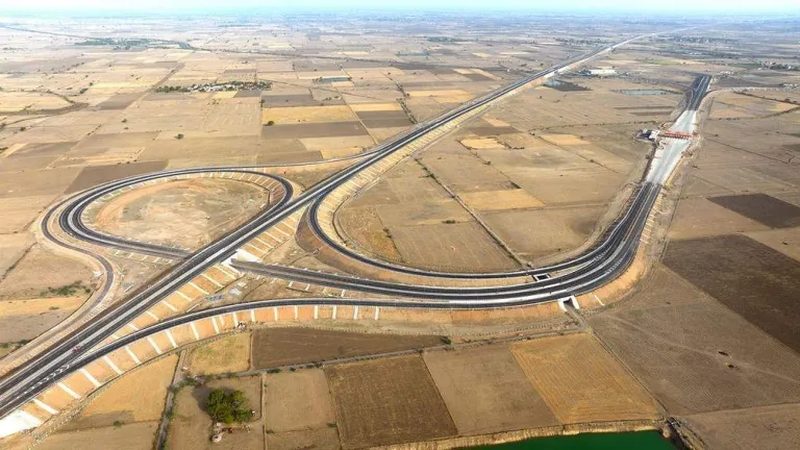
In 2017, the government approved one of the most ambitious road-building programmes in the world: Bharatmala Pariyojana, a plan to develop about 34,800 kilometres of national highways at an estimated cost of over 5 lakh crore rupees. The programme’s logic was a step beyond earlier schemes: instead of upgrading roads piecemeal, it would build economic corridors connecting the places that actually generate freight, ports, industrial clusters and consumption centres. Seven years on, thousands of kilometres have been built, marquee expressways have opened, and the programme has also run into the familiar Indian constraints of land costs, funding and execution delays. This explainer unpacks the masterplan and measures it against reality.
What Bharatmala set out to build
The programme’s components tell the story of its ambition: 44 economic corridors linking major production and consumption centres, inter-corridor and feeder routes, national corridors for through traffic, border and international connectivity roads, coastal and port-connectivity roads, and greenfield expressways. The flagship idea was corridor-based development: identify the routes that carry the bulk of freight, and build them to high, uniform standards rather than widening whichever stretch a local MP demanded. Greenfield expressways, built on entirely new alignments, were central to this, because they avoid the slow strangulation of ribbon development that chokes widened old highways.
How it differs from earlier programmes
The Golden Quadrilateral and the North-South-East-West corridors of the early 2000s connected the four metros and proved that highway building could transform logistics. Bharatmala was conceived as their successor with a sharper economic logic: the corridors were chosen through freight-traffic studies, including origin-destination surveys of goods movement. Implementation moved to the hybrid annuity model and the engineering-procurement-construction model for most stretches, with the build-operate-transfer toll model used where traffic justified it. The National Highways Authority of India also began monetising completed stretches through toll-operate-transfer bundles and the InvIT route, recycling capital into new construction.
What has actually been built
By the mid-2020s, a large share of Bharatmala’s Phase 1 length had been awarded and a substantial portion completed, though the original 2022 deadline slipped by years. Marquee projects opened to traffic: the Delhi-Mumbai Expressway in phases, the Bengaluru-Chennai Expressway, the Delhi-Dehradun Expressway and sections of the Amritsar-Jamnagar corridor. Highway construction pace, which had touched record levels of nearly 40 kilometres a day at its peak, settled into a steadier rhythm. The programme undeniably accelerated India’s highway stock: national highway length roughly doubled in a decade, and average truck speeds on major corridors improved measurably.
The reality check
The programme’s troubles are well documented. Land acquisition costs exploded, in some states exceeding half the project cost, as compensation norms and litigation pushed prices up. Several stretches were bid out aggressively and then stalled when contractors ran into financial trouble. The Comptroller and Auditor General flagged cost overruns and instances where per-kilometre costs far exceeded approved norms, triggering political controversy. Funding the remaining length requires ever-larger borrowing by NHAI, whose debt and servicing obligations have drawn scrutiny. And the original Bharatmala blueprint itself was effectively superseded by a newer vision of high-speed corridors, leaving the programme’s second phase in limbo.
What comes next
The government has pivoted to a new framework of high-speed, access-controlled corridors, with dozens of new expressway and corridor projects in the pipeline under revised cost and appraisal norms. The emphasis is on completing the highest-traffic corridors first and on stricter project preparation to avoid the land and cost surprises of Bharatmala’s first phase. Whatever the label on the next programme, Bharatmala’s legacy is structural: it established corridor-based planning, greenfield expressways and asset monetisation as the standard toolkit of Indian highway development. The roads it built will carry India’s freight for decades.
FAQs
What is Bharatmala Pariyojana? A central programme launched in 2017 to develop about 34,800 km of national highways, including 44 economic corridors, at an estimated cost of over Rs 5 lakh crore.
How is it funded? Through budgetary support, NHAI borrowings, toll revenues, asset monetisation via ToT and InvITs, and private investment under HAM and BOT models.
Is Bharatmala complete? No. Phase 1 awards and construction extended well beyond the original 2022 target, and the programme’s next phase was folded into a newer high-speed corridor framework.
Bharatmala promised to rebuild India’s highways around economic logic rather than political logic. It delivered thousands of kilometres of genuinely transformative roads, and a set of hard lessons about land, costs and execution that the next programme ignores at its peril.
Compiled by the Khabar 24h Editorial Desk from publicly available sources.

Khabar 24h Editorial Desk — our explainers are prepared by the Khabar 24h editorial team using AI-assisted research tools, and every piece is reviewed by a human editor before publishing. We do not claim original reporting: our work is turning complex topics into simple, accurate summaries. Spotted an error? Write to contact@khabar24h.com — our corrections policy aims for same-day review.
More from this author →