Bail in India: How It Works, and Why Undertrials Fill the Prisons
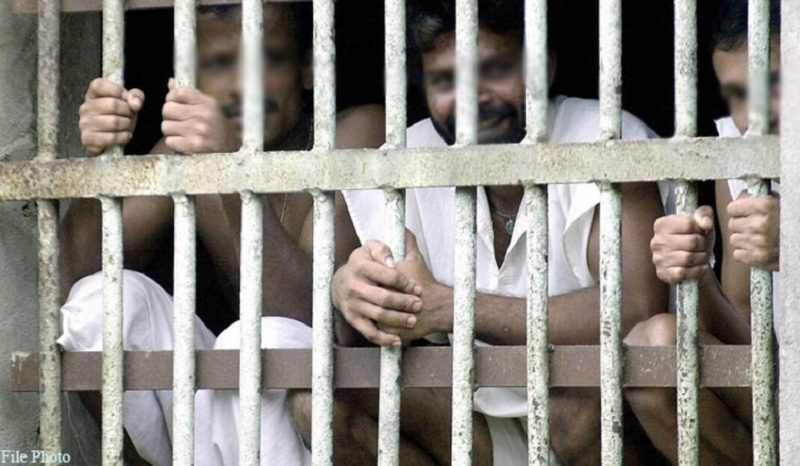
India’s prisons hold a paradox: roughly three out of every four inmates have not been convicted of any crime. They are undertrials, people awaiting trial, many of them jailed for longer than the maximum sentence for the offence they are accused of. The Supreme Court has repeatedly called this a crisis, noting that the undertrial population is overwhelmingly poor, and that poverty, not dangerousness, is what keeps most of them behind bars. Understanding bail in India means understanding why this happens, and what it would take to fix it. This explainer covers the law, the lived reality, and the reform debate.
How bail is supposed to work
Bail is the conditional release of an accused person pending trial, premised on the foundational principle that a person is innocent until proven guilty. Indian law, now under the Bharatiya Nagarik Suraksha Sanhita which replaced the Code of Criminal Procedure in 2024, provides for several kinds of bail: regular bail after arrest, anticipatory bail apprehending arrest, and interim bail for short periods. For bailable offences, bail is a matter of right; for non-bailable offences, it is at the court’s discretion, guided by factors like the gravity of the offence, the risk of the accused absconding or tampering with evidence, and their criminal antecedents. Courts can impose conditions: surrendering passports, reporting to police stations, furnishing sureties. The jurisprudence is rich with the principle, stated memorably by Justice Krishna Iyer, that bail, not jail, should be the norm. In practice, the norm inverts for those without resources.
Why undertrials fill the prisons
The statistics are stark and stable across decades: undertrials consistently make up around 75 per cent or more of the prison population, numbering in the lakhs. The reasons are structural. First, money: bail routinely requires sureties and bonds that poor families cannot furnish, so the bail order exists on paper while the accused stays in jail. Second, delay: India’s trial courts are clogged, and undertrials wait years for their cases to be heard, with many spending longer inside than any sentence they might receive. Third, legal aid gaps: a large share of undertrials have no effective lawyer, do not understand the proceedings, and miss the procedural windows for bail applications. Fourth, policing incentives: arrests are easy, investigations are slow, and there is little institutional pressure to release. The profile of the undertrial population tells the story: disproportionately Dalit, Adivasi, Muslim, and poor, the very groups least able to navigate the system.
What the courts have said
The Supreme Court has intervened repeatedly, and its language has grown increasingly anguished. In landmark orders, the court has directed the release of undertrials who have served half the maximum sentence for their alleged offence, a provision now codified in law, ordered states to identify and release eligible prisoners, and criticised the routine denial of bail by lower courts. The court has noted the particular scandal of prisoners who remain jailed even after being granted bail, because they cannot arrange sureties, and has suggested alternatives like personal bonds. Recent years have seen the court push for undertrial review committees in every district, comprising the district judge, district magistrate, and police chief, tasked with periodically reviewing cases and recommending release. Yet compliance is uneven, and the undertrial share of the prison population has barely budged, a measure of the gap between judicial direction and systemic change.
The new criminal laws and bail
The 2024 overhaul of India’s criminal laws, replacing the IPC, CrPC, and Evidence Act with the Bharatiya Nyaya Sanhita, Bharatiya Nagarik Suraksha Sanhita, and Bharatiya Sakshya Adhiniyam, touched bail provisions in ways that are still being interpreted. The new framework retains the half-sentence release rule for first-time undertrials, with some exclusions for serious offences, and introduces provisions on timelines for investigations and trials that could, if enforced, reduce undertrial detention. Critics argue the new laws also expand police powers in ways that could increase pre-trial detention, including longer police custody in some circumstances, and that the real determinants of undertrial incarceration, poverty, delay, and weak legal aid, are untouched by statutory renumbering. The early years of the new regime are being watched closely by legal scholars for their actual effect on bail outcomes.
What reform would actually take
Experts converge on a set of practical fixes. Make bail genuinely affordable: expand personal bonds without sureties, especially for the poor, and enforce the Supreme Court’s directions on this. Speed up trials: fill judicial vacancies, use plea bargaining more actively, and enforce statutory timelines. Strengthen legal aid so every undertrial has a lawyer who actually files for bail. Fix policing incentives so arrest is not the default and release is not an afterthought. And use data: real-time tracking of undertrial detention periods, with automatic alerts when limits are crossed. None of this is technically difficult; all of it requires sustained administrative will. Until then, India’s prisons will continue to house mostly the unconvicted, and the constitutional promise of liberty will remain, for lakhs of undertrials, a promise deferred.
FAQs
What is the difference between bailable and non-bailable offences? In bailable offences, bail is a right; in non-bailable offences, it is at the court’s discretion based on factors like offence gravity and flight risk.
What is anticipatory bail? Bail granted in anticipation of arrest, protecting the person from detention if arrested on the apprehended charge.
Why do granted bails go unexecuted? Most often because the accused cannot furnish the required sureties or bond amounts, a problem the Supreme Court has repeatedly flagged.
Bail in India works well for those with money and lawyers, and poorly for those without. Closing that gap is not a matter of legal philosophy but of administrative plumbing: affordable bail, faster trials, and lawyers for the poor. The blueprint exists; the implementation is the trial.
Compiled by the Khabar 24h Editorial Desk from publicly available sources.

Khabar 24h Editorial Desk — our explainers are prepared by the Khabar 24h editorial team using AI-assisted research tools, and every piece is reviewed by a human editor before publishing. We do not claim original reporting: our work is turning complex topics into simple, accurate summaries. Spotted an error? Write to contact@khabar24h.com — our corrections policy aims for same-day review.
More from this author →